
Giulia Lamarca: 'Every disability has a margin of independence'

3' min read
3' min read
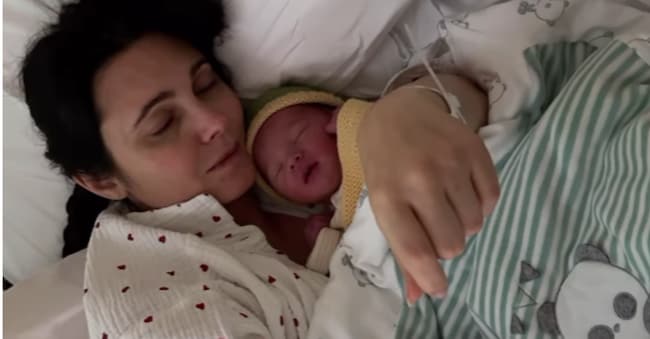
"It is very difficult to eradicate the narrative of the hero-saviour and the disabled-saved from loneliness. Disability narratives are changing from the bottom up, thanks above all to the open world of social media, which has given a voice to those who previously struggled to find space in the traditional media. A new phenomenon that for this very reason has to face atavistic prejudices, such as those highlighted by Giulia Lamarca, born in 1991, psychologist, business trainer and travel blogger, who in 2011 following an accident lost the use of her legs and began a second life sitting in a wheelchair. Married to Andrea Decarlini, with whom she had two children, Sophie, three years old, and Ethan, born a few days ago, Lamarca is a spokesperson for a cultural change needed to build a more inclusive society: 'I never condemn stereotypes too much because I too, before the accident, but perhaps also afterwards, was a victim of them. During my first pregnancy, I asked myself a series of questions: am I able to take care of the child? Will I be a good mother? Questions and doubts grow with each situation, but from motherhood I learnt, for example, that there are different ways of being present with children. It took time, but I learnt not to be condemned by clichés. The problem is, especially in Italy, that we are used to thinking of parenting as only a female figure, while a man playing with children seems like an alien, but in other countries it is absolutely not like that'.
The life project envisaged by the disability reform also works on independence, another prejudice that needs to be dismantled piece by piece, but which requires major interventions on the accessibility front. "Every disability has a margin of independence. Of course, there is a difference between a quadriplegic and a paraplegic, as I am, but everyone has the possibility to be independent on something, even a little, but it is possible. Unfortunately, the situation of architectural barriers, at least in Italy, remains a difficult problem to solve. There will always be stairs I cannot climb. But it is important that newly built houses are accessible, because at the moment, for a disabled person, finding a house adapted to their needs is an almost impossible task. We still struggle with rooms that are too small and bathrooms that are impractical for wheelchairs. Just as we have problems using public transport even in big cities'.
Another sore point is economic independence: in Italy, only 32.5 per cent of people with disabilities have a job. "The difference in this sense can be made by private companies, assisted by the State. Many companies today still prefer to pay penalties rather than include people with disabilities in their workforce, not realising that an opportunity is thus lost. Having a disability does not mean not knowing how to do anything, and through appropriate cultural training in the workplace a greater wealth of talent can be brought in by hiring people who bring different instances, experiences and skills".
Giulia Lamarca, despite the visibility she has gained on social networks and in the media, still experiences discrimination: 'In Italy, fashion remains one of the most discriminatory sectors. I, for example, have worked for very few brands and have never received invitations to Italian fashion weeks, while I have to foreign ones. We have seen models on the catwalk with prosthetic limbs, but seeing a model in a wheelchair is still a rarity, because the stereotype of the standing woman has not yet been broken down'.
From school to services, from work to parenting, from media to travel, the complexity of a disabled person's life also inevitably weighs on the family: 'I, with my history, have not had the same opportunities as someone who stands and walks. It is difficult to say and to live, psychologically this thought can destroy you. I have struggled more than others, both on the work front - first as a psychotherapist, then as a content creator - and on the personal life front. It is a fact: from time to time there were not the right people or resources or services and I did not have the same opportunities as a normal person. And this struggle did not change even after I became public. It frightens me, therefore, that my disability falls on Andrea, on my children, even on my parents. That they have fewer possibilities because of my disability. We have to start thinking about the world we want to live in in order to build it'.

