
The glamorous restraint of Schiaparelli, the casual opulence of The Row
Unprecedented rigour for Miguel Castro Freitas' debut at Mugler, Rabanne athletic and decorative, Rick Owens' ethereal vision
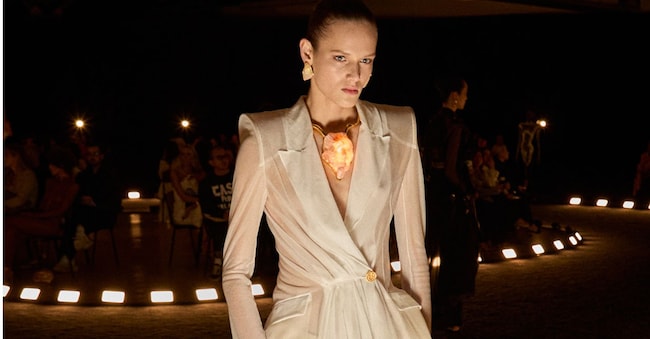
In the era of the Ozempic body, flat and without curves, the waist is back in fashion. It is being seen in Paris these days. Corsets are the only link with the iconography of the past maintained by Miguel Castro Freitas for his debut at the helm of Mugler: no camp, no humour, very little glamour and no soubrette. Rather, a sense of rigour, a taste for coverage and construction and the idea that clothes can redesign and reconstruct the body - this, however, totally Mugler. The proposal is visually interesting but perplexing. Castro Freitas is a capable designer with a first-rate CV - recently, he left an indelible mark at Sportmax. His idea of a rigorous and severe Mugler is against the grain but possible, but it has to be seen how the public will react, considering that fashion, now that Mugler is owned by L'Oréal, is just a marketing tool to sell perfumes, and therefore engagement is important.
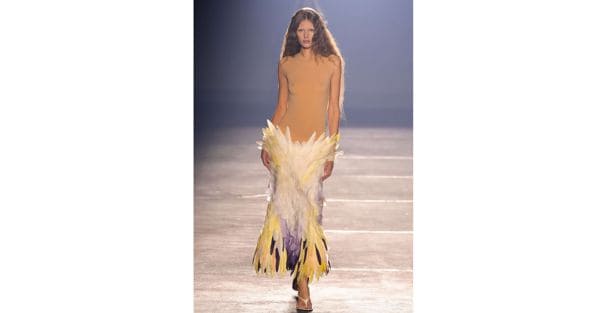
Casey Wallander, his predecessor, had an audience. Castro Freitas will probably find another niche, of fashion literati. By the way, one aspect that would be worth correcting is the excessive citationism. From Mugler himself to Gaultier, McQueen and Margiela, the homages are too obvious, and even taken for granted. However kneaded into a personal code, they weigh down.
Luxury as renunciation still counts at The Row, but something has changed. The monkish layers and Saturday morning softness of the last few collections give way to something a little more conservative, a little more austere: hair pulled back in a bun, pencil skirts down to the calf, fitted jackets cinched at the waist, wide skirts and high heels, all in a narrow palette of white, black and beige.
A marked departure from the vernacular that has made Ashley and Mary-Kate Olsen the darlings of the fashion intelligentsia and The Row a successful brand. The relationship between dress and body is different: no longer a dancing and floating, but a close, sculptural encounter. What remains is a taste for the unadorned, an as if casual way of putting things together, and the sense of unattainable opulence of a fabulous wardrobe that seems to be made up of haute couture pieces inherited from mother or grandmother.
Rick Owens continues the discourse begun with the men's fashion show in June, linked to the retrospective exhibition currently running at the Musée Galliera, and talks about his personal, ongoing quest for glamour and debonairness. What is striking about this new fashion show in the waters, however, is the ethereal quality of the clothes as well as the vision. It does not seem to be the infernal Styx into which the models plunge with their tunics and train, but the Dantean Eunoè, the river that reinforces the memory of the good accomplished.

