
Global brands with a local soul: the new game is being played on home turf
Remote working and new lifestyles are bridging distances, shifting shopping and social interactions towards local neighbourhoods, and prompting large companies to rediscover the importance of proximity, community and the local area

Key points
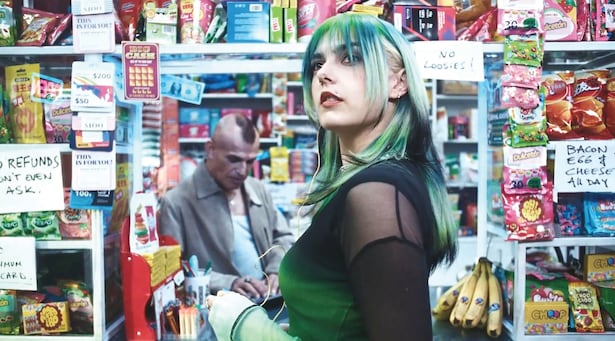
It’s a bit like the rivalry between Siena’s contrade during the Palio. Except that this time we’re in New York. Here there are no horses, just running shoes, and the neighbourhoods vying for the top spot are Manhattan, Brooklyn, Queens, the Bronx and Staten Island. The footwear brand Hoka, which has moved from the niche trail running market to the global stage with a turnover that reached nearly 2.6 billion dollars last financial year, has decided to think big by focusing on the small – namely, the neighbourhood. It has transformed five areas of the Big Apple into five teams with ‘Run Your City’, a challenge launched a few weeks ago in partnership with Strava and Jellyfish. People run for their own part of the city: every kilometre logged contributes to the neighbourhood’s score, whilst rankings and performance figures are displayed on giant city screens. In just eight days, nearly 40,000 New Yorkers took part. A massive neighbourhood rivalry in the age of digital platforms, orchestrated by a global brand that has chosen to go hyper-local. A rediscovery of a sense of community that no algorithm has yet managed to fully replicate. The initiative coincided with the launch of the campaign for the new trainers. The star of the show is Emma Rogue, a New York-based entrepreneur. In this way, something broader is championed: the city’s culture, together with the communities that inhabit it.
The doughnut effect
This is the paradox of the new proximity marketing: the more global a brand becomes, the more it wants to understand the pavement we walk on. After the obsession with scale and audience, the focus is now on the local area. In England, the IAB – the local branch of the digital advertising industry association – sets this out in black and white in its new Futurescape report: by 2030, brands will be talking about ‘neighbourhood, not nationwide’, meaning they will target specific neighbourhoods rather than just the whole country. A shift that would have been unthinkable until recently. The key point is no longer to abandon the national scale, but rather to combine it with local relevance. Even the metrics are changing amid a geographical upheaval that is already underway: the Gottlieb Duttweiler Institute, Switzerland’s oldest think tank, founded near Zurich and dedicated to studying shifts in consumer behaviour, has coined the term ‘nearconomy’ and documented the ‘donut effect’. The geography of consumption takes the shape of a doughnut, with part of spending and daily life shifting from urban centres towards residential neighbourhoods. According to the data analysed, non-food sales in physical shops in Switzerland’s outlying areas have risen by 40 per cent compared with six years ago. Remote working and new lifestyles are shortening people’s daily commutes: they work from home and end up shopping, eating and living locally. But proximity means accessibility, familiarity, personalised advice and trust. It provides a human counterbalance to an increasingly automated retail sector dominated by online platforms.
Cases worldwide
Neighbours, in short. Even when you’re giants. During the hottest summer on record in Los Angeles, Nike and Foot Locker opened The Crenshaw Rec, a new concept designed for the local community. It’s not just about trainers and shelves: there’s a gym, creative spaces and places to meet up. Something similar is happening in Berlin, where independent retailers are rediscovering the high-street shop just as the big platforms dominate online retail. “Berlin is, above all, a village,” Julius Weissenborn, co-founder of the label Haderlump Atelier Berlin, told Vogue, speaking about the new store in Kreuzberg. The boutique emphasises personal connections, shared values and a consistent presence. In Italia, too, the signs are multiplying. This year, American Express relaunched ‘Shop Small’, the programme that encourages shopping at small local businesses, accompanying it with a guide produced in collaboration with Confcommercio on the independent businesses that are transforming Milan. An Ipsos-Doxa survey commissioned for the project reveals that 46 per cent of Italians aged between 18 and 34 say they have increased their shopping at local shops over the past year, whilst 65 per cent are more inclined to support local businesses capable of introducing new ideas. A contemporary sense of proximity. Here in Italy, Coca-Cola has chosen the slogan “so close, so Italian” for its campaign centred on people, production and distribution. The creator economy is also taking root locally: Conad Centro Nord has entrusted a campaign to nine local influencers selected for their local relevance and ability to portray recognisable habits.
Hungry for local food
But it is in the catering sector that this distance narrows until it almost disappears. National Geographic has dedicated a feature to the hyper-local food revolution, starting with an old, derelict bowling alley in Manchester that has been transformed into a vegetable garden, café and community hub: on just half an acre, it produces more than a tonne of fresh produce a year, most of which is sold and consumed on the premises. Ultra-short supply chains are attempting to replace the anonymity of international wholesalers. In Franciacorta, chef Alessandro Cappotto has opted for the term ‘true kilometre’ rather than ‘zero kilometre’. At Villa Calini, the vegetable garden in front of the restaurant becomes an integral part of the kitchen, and distance is measured in steps. But the game also involves large-scale retailers reimagining themselves as farms. In Berlin, the Rewe chain – which operates 3,800 supermarkets across Germany – has developed the new Green Farming Market in Lankwitz, featuring vertical farming integrated into the building. ‘Shop downstairs, salad grows upstairs’: this is the concept behind this space, which opened in May with a hydroponic farm spanning three thousand square metres. ‘Smaller is smarter’, reports the Journal of Marketing in a study challenging the scale-is-everything mindset, focusing on micro-influencer profiles. Communities are replacing audiences. It is the harsh reality of marketing in these fast-paced times: you don’t have to be the biggest to be the most influential. But the appeal of the shop next door goes beyond a romantic return to the local corner shop. Because the new localism is technological and measurable. Neighbours, yes, but always connected.

