Industry

The global finance sector is investing in trade fairs. And Italia (for now) is standing on the sidelines

More capital has been allocated in 8 weeks than in the last 8 years. The Italian system, which is closely linked to local areas, is looking into how to capitalise on this trend

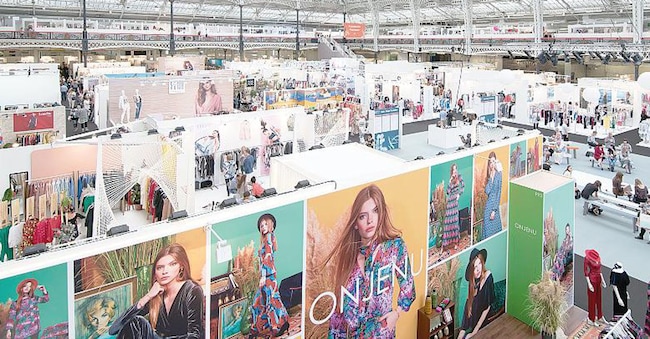
Tra i protagonisti delle recenti operazioni di M&A, il gruppo Hyve, rilevato dal fondo di private equity Hellman & Friedman lo scorso giugno. Tra le più note manifestazioni organizzate da Hyve c’è Pure London (foto)

5' min read

Translated by AI
Versione italiana

5' min read

Translated by AI
Versione italiana

And to think that, during the Covid pandemic and in the period immediately afterwards, they had written it off as a lost cause. Financially on its knees, prematurely aged and overtaken by new technologies, which would make it possible to run businesses and enjoy all sorts of experiences remotely, saving time and money for both companies and individuals.

However, five to six years on, the trade fair sector is in better shape than ever and, in Italia, has continued to grow even in the first six months of the year, despite international geopolitical turmoil, recording further increases compared with the record results of 2025 when (according to data from Prometeia-Aefi) companies’ turnover reached €2.1 billion, up 10 per cent on 2024 and, in real terms (adjusted for cumulative inflation), up 35 per cent on 2019.

Loading...

Not only that: the very technologies (in particular artificial intelligence) that seemed to threaten the trade fair business and, more generally, live events, are proving to be a driver of growth for the sector – both as a means of enhancing services and adding value to the offering, and because, paradoxically, AI encourages people to want to attend and spend money on live events, whether for business or leisure.

The interest of private equity funds

The first to spot this, sensing a business opportunity, were the major international investors, followed by some of the biggest international financial media outlets (from the Wall Street Journal to the Financial Times), which had rarely covered this sector in the past. In the space of just eight weeks, between May and June this year, four of the world’s ten largest trade fair groups (excluding German trade fairs) were sold: the British firms CloserStill and Hyve, and the American firms Group Emerald and Questex. Three deals in particular, valued at between 1.5 and 1.8 billion dollars, rank among the four largest private equity transactions ever to have taken place in the history of the trade fair industry. In essence, as Corrado Peraboni, CEO of Italian Exhibition Group, observes when commenting on these figures, ‘More capital has been moved in a few months than in the last eight years in terms of M&A’. We are witnessing an unprecedented consolidation in the sector and, consequently, “the issue of scale is beginning to be critical not only for us Italians, but also for the Germans who, although they have larger groups, are themselves seeking a response to this phenomenon”.

The distinctive features of Italia and Germany

At present, in fact, Italia and Germany (which boast the world’s fourth and third largest trade fair systems respectively in terms of volume and visitor numbers) are sitting on the sidelines. It is important to point out that the transactions mentioned above involve US and UK giants active in the organisation of trade fairs and B2B events, which explains why Italia and Germany are excluded from these developments: both countries have, in fact, ‘a trade fair industry based primarily on the activities of trade associations and industrial bodies, which therefore prioritise the promotion of their local areas and the businesses within their respective sectors’, observes Francesca Golfetto, professor of market strategy at Bocconi University and an expert in the trade fair sector. ‘It is unlikely,’ she notes, ‘that Italian companies – be they trade districts or associations – would decide to sell or open up to foreign capital.’

However, Golfetto herself admits that there is a need for substantial capital. This is because the facilities need to be modernised and adapted to a changing market, observes Francesco Conci, chief executive of Fiera Milano, who calls for innovative spaces and services to manage not only B2B events but also consumer events, live shows, sporting competitions, conferences and trade fairs with hybrid formats.

Possible developments in the system

So, sooner or later, in one way or another, our country too will have to play its part in this phenomenon – ideally by managing it rather than simply being at its mercy. BolognaFiere has led the way in this regard, opening up its shareholding to the British giant Informa in 2022; the following year, Informa became a full partner in the Bologna-based group with a stake of approximately 15.6 per cent.
“There are many ways to be competitive,” observes Golfetto. “You can form international partnerships – something the Germans have been doing for decades and which our trade fairs have also begun to do in recent years, with interesting results.” Partnerships to take successful trade fair formats abroad (as the major groups – Milan, Bologna, Rimini-Vicenza, Verona and Parma – do). But also partnerships to better manage exhibition spaces across Italia, which are increasingly opening up their venues and halls to live events, both to meet growing market demand and to maximise profits and margins by utilising the venues all year round, not just during trade fairs.
‘“The Italian trade fair model, characterised by fragmentation, the small size of companies and the involvement of public shareholders, serves the country’s economic system – a manufacturing system based on a network of small and medium-sized enterprises,” observes John Shehata, adjunct faculty member at Luiss Business School . “But the economy does not stand still, and I believe we will inevitably have to see the sector evolve in Italia too.” One possible solution, suggests Shehata, could be a ‘dépeçage’ – a separation between the organisation and the infrastructure. ‘The infrastructure should remain public, which would allow us to continue to enhance the region and the national business fabric, whilst the organisation of events, certain exhibitions and conferences, could be privatised.’

A positive development, but we need Golden Power

“The fact that investors are showing an interest in the trade fair sector, including the Italian one, is an excellent sign,” observes Giovanni Bozzetti, chairman of Fondazione Fiera Milano. “Italian trade fairs, unfortunately, are still very under-internationalised, apart from a few brilliant initiatives. We should invest more in this direction, acquire events abroad and open up our capital to foreign operators,” he adds. But here lies the flip side of the coin, namely the risk that international operators might take control away from highly successful events, which serve as global benchmarks for their respective sectors (from the Salone del Mobile in Milan to Vinitaly, from Cosmoprof to Vicenzoro or Cibus, to name just a few of the jewels in the crown of our trade fair system).
“Trade fairs are extraordinary tools of industrial policy, capable of drawing the world’s attention to entire Italian production sectors,” says Bozzetti. “We cannot risk some of our events – or, worse still, our exhibition centres – being sold to foreign operators.” Hence Bozzetti’s proposal to establish a form of ‘Golden Power’ over trade fairs, as is the case in other strategic sectors such as energy, telecoms and defence, to prevent any foreign investor from acquiring more than 51 per cent of the capital, ‘so as not to squander a wealth of assets for industry and the regions’.

Copyright reserved ©
Loading...

Brand connect

Loading...

Newsletter

Notizie e approfondimenti sugli avvenimenti politici, economici e finanziari.

Iscriviti