
“Global trade is growing and changing: supply chains are keeping pace with these developments”
According to John Pearson, Global CEO of DHL Express, the resilience of Italian exports highlights the growing importance of agile and reliable supply chains in an increasingly complex global trading environment

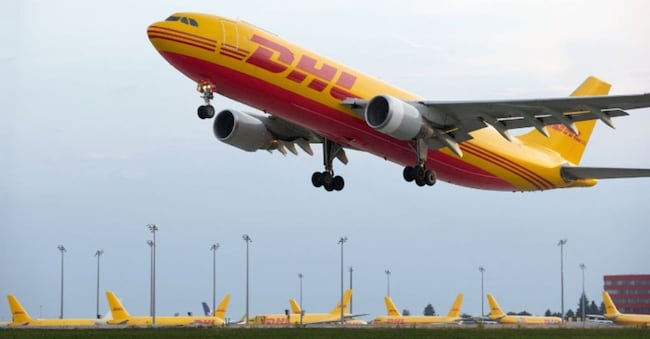
As global trade enters a more complex phase in 2026, characterised by growing uncertainty and profound shifts in the international balance of power, the role of supply chains is becoming increasingly central to the competitiveness of businesses in global markets. From the insights shared today by DHL Express’s management during a business review in Treviso, it is clear that the ability to manage complexity – even more so than mere cost optimisation – has become a key factor in international success. Against this backdrop, Italia remains one of Europe’s most resilient exporting economies, whilst world trade continues to grow despite an increasingly complex and fragmented international landscape.
Globally, this change is structural in nature. As John Pearson, Global CEO of DHL Express, explains: “What we are witnessing today is not a cyclical phenomenon, but a structural transformation. Global trade continues to evolve and volatility has become a permanent feature of the environment in which businesses operate. For decades, supply chains have been optimised primarily to maximise efficiency. Today, however, efficiency alone is no longer enough to remain competitive. Companies need resilience, visibility and control to navigate an increasingly complex global landscape. We are also seeing a growing shift towards more complex, higher value-added trade flows, in which reliability and responsiveness are just as important as speed. In this context, supply chains are no longer merely supporting trade: they are shaping its future”.
In Europe, these dynamics are intertwined with an increasingly fragmented trade environment. Economic growth is expected to remain modest in 2026, standing at around 1 per cent, whilst businesses must contend with rising costs, evolving trade policies and growing geopolitical uncertainty. The global landscape is also under significant pressure: trade tensions, tariff measures and the gradual weakening of the multilateral system are all contributing to increased volatility and complexity in the international arena.
As Mike Parra, CEO Europe at DHL Express, points out: “Across Europe, the business environment is becoming increasingly complex and fragmented. We are witnessing a rise in international tensions, ever more frequent changes in economic and trade policies, and a growing level of uncertainty for businesses. At DHL Express, we observe the effects of these dynamics every day through our global network. Today, resilience is measured by the ability to adapt in real time, by rapidly changing routes, redirecting shipments or rebalancing flows between different hubs to ensure continuity of transport. At the same time, trade flows are evolving: companies and economies are increasingly seeking to diversify their partners and markets, reducing their dependence on individual geographical areas and thereby strengthening the resilience of their supply chains. Against this backdrop, Italia stands out as one of Europe’s leading export-oriented economies, showing particularly strong performance in the first few months of 2026. This also highlights a crucial point: the more export-oriented an economy is, the more exposed it is to disruptions affecting global trade”.
The most recent data confirm this dual trend. In the first quarter of the year, Italian exports rose by around 4 per cent compared with the previous quarter (source: ISTAT), making a positive contribution to overall economic growth. This performance also reflects the country’s high level of international integration. According to the DHL Global Connectedness Index, Italia ranks 28th worldwide out of 180 economies analysed and stands out for the breadth of its network of international trade relations, ranking 7th in the world in terms of the geographical reach of its trade flows. At the same time, it maintains strong links with regional markets: 66 per cent of its international trade flows take place within Europe.
A significant proportion of this trade is handled via express air freight, which is essential for high-value goods that are highly sensitive to delivery times. In this context, DHL Express supports around 80,000 Italian businesses – over 50 per cent of which are in the manufacturing sector – handling an estimated 49 per cent of Italian exports to non-EU countries via air express courier.
This transformation is also reflected in the evolution of logistics infrastructure. In Italia, the sector’s operational capacity has been strengthened through significant investments, including the international hub at Milan Malpensa, built with an investment of 110 million euros, and new strategic facilities such as the logistics centre in Treviso, developed thanks to an investment of over 40 million euros to support growth in regions with a strong export focus.
As highlighted by Nazzarena Franco, CEO of DHL Express Italy: “In Italia, we can clearly see how companies are adapting their internationalisation strategies. Exports are expanding beyond traditional European markets towards more complex destinations with high growth potential, such as China – where Italian exports have grown by over 20 per cent – and India, which is taking on an increasingly strategic role for many Italian companies. This development is transforming the way companies operate in international markets, requiring faster decision-making, greater flexibility and stricter control over cross-border activities, particularly for SMEs. In this context, logistics becomes a crucial enabler, helping Italian businesses to compete successfully, access new markets and sustain long-term growth”.
In this context, the ability to adapt quickly to change and to ensure reliable operations at an international level is the key differentiator in competitiveness. It is this ability that enables businesses to grow, expand into new markets and seize business opportunities anywhere in the world.
DHL – The logistics company for the world
DHL is the world’s leading logistics brand. The various divisions of the DHL Group offer an unrivalled portfolio of logistics services, ranging from domestic and international parcel delivery to e-commerce and fulfilment solutions, from international express shipping to road, air and sea freight, right through to integrated industrial supply chain management.With around 389,000 employees across more than 220 countries and territories worldwide, DHL connects people and businesses securely and reliably, fostering the development of sustainable global trade flows.Thanks to specialised solutions tailored to growth markets and strategic sectors such as technology, life sciences and healthcare, engineering, manufacturing and energy, automotive and retail, DHL reaffirms its position as “the world’s logistics partner”.
DHL is part of the DHL Group, which recorded revenue of approximately €82.9 billion in 2025. Through sustainable business practices and a commitment to society and the environment, the Group makes a tangible contribution to generating a positive global impact. DHL Group has set itself the goal of achieving net-zero emissions in its logistics operations by 2050.

