Climate

UN: Global warming set to exceed 1.5°C in the coming years, but the trend can be reversed. Here’s what needs to be done

Secretary-General Guterres: ‘This summer’s scorching heat, devastating wildfires and deadly floods are a warning of what lies ahead’

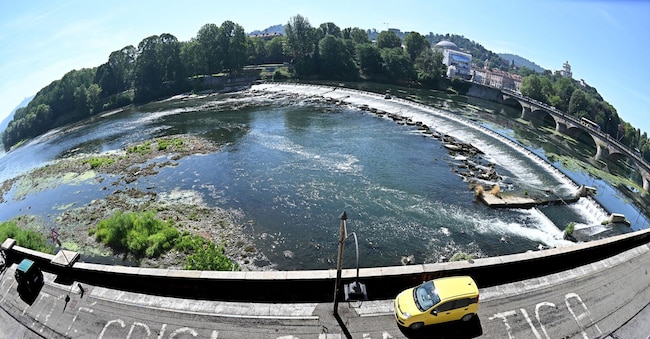
Fiume Po in secca ai Murazzi e terreni agricoli aridi dopo il caldo torrido, Torido, 8  luglio 2026. ANSA/ ALESSANDRO DI MARCO ANSA

4' min read

Translated by AI
Versione italiana

4' min read

Translated by AI
Versione italiana

It is now almost certain: global warming will exceed the threshold of 1.5 degrees above pre-industrial levels – the limit set by the 2015 Paris Agreement. And this will most likely happen in the coming years. Even in the most optimistic scenario, if all national plans are fully implemented, the increase will reach 1.8 degrees, whilst in all other cases even higher peaks are forecast, rising as high as 2 degrees. The alarm has been raised by UNEP, the United Nations Environment Programme, in its report *Limit Overshoot*. However, the study outlines a possible three-step solution to reverse the trend: exceeding the threshold, reaching the peak and then reducing emissions, which involves massive action to mitigate the effects of climate change.

Exceeding the threshold

Although exceeding the limits set by the Paris Agreement is inevitable, UNEP emphasises in its report that we must not underestimate the implications of such an overshoot, which must not be regarded as acceptable. The consequences, in fact, could be extremely serious. Possible impacts include an acceleration in sea-level rise, a greater likelihood of ecosystems such as coral reefs collapsing, extreme temperatures, more widespread wildfires and profound changes to the cryosphere – that is, the portion of the Earth’s surface covered by ice or snow.

Loading...

Glaciers could lose a quarter of their mass by 2100, a trend that would lead to a rise in sea levels of 9–12.5 centimetres. In essence, the report reiterates, unless concrete action is taken as soon as possible, global warming will cause harm to people, societies and economies, particularly in small island states, which will be completely or partially submerged by the rising waters.

That’s not all. Exceeding the 1.5-degree threshold could lead to increasingly intense heatwaves and flooding. Furthermore, warmer oceans, falling oxygen levels and increased acidity will make living conditions more difficult for marine life and for the communities that depend on it for their survival.

“This summer’s scorching heat, devastating wildfires and deadly floods are a warning of what lies ahead. We must ensure that any overshoot of the 1.5-degree threshold is as limited and short-lived as possible. This requires a leap forward in terms of ambition,” said United Nations Secretary-General António Guterres.

A possible solution

According to UNEP, the inevitability of exceeding this threshold must not, however, be accepted passively: we must both adapt to climate change and take action to mitigate the damage and bring global temperatures back below the risk threshold. However, returning to a rise of less than 1.5 degrees above pre-industrial levels will require ‘unprecedented’ action. The aim is to limit the rise in temperatures as much as possible through a three-step approach.

Firstly, an immediate response phase is envisaged, which will take place once the threshold set by the Paris Agreement has been exceeded. During this phase, it will be necessary to make sharp cuts to emissions, including methane emissions, and to adopt measures to protect the most vulnerable people and ecosystems.

The second phase will be one of mitigation, coinciding with the peak in temperatures: the pace of decarbonisation will need to be stepped up to achieve ‘net-zero emissions’, when the greenhouse gases released into the atmosphere are equal to those removed. In the meantime, we will also need to tackle and mitigate the impacts of climate change.

The final stage, on the other hand, is one of long-term resilience, in which temperatures will first stabilise and then fall. This stage involves achieving a state of equilibrium characterised by negative carbon dioxide emissions and adapting to those effects of rising temperatures that are irreversible.

Appeals from the WWF and Greenpeace

The figures released by UNEP have raised alarm amongst major environmental organisations, foremost among them the WWF and Greenpeace. In a statement, the WWF warned that ‘any rise above 1.5 degrees must be as small and as short-lived as possible’. For this reason, the organisation “urges governments to put forward truly effective climate plans, to accelerate the reduction of emissions and to increase support for people and communities already suffering the effects of climate change. Adequate funding must also be allocated”.

Loading...

According to the WWF, ‘the fact that we are close to exceeding the 1.5 °C limit must serve as a catalyst for action, because the longer the world remains above that threshold, the greater the risks will be for people, nature and economies. The 1.5 °C limit remains the legal, moral and scientific safety threshold for the world. Exceeding it, even for a short period, would demonstrate a failure to fulfil our commitments, not a reason to weaken the target. We must reduce emissions, not our ambition, and act more swiftly to bring global warming back below the limit.”

Greenpeace, on the other hand, has called on governments to speed up the transition and to ‘recognise the responsibilities of oil and gas companies. Introducing a tax on these industries’ profits is the first step towards ensuring a just and equitable transition’.

Copyright reserved ©
Loading...

Brand connect

Loading...

Newsletter

Notizie e approfondimenti sugli avvenimenti politici, economici e finanziari.

Iscriviti