
Gnut: ‘Neapolitan songs as World Heritage? Yes, but they always have been’
The Neapolitan singer-songwriter, a finalist in the Targhe Tenco awards, talks about his latest album, *Dduje paravise*, and his next one, which draws on influences from the Mediterranean, the Maghreb and Mali
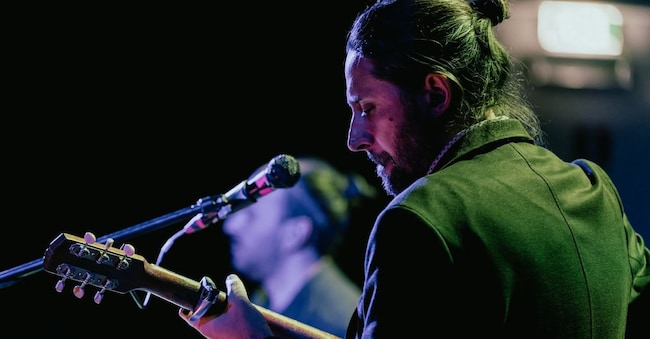
About a month after his nomination for UNESCO Intangible Cultural Heritage, how is Neapolitan song? We’d love to interview it in person, but as it’s intangible, that’s rather difficult. Instead, we’ve decided to speak to someone we consider one of its leading contemporary exponents: Gnut, aka Claudio Domestico, aged 45, a professional singer-songwriter, with six albums and two EPs to his name, including his own projects and collaborations, right up to Dduje paravise, a beautiful album shared with the accordionist Alessandro D’Alessandro in which he reinterprets ancient and modern classics from the Neapolitan songbook. An album that reached the shortlist for the best performer’s album at the latest edition of the Targhe Tenco awards, for which voting is taking place right now.
Gnut, let’s start with the facts. What’s your view on the nomination of Neapolitan song as Intangible Cultural Heritage of Humanity?
Let me start by saying that I don’t have a great relationship with plaques, prizes and institutional accolades in general. My view is that Neapolitan song has always been part of humanity’s heritage. We’re talking, after all, about a repertoire that has had a global influence: Elvis Presley recorded Neapolitan classics in English, ’O Sole mio is by far the song that has been translated into the most languages worldwide, and that particular sound even influenced the Beatles on some of their tracks... In short: we could discuss this at length. Whether or not this recognition comes to pass, it won’t change the depth and significance of Neapolitan song.
Which Neapolitan masters are you most attached to, and which ones do you think deserve to be rediscovered?
Let’s start with Pino Daniele: he was one of the first artists I ever listened to. Then I travelled the world, starting with grunge, before returning to Neapolitan song. My most important point of reference within the tradition is Roberto Murolo. I love his ultra-minimalist approach: he broke away from the old interpretation a fronna ‘e limone, with a revolutionary style that I’d describe as that of an American crooner. The work he did with the Antologia Napoletana, too, is fundamental to our culture. Among the names worth rediscovering, I’d include Enzo Gragnaniello, James Senese, Marcello Colasurdo and the maestro Roberto De Simone, about whom, shamefully, very little is said. As far as I’m concerned, Piazza Garibaldi should be renamed Piazza De Simone.
Let’s talk now about the album Dduje paravise. How did it come about?
It all started a year ago. Alessandro D’Alessandro and I didn’t even know each other in person. Of course, we had mutual friends who spoke highly of each other, and then, by a strange coincidence, we’d both been guests of Stefano Bollani at Via dei Matti N. 0 during the same season, though we didn’t actually meet. A year ago, he was a guest at an artist-in-residence programme organised by Toscana Produzione Musica. The theme was Naples, and the idea was to put together a show centred on Neapolitan songs. He got hold of my number and we had a chat. Initially, the project was supposed to focus solely on Pino Daniele’s repertoire, but I didn’t fancy capitalising on the tenth anniversary of his death. So we had to look for alternatives. When I realised we were short on time, I took the ‘easy’ option, suggesting songs I’d already performed in my own style. Let’s just say I played it safe. Then, when Alessandro and I met up, we included ‘Villanella di Cenerentola’, ‘E cerase’ and the two previously unreleased tracks. Some interesting things emerged: E mò e mò, performed at Sanremo 1988 by Peppino di Capri, has, for example, become a ballad...
We played these songs in theatres across Tuscany, as the project intended, then Squilibri Musicali, Alessandro’s record label, suggested we turn them into an album. I didn’t think twice about it. A project like that, you either build it up over ten years or you do it in two days.
Dduje paravise reinterprets tradition, something ‘sacred’ to Neapolitans. In the past, scathing judgements were not spared even mainstream names such as Lucio Dalla and Renzo Arbore, guilty of dabbling in the Neapolitan language without having been born in Naples...
Times have changed somewhat since then: today, paradoxically, Neapolitans are more tolerant of those who sing traditional songs despite not having been born here than of those who are Neapolitan but do not conform to the traditional stereotype.


