
Gof, Franciscan whipping boy
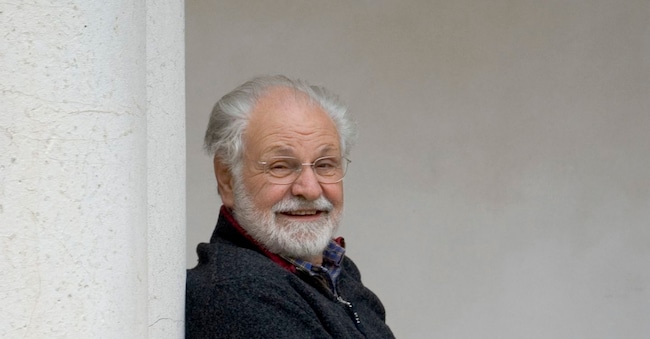
For more than 30 years he was a much-loved contributor with carte blanche to thunder at anyone. Lately, more than writing, he preferred to give ideas

5' min read
Key points
- The house with Totò's figurines
- Love for Carmelo Bene
- The side world
- Milan, Turin and Paris
- Enviable writing
5' min read
Goffredo was always worried that not enough was remembered of the dead who had created a positive stir. His last worry was Alexander Langer, on whom he had just written a book for Alphabeta,That which was right. He seemed like the ideal candidate, but when invited to write, he was transcendent: 'Leave my book alone, entrust the portrait to someone good'. In his thirty years as a much-loved contributor to 'Domenica', Goffredo had carte blanche in terms of topics and spaces, but lately he preferred to give suggestions and ideas, all of them collateral, especially on characters and small publishing houses. For example, Else edizioni, of books made with the press, often on texts that Goffredo indicated (such as I rowed for a Lord by Stig Dagerman with illustrations by Davide Reviati). Or the magazine 'Monitor', born in Naples, but then branched out to various parts of Italy, carrying out social investigations or forgotten causes.
The house with Totò's figurines
He made you meet the people he esteemed almost in ambush in his Esquiline house, strictly rented because he had no property and earned the minimum to survive. A two-room apartment with a Franciscan bed, an armchair in the living room and variegated statuettes of Totò, whom he had rehabilitated from the neglect of culture 'with a moustache' with Franca Faldini and a book that has gone down in history, L'uomo e la maschera (1968). Of these figurines, he particularly loved one, a whistle that was activated by blowing from the backside, which always made him laugh. Lately he was quite satisfied because he had been able to donate most of his books to those who deserved them, and the bookcase was jarringly and disorientingly empty, as if he were waiting for a move. He always announced that he wanted to leave Rome for his buen retiro: Calabria. He would leave, convinced he would stay there, but after two weeks you would find him at the Esquilino, even if he was then on the train to Gubbio to visit his family, to his beloved Naples or to some remote place where he could plead a cause or remember a friend. Because of this sprightly nomadism, when he said he was old, you could not believe him, and that is why the news of his death found us completely unprepared, moved and a little angry, because he had once again found a way to amaze us, but this time in the cruellest way.
Love for Carmelo Bene
.We had pending a review on Carmelo Bene in Cannes, one of the whipping boys, a group he belonged to, whom he most admired. He often came down to Salento, of which he appreciated the people with 'fishermen's faces', and rarely had the writer seen him so happy as when the Carmelo Bene Archive was finally set up in Lecce with the author's book collection, costumes, sets and papers. Perhaps also when Nicola Lagioia had won the Strega prize with La ferocia, although he was convinced it was a sterile achievement. Success for him was not an indication of renewed esteem. On the contrary, he mistrusted prizes and career advancements and, if you happened to receive them, you had to jump up ten times to show him that you would not abandon his battles and themes, namely society, solidarity, the marginalised, those who remained 'outside'. He also happened to have remorse for intellectuals (a term he detested) whom he had clubbed in the past and who then left without him being able to make amends. One above all Pasolini, for whom he had resolved, after some hesitation, to go to a commemorative conference on the centenary of his birth at Gnam in Rome, recognising his great talent as a pedagogue, a supreme gift for Goffredo.
The Side World
.In fact, however, it was the lateral world that interested him: he strongly wanted to dedicate a special issue of 'Lo Straniero' to the borders of the North East and to unjustly neglected figures such as the emigration poet, Leo Zannier, the Friulian verist writer, Caterina Da Percoto, the Slovenian poet, Srečko Kosovel, and Don Pierluigi Di Piazza, parish priest of Zugliano and founder of the 'Ernesto Balducci' reception centre. He used to say that the last hope was in priests, not the cardinals, those in the street, and for this reason he used to reiterate that his favourite newspaper was 'L'Avvenire', leaving his interlocutor on the other end of the phone for a few seconds in a perfidious suspension, while he laughed. He loved to provoke, but he also knew that on our pages he could be free to thunder against anyone. He lived like a Franciscan, but he did not renounce certain minimal pleasures, for example, his tasty, strictly vegetarian gravies, which he had learnt from the Neapolitan tradition, and a glass of red wine. Then classical music at maximum volume. Everything he was really interested in was in the South, Naples above all (his programme on Radio 3 was not by chance called Zazà, Meridione, Cultura, Società), Matera, where he had gained experience with Angela Zucconi, Danilo Dolci's Palermo, Winspeare's Depressa salentina, the Calabria of close friends.
Milan, Turin and Paris
But when he came to Milan, he became enthusiastic about the years of great ferment he had experienced, here as in Turin, when they were workers' towns. Paris, where his mother had at one point gone to be a porter, was the beauty. He told of the epic car journeys from the Ville Lumière to Gubbio for the holidays, fictional tales that would have fit well in a novel 'which I will never write because otherwise everyone would be ready to skewer me', as he was not afraid to do with others. Wealthy friends often gave him donations or bequests, but he immediately invested them in a new magazine in which he gathered young people who almost regularly became women and men who left their mark (the last one, Caro agli dei, Alessandro Leogrande) to fight enemy number one, the university professors, guilty of not conveying anything revolutionary, subversive or healthy for society and, in general, the sleepy bourgeoisie that was corroding the country.


