Metals

Gold back to all-time high, along with silver and copper

The yellow metal exceeds $4,400 an ounce, silver is close to $70 and copper is approaching $12,000 per tonne

by Sissi Bellomo

Aggiornato il 22 dicembre 2025 alle ore 19,10

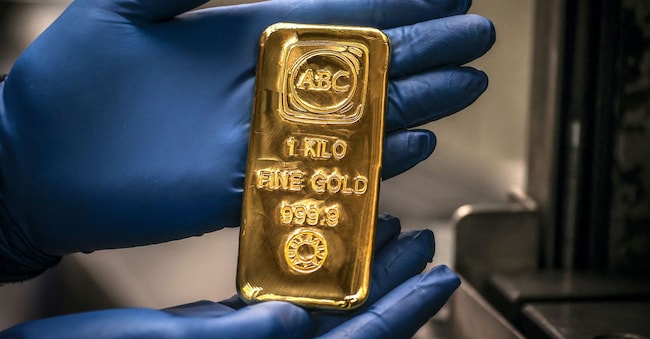
 (Photo by DAVID GRAY / AFP)

4' min read

Translated by AI
Versione italiana

4' min read

Translated by AI
Versione italiana

The year-end rally is a classic, almost like panettone. But for metals (precious and otherwise), 2025 is really ending with a bang. Even gold is back at record levels, having regained momentum in a run that has lasted almost four years: on Monday 22 it surpassed 4,400 dollars an ounce and went up to a peak of 4,420.35 dollars on the London spot market, up almost 70% since the beginning of the year and well above the previous all-time high (4,381 dollars) that had held since October.

In parallel, the dizzying rise of silver continues, now close to breaking even the $70 an ounce barrier, with progress close to 140% in 2025 (the peak was at $69.45). For both metals one has to go back as far as 1979 to find comparable performances.

Loading...

Also on Monday 22, platinum updated its 17-year high (at $2,057.15 an ounce to be exact) while palladium, with a leap of more than 4 per cent, moved up to $1,786.45 - a price it had not reached in about three years.

In the meantime copper also updated its historical record, approaching the psychological threshold of $12,000 per tonne by leaps and bounds: at the London Metal Exchange (Lme) the benchmark contract, the three-month contract, came in at $11,996.

For the red metal, the latest upward tear is partly related to the agreement whereby the Chilean Antofagasta and a Chinese smelter have just set the processing fee for concentrates at zero in 2026: this is also a historical record, because at the contractual level the so-called Treatment and Refining Costs (TC/RC) have never been so low.

On the spot market, on the other hand, TC/RCs have long since fallen into negative territory, an aberration resulting from the imbalance between refining capacity - which has developed hypertrophically in China - and mining supply, which is instead held in check by production difficulties in several large mines: copper refiners in practice have to pay (or work for free) to compete for concentrates to be 'transformed' into metal.

Beyond the industrial themes - which also have a certain weight, not only for copper but also for silver and platinum - what is driving the market today are, however, above all financial dynamics: the same ones that continue to fuel the rises of the stock exchanges, in a rally that in an unusual (if not anomalous) way sees them run in parallel with gold and that in part nullifies the virtues of the ingot as an asset to diversify and protect portfolios.

Stock markets - seen as a whole, through the MSCI World Index - also continue to break records. On Wall Street, which was again led by technology on Monday 22, the S&P 500 recovered its December losses and is on its way to record its eighth consecutive month of gains, a positive sequence not seen since 2018. European stock markets were less bright in the last session, with Milan losing 0.3 per cent as did Paris, London down 0.4 per cent and Frankfurt unchanged.

For both stock exchanges (Wall Street above all) and precious metals (gold above all) the main beacon is the Federal Reserve, from which the market expects further interest rate cuts: at least two next year, one in April and the other in September, of 25 basis points each.

Among investors, an almost fideistic approach now seems to prevail, both with regard to the Fed's monetary policies - which are certainly destined to move away from the 'classic' canons with the next change of leadership - and with regard to the health of the US economy, even if the latest macro data published overseas have raised some concerns.

The inflation figure in particular, released on Thursday 18, showed an increase in consumer prices of just 2.7 per cent in November - much lower than expected - with 'core' prices (excluding food and energy) the coldest since 2021, but the reliability is doubtful as many readings were missed due to the long shutdown, the closure of US federal offices.

The markets, at least for the moment, do not seem to be asking uncomfortable questions. And even for gold a further easing of US monetary policy is tailwind.

Also supporting the ingot, which retains its attraction as a safe haven asset, are geopolitical tensions: in recent days in particular the escalation between the US and Venezuela. There are the central banks, whose purchases have lost some intensity, but continue to be robust. And there is a boom in Etf investments (which also concerns silver): purchases now so intense that they have ignited a 'competition with central banks', according to Goldman Sachs. When competing for a limited resource, prices inevitably tend to rise and Goldman, like many other banks, expects gold to continue rallying in 2026, driven by the same factors as today: 'structurally high demand from central banks and cyclical support from Fed cuts'.

At the beginning of the New Year, several analysts warn, at least a phase of volatility is to be reckoned with, caused by the rebalancing of commodity indices: gold and silver - precisely because they appreciated so much in 2025 - will be sold (the Bloomberg Commodity Index will trade for five sessions starting on 8 January).

Also on the cautionary note is the weakness in demand for gold jewellery, which nevertheless remains a key sector. Price increases are weighing heavily and signs of subsidence are increasingly visible on the physical market, especially in Asia: in India consumption remained weak even during the wedding season and in China gold trades at the biggest discount since 2020 compared to international values (a spread of up to 64 dollars an ounce last week, Reuters reports).

Copyright reserved ©
Loading...

Brand connect

Loading...

Newsletter

Notizie e approfondimenti sugli avvenimenti politici, economici e finanziari.

Iscriviti