The interview

‘Good lads? An alibi to ease their consciences. Fathers need to change their behaviour.’

Supreme Court judge Paola Di Nicola Travaglini speaks out: male violence against women must be eradicated, starting with everyday actions

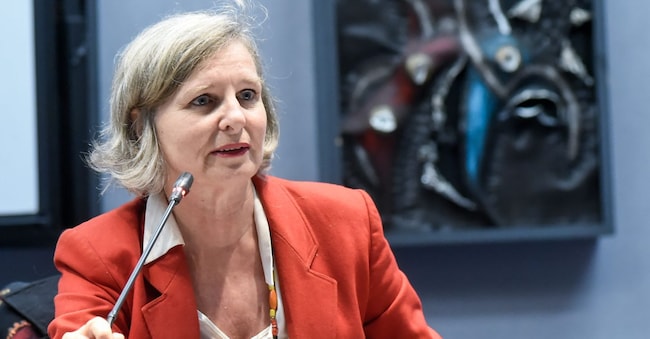
Paola Di Nicola Travaglini  Imagoeconomica

4' min read

Translated by AI
Versione italiana

4' min read

Translated by AI
Versione italiana

It is always one of the first comments heard following the discovery of an abuse or a femicide: ‘He was such a nice lad’. Even if he has abused, beaten, harassed, raped or even killed. In the words of those asked to describe the perpetrator of violence against women, that judgement is almost inevitable. It reveals a world of underestimation, stereotypes and cultural complicity. It is no coincidence that Paola Di Nicola Travaglini, a judge at the Court of Cassation who has been at the forefront of the fight against male violence against women for thirty years, has made this the title of her latest book, published by HarperCollins: “He was such a nice lad”. It is a sort of compendium of the alibis put forward to protect perpetrators of violence, acting as a safety net and a means of collective soul-searching, but also a toolkit for dismantling them.

Why are the so-called ‘nice lads’ who end up preying on women getting younger and younger?

Loading...

The first reason is the age at which young people start using social media, which exposes them, without any filters, to distorted models of masculinity based on the flaunting of sexual performance and the ability to control women, including through forms of aggression and domination. This subculture fuels a narrative that commodifies girls’ bodies, treating them as objects, trophies of male power.

Has there been a step backwards from the achievements of the 1960s and 1970s?

Those achievements have not become part of popular culture. One need only look at how many TV series continue to harp on about serial killers who target women. Women are portrayed as the quintessential victims, and social media is exponentially amplifying outdated and misleading messages. Without adopting a gender-based perspective, social relations remain trapped in prejudice and asymmetries.

Is this why, in our eyes, young people remain ‘good’ even when they rape and kill? 

Yes, because the ‘good lad’ is the one right here amongst us, the one we raise in our homes and within our families. He is the one whom nobody teaches to accept ‘no’, to recognise the authority of women’s voices, and to see women’s freedom as a value rather than as a threat to masculinity and to men.

So how can you protect yourself? What are the warning signs that girls can look out for?

The first red flag should go up when, in a relationship, you do not feel valued, but rather humiliated and restricted, starting with the simplest aspects of daily life: the way you dress, the colour of nail varnish you choose, or the freedom to go out with friends without being tracked. Control and humiliation are the two warning signs to watch out for: they mean that the relationship is not an equal one, but is based on the suppression of one’s freedom. This includes freedom of speech: when you start to fear expressing your own point of view, something is wrong.

Giulia Cecchettin’s confidences to her friends, however, show that even when the warning lights come on, the girls often don’t manage to save themselves. What do we need to learn to do?

Loading...

First and foremost, we must avoid confusing jealousy – which is a personal and intimate feeling – with coercive control. We must not use flowery language to distort something that has nothing to do with affection or love. And I would advise young women to confide in a trusted adult at the very first sign of alarm. In the most serious cases, contact a women’s refuge or call 1522.

You conclude your book with a letter to fathers. Why?

The father is the primary role model of masculinity for his sons, as studies on intergenerational violence have shown. If he displays aggression, domineering behaviour and abuse towards his partner, daughters and women in general, it is likely that his sons and grandsons will repeat the same behaviours. Conversely, if he embodies a new form of empathetic masculinity – one that values vulnerability, tenderness and care – he offers his sons a new role model with whom they can identify. The same applies to daughters: their father’s gaze is the first male gaze they encounter. If he is grateful, if he celebrates girls’ abilities without focusing solely on their physical appearance or resorting to stereotypes, and if he encourages their freedom, then once they grow up, they are unlikely to be drawn to a violent and controlling man. Fathers today have a historic opportunity. To them I say: give telescopes to girls and irons to boys. You can change the world. For the better.

In the face of a culture that seems to be regressing, we now have a robust body of legislation. What, in your view, is still needed to complete the picture?

Compulsory training for teachers, healthcare professionals, social workers, psychologists, the police and the Carabinieri. Fortunately, for magistrates, this was included in the law that established the offence of femicide. Training must be provided for the entire chain of professionals who deal with, or who might be able to identify, warning signs at an early stage.

Copyright reserved ©
Loading...

Brand connect

Loading...

Newsletter

Notizie e approfondimenti sugli avvenimenti politici, economici e finanziari.

Iscriviti