Berlinale

'Good Luck, Have Fun, Don't Die', Verbinski's dystopia against AI

At the Berlin Film Festival the new film by the director of the 'Pirates of the Caribbean' saga. In competition the very bad 'Rosebush Pruning'
by Andrea Chimento

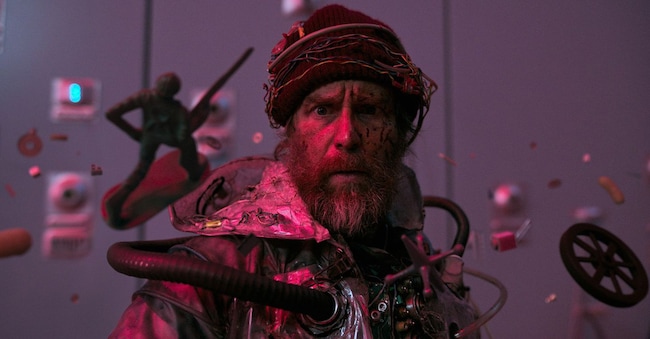
Una scena tratta dal film «Good Luck, Have Fun, Don’t Die»

3' min read

Translated by AI
Versione italiana

3' min read

Translated by AI
Versione italiana

It has been a good nine years since the release of Gore Verbinski's last film: it was in fact 2016 when the director of 'The Curse of the First Moon' and 'Rango' brought 'The Cure from Wellness' to cinemas around the world, a only partially successful horror film in which Verbinski returned to the genre that had given him enormous success with 'The Ring'.

Now, finally, in the Berlinale Special section of the German festival he has brought his new creature, which plays with dystopian science fiction: 'Good Luck, Have Fun, Don't Die'.

Loading...

The film opens in a Los Angeles coffee shop, where a mysterious man who claims to be from the future shows up. His goal is to recruit the right combination of customers from the café to form a team capable of eliminating a dangerous artificial intelligence and thus save the world.

Alternating between funny and truly disturbing moments, Verbinski signs a successful apologue in which the main target is the spasmodic use we make of technology, smartphones and artificial intelligence itself.

Entertainment is thus combined with brilliant reflections on the (possible?) drift of the contemporary world, through futuristic and surreal narrative choices that also have much to do with certain aspects of our present.
Among the characters, well-written by screenwriter Matthew Robinson, the figure of Ingrid, a girl allergic to smartphones and Wi-Fi, stands out. She provides several extremely touching passages.

Unbridled citationism

Starting with 'La jetée' (and, thus, also with its remake 'The Army of the 12 Monkeys'), 'Good Luck, Have Fun, Don't Die' is a film that takes up a lot of cinema of the past, through blatant references ranging from 'Terminator' to 'Night of the Living Dead', all the way to 'The Matrix' and possible connections also with the 'Black Mirror' series.

This may perhaps be the limitation of a product that mixes many things that have already been seen, but Verbinski nonetheless manages to give personality and originality to a courageous production that is capable of shaking you from start to finish.

The conclusions are perhaps a little too many, but at the end of the credits there is more than something to think about, and the performance of the entire cast and, in particular, of the protagonist played by Sam Rockwell should also be emphasised positively.

«Rosebush Pruning»

Rosebush Pruning

Instead, the competition featured 'Rosebush Pruning', a new film by Brazilian director Karim Aïnouz, strongly and explicitly inspired by Marco Bellocchio's masterpiece 'I pugni in tasca'.

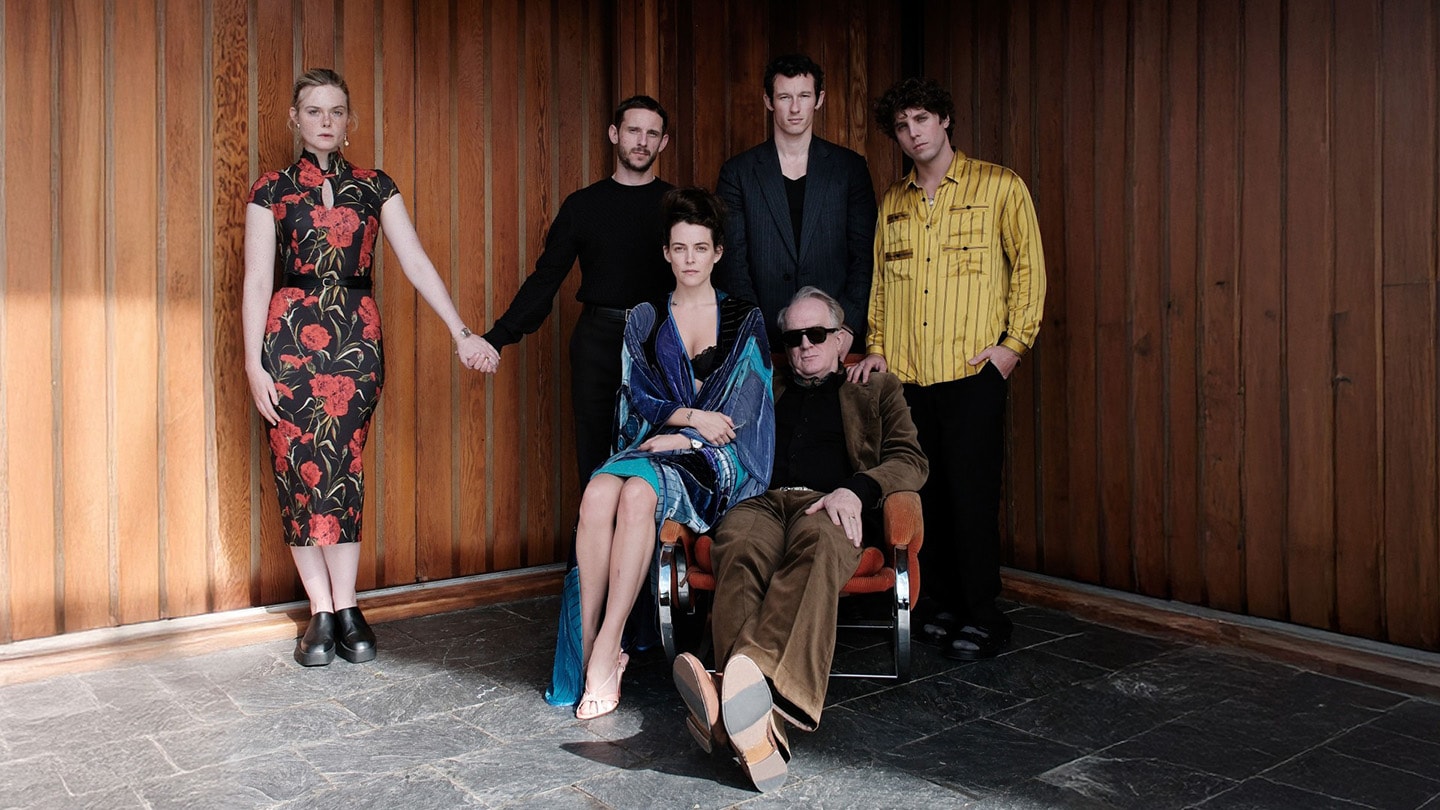
Set in a large villa in Catalonia, the film centres on a family consisting of a blind father and his four children. When Jack, the eldest brother, announces that he wants to move out to live with his girlfriend, the already delicate family balance comes crashing down.

Written by Efthimis Filippou (a regular collaborator of Yorgos Lanthimos), 'Rosebush Pruning' opens badly and ends worse, stringing together a series of sequences that are simultaneously irritating in content and embarrassing in form.

In an attempt to scandalise on themes that have ceased to be uncomfortable in cinema for at least forty years, Aïnouz raises the bar of morbidity in the relationships between the characters and only ends up achieving an unintentional ridiculousness that becomes apparent at various moments in the narrative.

Once an important director (think of the beautiful 'The Invisible Life of Eurydice Gusmão'), the Brazilian auteur was already on the decline with his previous films - 'Firebrand' and 'Motel Destino' - but here he clearly reaches the lowest point of his career, giving life among other things to a 'remake' (if one can call it that) among the most pointless and forced of recent years. Moreover, as if that were not enough, none of the performers in the rich cast at the director's disposal work: from Callum Turner to Riley Keough, via Pamela Anderson and Jamie Bell.

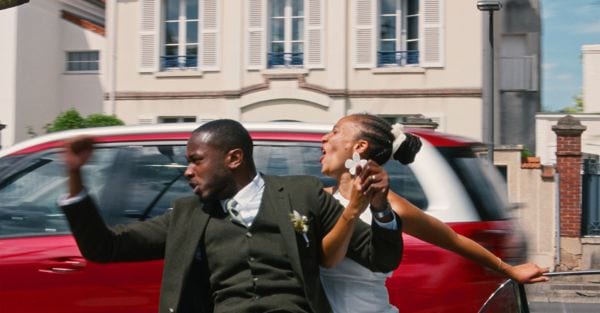
Una scena tratta dal film «Dao»

Dao

Among the films seen in competition was 'Dao' by Alain Gomis, a Parisian director born in 1972 to a Senegalese father and French mother.

These two souls are fully brought together in this feature film, which opens with a casting call to enter a film production. Actors and non-actors will all find themselves together celebrating a wedding in Paris and commemorating the disappearance of a patriarch in Guinea-Bissau.

Often included in the programme of the Berlin Film Festival (it is worth mentioning especially 'Félicité', Grand Jury Prize in 2017), Gomis has created a torrential tale, where reality and fiction intermingle, deliberately going so far as to confuse even the audience about the figures we see on the screen.

The approximately three-hour duration is indeed excessive and there are too many tired moments, but it is at least an operation capable of arousing curiosity and endowed with a precise and interesting directorial intent.

Copyright reserved ©
Loading...

Brand connect

Loading...

Newsletter

Notizie e approfondimenti sugli avvenimenti politici, economici e finanziari.

Iscriviti