
Good news, animal welfare on European chicken farms increases
Being Animals: in Italy Carrefour, Cortilia, Eataly and Fileni now guarantee the standards of treatment required by animal welfare organisations

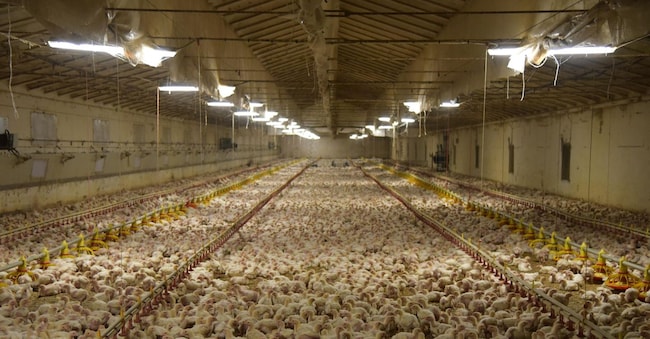
The number of companies across Europe committed to improving the conditions in which chickens are kept is growing. Almost 400 companies and supermarkets now adopt better standards for animals and consumers, with a positive impact on the living conditions of more than 260 million chickens. Among the companies operating in Italy are Carrefour, Cortilia, Eataly and the producer Fileni.
The data come from the association Essere animali, which released in Italy the report European chicken commitment progress drawn up by the Open wing alliance - the international coalition that brings together a hundred organisations including Essere Animali - which takes stock of the progress made by the European food industry to eliminate the major causes of suffering for chickens bred for meat production. From the UK to France, via Norway, Germany and Spain, Europe's major producers are taking important steps to put animal welfare at the heart of their business policies.
Italy, in spite of progress, is still at the bottom of the list: "There is a lack of commitment on the part of the main Italian brands, including Coop, Conad and Esselunga," says Simone Montuschi, president of Essere Animali. "It would be important for them to adhere to the minimum standards set by the European Chicken Commitment (Ecc), thus demonstrating to their customers that they care about animal welfare and the quality of products sold on the shelves
According to estimates by the Open wing alliance, the commitment of the companies that have adopted the Ecc will lead to a reduction in suffering for more than 1.3 billion animals each year. Among the large international chains that have signed up are Aldi, Carrefour, Lidl, Waitrose and Marks & Spencer: the latter reported a 33% increase in poultry meat sales after the transition to the Ecc. Norway's Norsk Kylling produces 100% chicken meat in line with the Ecc criteria and has seen a 79% reduction in animal mortality. The producer Plukon Food, on the other hand, after adhering to the minimum standards suggested by animal welfare associations, announced that it had reduced its use of antibiotics by more than 100 times.
The European chicken commitment, Essere Animali recalls, is a call from civil society to meet higher animal welfare standards for chickens raised for meat production. Based on scientific evidence, the Ecc standard aims to reduce the suffering caused by intensive farming, including high stocking densities and the use of fast-growing breeds, which cause these animals to reach their ideal slaughter weight in just 30-40 days, with serious damage to their bodies. It is precisely the introduction of slow-growing chicken breeds that is related not only to direct animal welfare benefits, but also to higher meat quality. An obvious sign resulting from the use of fast-growing breeds on chicken welfare and meat quality is the occurrence of white striping, a myopathy manifested by white stripes of fat and scar tissue on the breast, visible even to the naked eye. This disease, indicative of inadequate rearing conditions, affects between 50% and 90% of fast-growing chickens, those mostly used in intensive farming, from which - says Essere Animali - 9 out of 10 Italian chickens come.


