
Goodbye museum: the former Mint of Rome becomes an office building
From creative hub to desk and car park. The Poligrafico di Stato cancels a project that had been awaited for years and for which 35 million euro had been earmarked
4' min read
Key points
4' min read
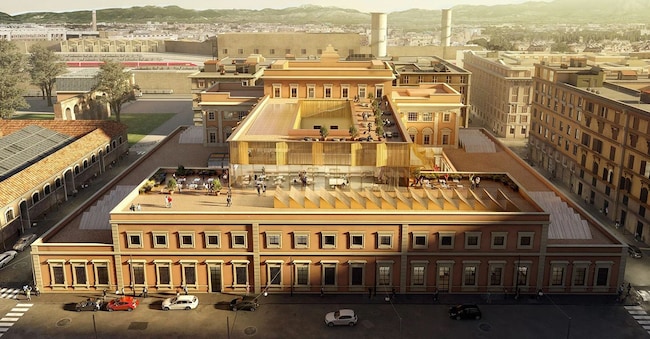
It was supposed to represent the cultural rebirth of the Esquiline district but, despite the enthusiasm, the redevelopment project of the former Mint of the Istituto Poligrafico dello Stato (IPZS) was turned upside down just a few months before its completion, breaking the promise of a new major cultural hub in the centre of Rome. The project, approved in 2021 with an investment of €35 million, aimed to transform the monumental building in Via Principe Umberto into an integrated cultural hub where the exhibition functions of the new Mint Museum would be intertwined with the workshops of the prestigious School of the Art of Medals, a guesthouse, a library, a bookshop, a cafeteria and a catering area open to the public. Instead, when the construction site was almost complete, the cold shower arrived: the complex will become an office building. The decision was taken by the IPZS through a design variant that effectively cancelled the cultural facility initially planned, allocating over 8,000 square metres out of a total of 11,000 to internal administrative functions.
A silent reverse
.The original project, signed by studio Atelier(s) Alfonso Femia with the curatorship of Progetto Zenone, envisaged the recovery and enhancement of the industrial archaeology of the former State Mint. The FAM - Fabbrica dell'Arte e dei Mestieri (Factory of Art and Crafts) was to be built inside, conceived as an urban laboratory where culture, craftsmanship and innovation could dialogue, offering the neighbourhood a dynamic, open space capable of connecting the historical heritage of Italy's first Mint with the city's contemporary needs. Today, however, little more than a memory remains of that original vision. In fact, with the variant approved by the Interregional Superintendency for Public Works for Lazio, Abruzzo and Sardinia of the Ministry of Infrastructures and Transport, the complex will be used mainly to house administrative offices, a company canteen and the headquarters of the Carabinieri Anti-Counterfeiting Command. The Mint Museum will remain but in the peripheral premises in Via Salaria, while the historic School of the Art of Medals will be transferred to Via Nomentana. Completing this downsizing is the increase in the space allocated to company car parks, from 800 to over 1,100 square metres. A functional redesign that effectively empties the project of its symbolic and cultural charge, robbing the Esquiline district of a rare opportunity for urban regeneration and social revitalisation.
According to IPZS, the project revision was due to 'changed needs'. At least this is how it is stated in the technical report approved in March 2025, which states: 'the changed needs that have developed within the Contracting Authority have led to the development of a design variant'. However, behind this formal motivation, economic considerations also seem to emerge. The IPZS itself, a wholly state-owned company whose profits are earmarked to reduce the public debt, has specified that completing the project in its original formulation would have generated annual losses estimated at between 2 and 3 million euro, out of a total turnover of around 500 million. An accounting justification, in short, that raises much broader questions about the state of the cultural sector in our country. But is this really the parameter by which we intend to measure the impact of culture? Because if its value is reduced to a mere budgetary item, the most serious risk is not economic loss, but the far more insidious risk of a progressive civil and cultural impoverishment, destined to spread far beyond the confines of a single project.
The case reaches Parliament
.The controversial change of use of the former State Mint has also provoked reactions and questions on the political front. In recent months, two parliamentary questions have been submitted to the Ministry of Economy and Finance: one signed by Paolo Ciani (Demos) and the other by Valentina Grippo, vice-president of the Chamber's Culture Commission. Both deputies criticise the transformation of a project conceived for public and cultural purposes into a simple building for administrative use, denouncing the loss of a concrete opportunity for urban regeneration for the Esquilino district.
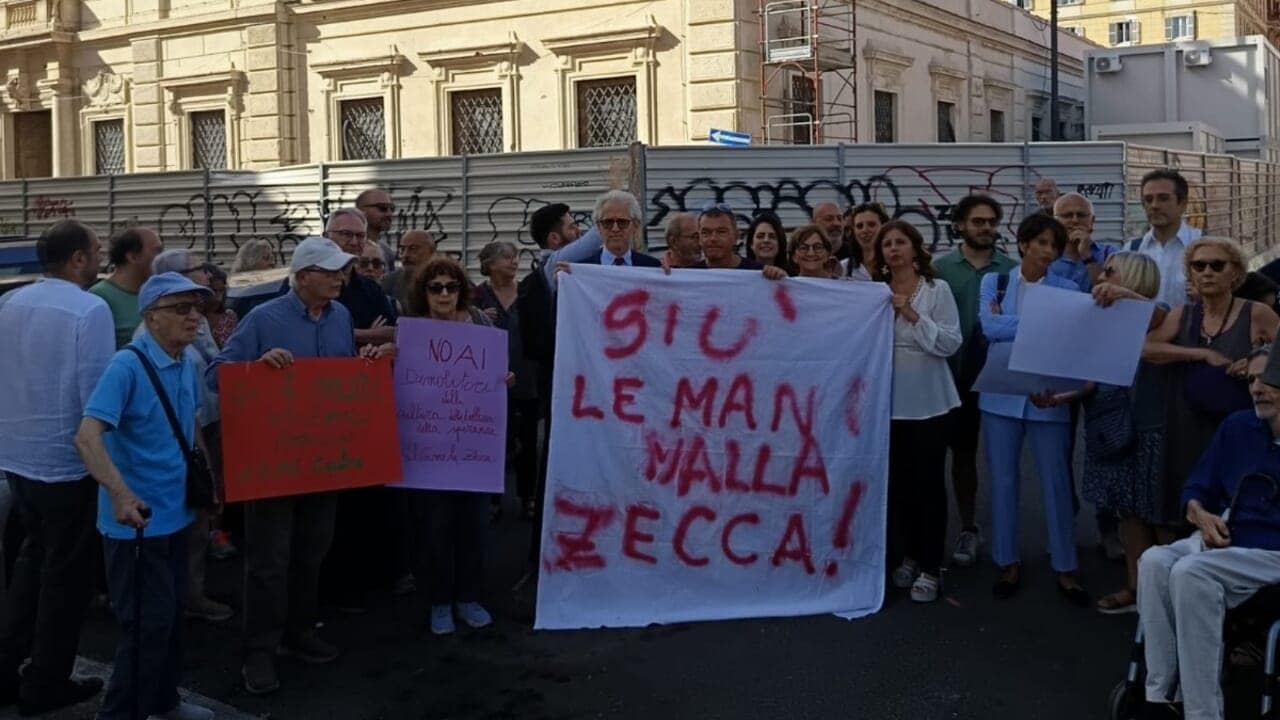
But that is not all. In recent weeks, the protests have intensified: first the residents of the Esquilino district organised a flash mob in front of the former State Mint, then a new parliamentary petition was presented. It was promoted by Michela Di Biase, who addressed both the Ministry of Economy and Finance and the Ministry of Culture, asking for clarifications on the radical change of use of the building in Via Principe Umberto, as well as a check on the possible risk of damage to the Treasury linked to the museum projects already approved and financed, but never actually implemented. The appeal also raises a crucial question: how was it possible to authorise a change of use in light of the opinions expressed by the competent Superintendency? What will now be the fate of the bound machinery and artefacts of the historic School of the Art of Medals, especially considering that the only museum dedicated to preserving the precious collections of the First State Mint, in Via Salaria, is now practically inaccessible?

