
Goodbye sandwich from home, now coming with a rider: food delivery to school is causing controversy. Controversy with headmasters
Photographing the discontent was a recent survey by Skuola.net, which asked students directly what they thought of these restrictions. The result is a clear rejection of the ban

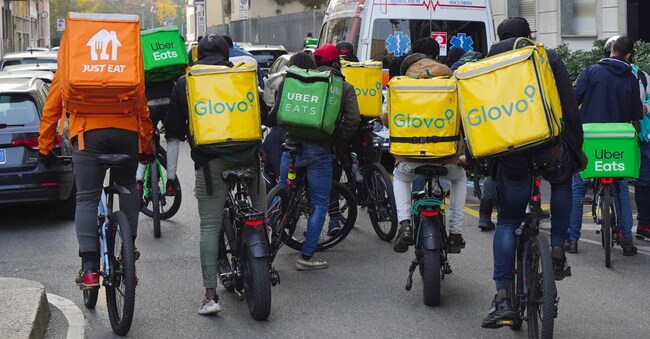
Once upon a time, there was the ritual of the sandwich prepared at home, carefully wrapped in tin foil and stuffed in the backpack between the maths book and the diary. Or, for the lucky ones, there was the headlong rush to the grocery store down the street or the café across the street from school, before the bell rang. Today, in the era of "anything and everything", recess is instead changing face: snacks are not wrapped, they are "ordered" with a tap on the smartphone.
The viral video
The phenomenon exploded in all its evidence in recent days, when on social networks - particularly on TikTok and Instagram - a video went viral of a group of students intent on having a carton of food delivered by a rider directly from the classroom window, despite the fact that their school had strictly forbidden it. An image that makes one smile at its brazenness, but which has opened up the debate on a practice, that of food delivery at school, which is much more widespread than people think. And, above all, increasingly opposed by institutions.
The Ban and the Survey
A ban that those directly concerned are finding hard to digest: a survey conducted by Skuola.net, in which 2,859 students from the portal's community participated, confirms that as many as 8 out of 10 are absolutely against the restrictions.
The wall of headmasters: 'Food forbidden' (but there is a reason)
While students are dreaming of hamburgers, sushi or poke to be eaten at the counter, school managers all over Italia are, in fact, raising the barricades with circulars. From North to South, many institutes are putting in black and white an absolute ban on the use of home food delivery services, under penalty of heavy disciplinary sanctions.
But why so much rigidity? The reasons for the 'no' derive not so much from the rage against teenage appetites, but from precise regulations on safety, hygiene and responsibility.
Firstly, there is a problem with access to school premises: having unknown deliverymen arrive at the entrance or at the gates of the institution prevents the internal staff from tracking who enters and leaves.
Secondly, there is the issue of food traceability: the school cannot take responsibility for food prepared outside, transported in unverifiable conditions and potentially risky for allergy sufferers.
Finally, there is the nuisance factor: the hustle and bustle of riders during lessons or recess risks paralysing normal teaching and supervisory activities.
Students want to feel free to order: Skuola.net survey
But if the headmasters shield themselves with regulations, the students are not happy to pass themselves off as mere transgressors and raise a real issue: the inadequacy, in many cases, of school refreshment services. Photographing the discontent was a recent survey by Skuola.net, which asked students directly what they thought of these restrictions. The result is a clear rejection of the ban.

Brand connect


Newsletter Scuola+
La newsletter premium dedicata al mondo della scuola con approfondimenti normativi, analisi e guide operative
Abbonati