
Growth in cargo handled by Italian ports in the first half of 2025
The Assoporti-Srm report counts 250 million tonnes or +1.2% compared to 2024. Containers drive traffic
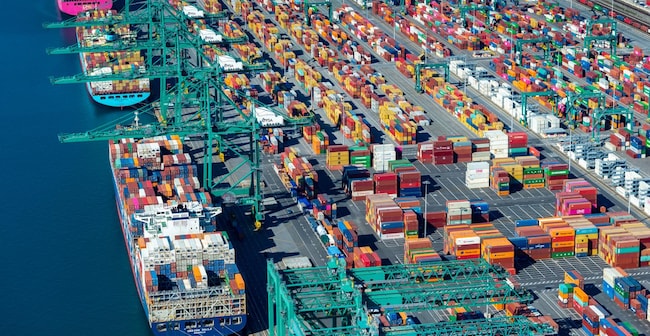
The activity of Italian ports will grow in the first six months of 2025, with almost 250 million tonnes of goods handled (+1.2% compared to 2024). This is the result of the six-monthly Port Infographics report, published periodically by Assoporti and Srm (a study centre reporting to Intesa Sanpaolo). It is containers and dry bulk that are driving traffic (+2.6% and +18.9% respectively). Liquid bulk declined by 3.5% and ro-ro (rolling stock) traffic by -1%.
Passengers (almost 30 million) and cruises (5.6 million), on the other hand, are accelerating, both up 5.8%. On the sustainability front, the study emphasises, 'the development of dock electrification in ports continues, with statistics showing 25 connection points for cold ironing (electricity supply to ships at the dock, ed.) contracted or installed'.
In 2025, according to the report, 'maritime trade will reach a new record of 12.8 billion tonnes transported by sea. It is also estimated that the container sector will grow by 14% by 2029'. It also emerges that the Mediterranean, 'in terms of container volumes handled by ports, is more important than Northern Europe: in 2024 the Mare nostrum handled more than 82 million teu (20-foot containers, ed.) against 61 in Northern Europe.
The business of intra-Mediterranean trade
Intra-Mediterranean traffic (short sea shipping), then, "is and will be, in the future, one of the major maritime businesses: in addition to Italy, Turkey, Egypt, and Spain stand out as the most dynamic countries to activate this type of traffic for container import-export. Total short sea traffic in the Mediterranean counts, for EU countries, almost 630 million tonnes of goods".
The Italian port system, says Assoporti president Rodolfo Giampieri, "is confirmed as strategic in the European and Mediterranean panorama, as we can see from the data we have collected from the Port System Authorities and which, as always, we have processed thanks to the collaboration with Srm. Now we must be able to seize the opportunities and adapt to the changes taking place, which I am sure will happen".


