
When your home stops just following orders and starts to understand. The impact of the Google Home Speaker with Gemini
Compared to Amazon’s Alexa, Google is bringing a different approach to home artificial intelligence

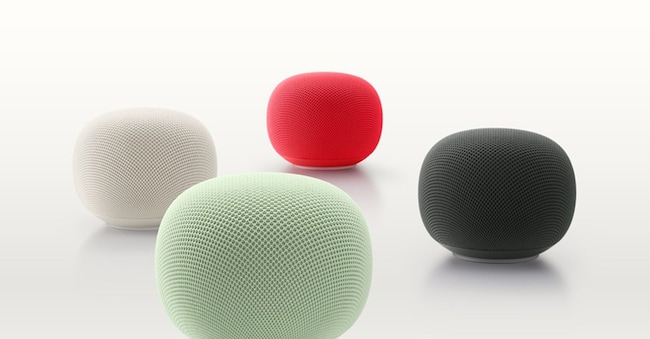
For years, we’ve been talking to smart speakers as if we were speaking to an automated switchboard. Short sentences. Precise commands. Little imagination. Now Google is trying to change the rules of the game. The new Google Home Speaker is the first smart home device designed around Gemini, the artificial intelligence model that represents a generational leap forward compared to traditional voice assistants. It’s not just a speaker. It’s a conversational interface for the smart home. The difference is simple to explain. Up until now, we asked. It carried out the task. Now it should also understand. In this regard, the challenge with Alexa
From syntax to natural language
The revolution lies in the software. Gemini for Home transforms the speaker into a sort of domestic assistant. You can chain together multiple requests in a single sentence: dim the lights, start a playlist and set a timer without having to issue three separate commands. Even more interesting is its ability to handle logical relationships. For example: “Turn off all the lights except the one on the bedside table”. It might seem like a minor detail. It isn’t.
For years, the smart home has been a collection of smart devices forced to behave like not-so-smart machines. Users had to learn the system’s language. Now it is the system that tries to learn the user’s. Even mistakes become tolerable. If you change your mind mid-sentence, Gemini recalculates the meaning without forcing you to start all over again. A bit like a person would do during a conversation.
The speaker who reflects on the context
The most interesting new feature is context handling. Google’s documentation states that if we ask what the weather will be like during our favourite team’s next match, Gemini doesn’t just look up a weather forecast. First, it identifies the date and venue of the event. It then links this information together and provides a coherent response. This marks the shift from mere search to understanding. It is an evolution that brings voice assistants closer to what researchers call ‘reasoning’: the ability to link different pieces of information to construct a response.
How does it work and what’s changed?
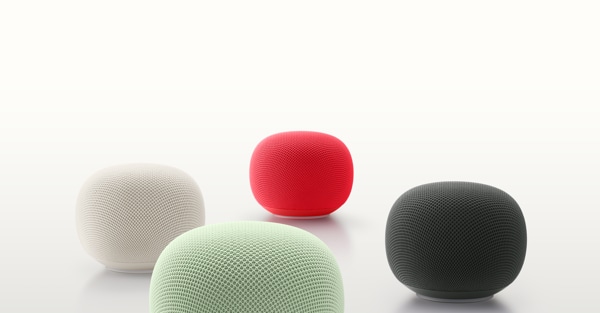
The casing utilises a three-dimensional textile manufacturing process that reduces production waste. At least 37 per cent of the materials used come from recycled components.A new light ring at the base visually indicates the device’s status: listening, processing, responding. On the back is a feature that is becoming increasingly important in the age of artificial intelligence: a physical switch that completely disables the three long-range microphones. A simple solution. Inside the speaker is a 2 GHz Quad-Core Cortex-A55 processor, supported by an NPU – a dedicated artificial intelligence accelerator. In short: some processing can take place directly on the device, reducing response times and reliance on the cloud. In terms of connectivity, it features Wi-Fi 6, Bluetooth 5.4 and, most importantly, support for Thread 1.3. For those unfamiliar with network protocols, Thread is a sort of common language for the smart home. Together with the Matter standard, it allows devices from different manufacturers to communicate without the need for constant translation.In practice, the speaker acts as the conductor of the home ecosystem. Great attention has been paid to the audio performance. The new 58-millimetre full-range driver is roughly twice the size of the one in the Nest Mini and delivers bass that is up to 2.5 times more powerful. Those who want to take it a step further can connect two speakers to the Google TV Streamer and set up a small home surround sound system. It won’t replace a dedicated hi-fi system, but it brings the concept of a home cinema into an affordable price range.


