Games

Schools: Google brings AI into the classroom – all the latest news for pupils and teachers

Personalised tutors for students, new research and study tools, AI integrated into Classroom, and features to help teachers track progress, resources and activities. Here’s what’s new

3' min read

Translated by AI
Versione italiana

3' min read

Translated by AI
Versione italiana

Artificial intelligence is set to play an increasingly integral role in learning and teaching as the new school year begins. During an online meeting with Google experts, new tools for teachers and pupils were unveiled. Gemini, Search, Classroom and Chromebook are being redesigned to transform AI from a general-purpose chatbot into a study companion and teaching assistant. Eligible students will also gain free access to Google AI Plus, with higher usage limits and 400 GB of storage space. The key shift is that AI is becoming an increasingly personalised tool for teachers.
Gemini becomes a personal tutor

One of the key new features relates to personalised learning. Within Gemini, students will be able to use study workbooks designed to help them understand what they know and, above all, where they still have gaps in their knowledge.

Loading...

The system uses tests to identify strengths and weaknesses and can draw up short, personalised study plans based on the student’s objectives. It works in much the same way as a digital private tutor: first it assesses the student’s level, then it decides which topics to focus on.

Gemini Live is also expanding. Students will be able to ask questions about and discuss the reports generated by Deep Research whilst on mobility programmes, turning AI-generated research into a conversation.
Google Search is also trying to teach

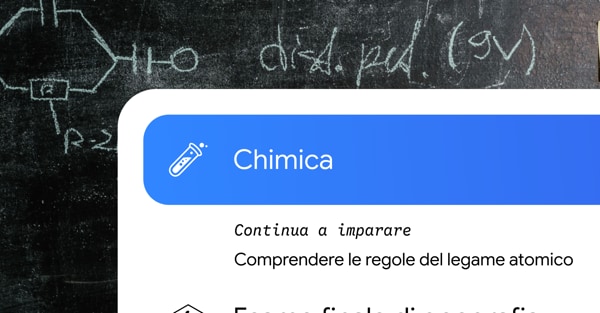
The changes also affect Google Search. The search engine is increasingly aiming to become a learning environment.
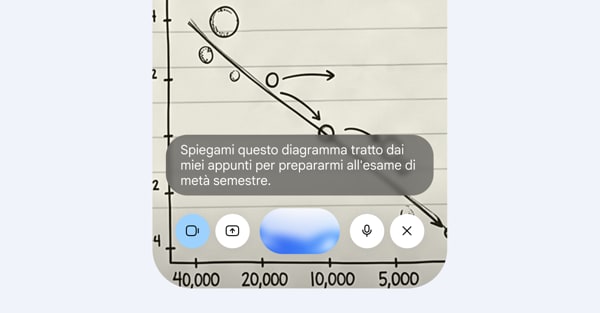
Students will be able to create interactive visualisations to understand complex concepts, take practice quizzes on various subjects – including standardised tests – and use Lens to work through problems step by step.

The difference compared with traditional web searches is substantial. It is no longer simply a matter of finding a page that contains an answer. Google wants to build the path to the answer directly. It is a sort of digital whiteboard that appears above the search engine.

AI comes to Google Classroom

The most interesting change, however, concerns teachers. Google insists on one principle: artificial intelligence in the classroom must be guided by the teacher.

Within Google Classroom, teachers will be able to create interactive study guides, materials for setting quizzes and personalised activities. They will also be able to choose which teaching materials the AI should use, so that Gemini remains within the scope of the curriculum set by the teacher.

The system will also provide information on how pupils use the materials, both individually and as a class. For the teacher, this means having a more detailed picture of the points at which pupils slow down or encounter difficulties.

Loading...

Gemini: homework, marks and resources

Google is also introducing a Classroom app linked to Gemini. The system can securely utilise assignments, marks and materials already available within the school environment to help teachers analyse pupils’ progress and create new, personalised activities.

This is where one of the most sensitive issues surrounding AI in schools comes into play: data. Google specifies that the Workspace for Education information used by these tools is not used to train AI models. The Classroom app linked to Gemini is initially being rolled out globally in English for Google Workspace for Education users aged 18 and over.

Chromebooks and Focus Mode

Then there is the age-old problem with digital schooling: distraction. If the same screen contains the textbook, Gemini, YouTube and the rest of the internet, the temptation to switch windows is built right into the hardware.

Google has responded with the Focus Mode feature in Class Tools on Chromebooks. Teachers can lock pupils’ screens onto a chosen activity – for example, Gemini Notebook – or provide support during an exercise whilst keeping pupils within the approved material.

A new Guided Learning mode will also enable real-time support to be provided during classroom activities.

The least visible new feature: the MCP protocol

Over the coming months, Google also plans to introduce an MCP (Model Context Protocol) server for Google Classroom.

It’s a technical acronym, but it gives a good indication of where AI is heading. MCP enables external systems to connect to data and tools in a controlled manner. In the context of schools, this means that external EdTech platforms will also be able to establish connections with the environment within Classroom.

It may well be the least eye-catching new feature in the whole package, but it is one of the most strategic. The next phase of artificial intelligence in education could, in fact, hinge less on the chatbot’s ability to answer questions and far more on its ability to understand the curriculum, the materials, the assignments and the actual level of the class.

In other words, Google is trying to take Gemini out of the chat box and into the day-to-day infrastructure of schools.

Copyright reserved ©
  • Luca Tremolada

    Luca TremoladaGiornalista

    Luogo: Milano via Monte Rosa 91

    Lingue parlate: Inglese, Francese

    Argomenti: Tecnologia, scienza, finanza, startup, dati

    Premi: Premio Gabriele Lanfredini sull’informazione; Premio giornalistico State Street, categoria "Innovation"; DStars 2019, categoria journalism

Loading...

Brand connect

Loading...

Newsletter

Notizie e approfondimenti sugli avvenimenti politici, economici e finanziari.

Iscriviti