
Gorizia-Nova Gorica, from cooperation to the first European Borderless Capital
Interreg resources and small initiatives fund decisive

3' min read
3' min read
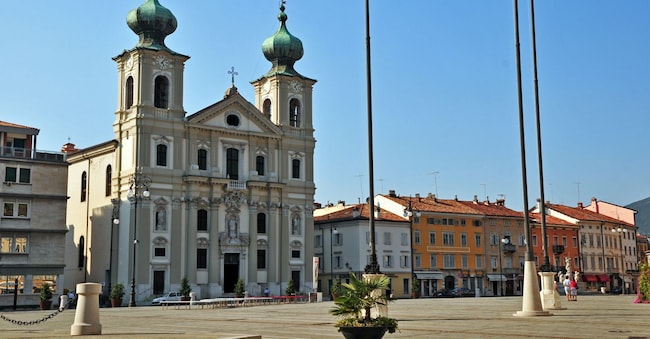
Not a point of arrival, but a beginning. One can clearly perceive from the words of the mayor of Gorizia, Rodolfo Ziberna, where the road of cooperation between the two cities is going. Gorizia and Nova Gorica, a single city until 1947, then divided in two by the Iron Curtain, is still divided between Italy and Slovenia.
Border territory, won the title of European Capital of Culture 2025. This is the first time that a cross-border city has held the title. And an important role has been played by the Interreg programmes between Italy and Slovenia: "We already had a path towards the European Capital with Interreg funds, which made it possible to finance events with contributions of 40, 200 thousand euro, realised by Italian and Slovenian partners," explained Ziberna.
The Small Projects Fund (Spf), was established in 2021 to support initiatives that can be realised within the framework of the European Capital of Culture 2025 Nova Gorica-Gorizia. The 6.5 million euros envisaged by the fund were allocated to the European Grouping of Territorial Cooperation Gect Go / Ezts Go founded by the municipalities of Gorizia, Nova Gorica and Šempeter-Vrtojba in 2011. To be financed were projects with "bottom-up"approach that aimed at "strengthening the role of culture and sustainable tourism in economic development, social inclusion and social innovation".
A virtuous collaboration
.But cooperation between the two neighbouring states began much earlier: the Interreg Italy-Slovenia programme was already active in 2006 and is currently funding 101 projects, including three of strategic importance (such as the cycling route along the Adriatic Sea coast between the two countries), with a total of EUR 88.6 million in the period 2021-27.
A collaboration that proved to be fundamental in achieving a goal such as Capital of Culture, especially in an area where historical memory is still very much present among citizens. "The greatest satisfaction was not the victory, but being a candidate. Because we know our border: there are still oppositions and discontents, on both sides. The walls that were torn down in 2004 and even more so in 2007 (when Slovenia entered into Schengen), remain in the minds of an important portion of citizens. Before 2007 there had been some hints of attempts at dialogue, but they were small things related to folklore, culture, sport. Here, the European Capital was a powerful accelerator of a process that was certainly underway, but that would perhaps have taken much longer'.

