The interview

Gota (Assogestioni): 'New forms of public-private alliance to support Italy'

The new president of Assogestioni praises the National Strategic Fund and proposes other ways to help SMEs that are no longer start-ups

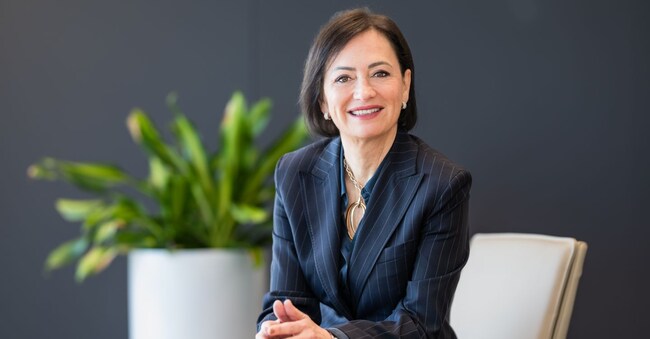
Maria Luisa Gota, Presidente Assogestioni

6' min read

6' min read

The 15th edition of the Salone del Risparmio kicks off today under the new leadership of Maria Luisa Gota, Assogestioni's first female president. Gota succeeds Carlo Trabattoni and will remain at the head of the asset managers' association for the next three years. Her election coincides with a complex, probably unprecedented historical period in which asset management could play an even more delicate role. And in her first public outing, the new president outlines with Il Sole 24 Ore the guidelines that will characterise her mandate.

A female figure as president is a novelty in the over 40-year history of the association. What will be the first moves?

Loading...

I will be able to draw up a precise programme in a month's time, after taking stock of all the open construction sites, also to see where we are in each case. Certainly, my mandate starts at a very interesting time, especially for the launch of the Saving Investment Union at EU level. A European Commission initiative that aims to strengthen the capital markets and offer new opportunities to European savers. For the time being, these are 22 strategic lines that will have to be declined and translated into a concrete operational plan over the next two to three years. In this scenario, Assogestioni cannot be a mere spectator of decisions that will affect Italian and European savings. Mario Draghi's and Enrico Letta's reports show that the transformations that Europe needs will also have to be financed with the contribution of EU citizens, in addition to public finances, and we as Italians are part of this wealth that must be channelled towards productive investments. This is the strand in which my presidency will be inserted.

In the course of the association's AGM in which she was elected, important innovations were already introduced.

The new statutes have been approved. The Executive Committee replaces what was previously called the President's Committee. But this is only a change of name and we will continue to work in continuity.

There is also the novelty of the deontological college. What is it?

The panel consists of three professionals from outside the association who will be consulted as wise men in relation to issues or disputes requiring a third, albeit non-binding, opinion. An additional resource for Assogestioni and the Managers' Committee.

In this regard, on the hot topic of minority lists, there is the inclusion in the statute of the already existing Management Committee.

It is a body established by Assogestioni, but operates autonomously from the association and participates in collective engagement activities through the composition of minority lists in the interest of fund subscribers. It follows the principles of stewardship to which investment houses are bound when they manage client money in a fiduciary manner. Its inclusion in the Articles of Association makes its activities even more explicit.

The first challenge that awaits you?

My goal is to gather concrete proposals for channelling the savings already under management and, above all, the approximately 1.5 trillion billions sitting idle in current accounts subject to inflation erosion towards investments supporting economic growth.

How?

Through European Pir or innovative forms of public-private collaboration. We have the great challenge of long term investing, that is, of extending the horizon of clients' financial planning, because this is the only way to steer them towards equity investments and even more towards private markets that can potentially return greater value over time. If we look at Covip's data, for example, given that pension funds are as close as we can get to the concept of long-term investment, we find that about a quarter of those under 35 tend to place themselves in guaranteed sub-funds. It goes without saying that there is much to be done in terms of awareness and financial education, but there is also a need to intervene on the automatic enrolment mechanism now active only on guaranteed lines for the silent ones.

You mentioned earlier forms of public-private collaboration. What do you mean?

There can be many ways. A recent example is Cassa Depositi e Prestiti's National Strategic Fund, where a public body acts as an anchor investor providing the initial capital to push managers to launch new products. This is one modality, but it is not the only one. Another could revolve around the central theme of growth capital, i.e. venture capital to be provided to companies at a stage when they are no longer start-ups and need patient capital for long-term growth. These are investments on which public actors could create innovative ways to provide risk mitigation measures, thus incentivising investment.

He also mentioned the European PPPs. But aren't we in danger of losing the objective of supporting the Italian real economy? Aren't there already Eltifs at EU level?

Eltif 2.0 is a vehicle that works well. In the original version they had several limitations, which were overcome with the recent revision. However, Eltif does not have a tax incentive: it is a European vehicle that if it invests 70% in Italy can be designed as a Pir under Italian law. So the European incentive could be understood as extending the tax benefit also to the 70% that Eltif invests in the EU and not only in Italy.

The theme of the 2025 edition of the Savings Fair has three key concepts: patient capital, progress and longevity. Can you go into more detail?

These are the three directions on which our industry must focus in order to create value for investors and support the economy. When people talk about patient capital, they usually think of pension funds, insurance companies, whereas in reality the idea of patient capital should belong to everyone because it is only through the ability to exercise the virtue of patience, as I mentioned earlier, that one is able to extend the periodic horizon and embrace investments that can offer superior returns in the long run. As far as progress is concerned, there are two main themes in relation to our industry: the digital transition and the use of artificial intelligence. Both can make what we do more efficient in the interest of both the financial sustainability of the SGR and to offer a higher quality service to clients. Longevity is there for all to see, and with longer life spans there is a need to lengthen the horizon of financial planning to ensure financial well-being when one is no longer an income earner. And the allies for setting aside enough money for the third and fourth ages are two: time and performance.

On the Italian PIR side, there is a return to bond products. Do you think they are a suitable vehicle for supporting the real economy?

It depends on what they invest in. In general when we talk about the real economy we think of the unlisted world. The PIR was originally created in the segment of listed SMEs with the aim of providing liquidity, but it is a different approach than pouring capital into private markets where there are unlisted companies. Here, debt capital in the form of bonds or loans can be used primarily to finance the company's ordinary operations or business activity. But to invest in the medium to long term with the aim of sustaining growth, venture capital is needed.

Between bonds there are maturity funds that have had a considerable impact on savers. What do you think?

They have had the merit of restarting flows by intercepting clients' needs. Now, however, we need to bring investors' attention back to equity, balanced and flexible segments. A challenge that we as an industry must take up, even if the markets do not help us.

There is an increasing focus on passive instruments.

Etfs are used in the same way as low-cost bricks to build higher value-added products. On their own, they do not meet the objectives of client advice and planning. They should be used in a logic of complementarity, used to build more articulated products more tailored to the needs of savers.

The issue of sustainability no longer seems to be as central as in years past. Was this just a marketing operation?

An incredible amount of work has been done on sustainability with huge investments. It was a profound exercise in integrating sustainability factors into investment strategies, a great deal of engagement work through meetings with issuers and to verify transition plans and monitor issuer credibility. I think a huge effort was made and above all one of substance through an informed dialogue with issuers. There is no good reason why we should go back, but what has been done remains, perhaps with less publicity.

Copyright reserved ©
Loading...

Brand connect

Loading...

Newsletter

Notizie e approfondimenti sugli avvenimenti politici, economici e finanziari.

Iscriviti