
The governance of Italian football changes. Gravina reform passes
The FIGC assembly changed the electoral weight of the various components, recognising greater autonomy for Serie A, which did not vote in favour

7' min read
Key points
7' min read
The governance of Italian football has changed. At the Hilton Rome Airport hotel in Fiumicino, the Extraordinary Federal Assembly convened on 4 November for the amendment of the FIGC Statute therefore approved the proposal of president Gabriele Gravina by a large majority. At the meeting, the accredited delegates, 253 out of the 283 entitled, for a total of 461.69 votes out of 516, voted for Gravina's proposal, with the Serie A always avoiding any of its delegates to vote in favour: 8 votes against and 12 abstained.
The Gravina reform
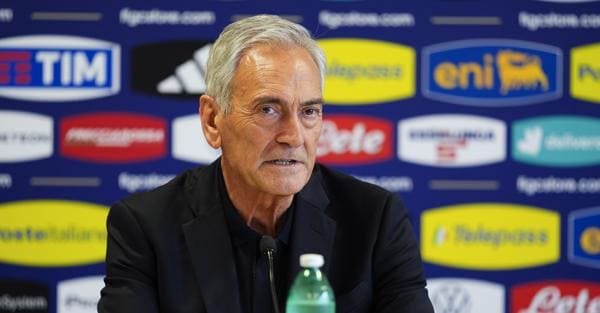
."The statutory changes that I am submitting to the Assembly's attention,' Gravina clarified in his speech before the vote, 'refer to 10 articles of our statute and move in four directions that can be summarised as follows: 1) Recognition of the full autonomy of each league in the organisation of its competitions; 2) Recognition of the so-called 'strong agreement' of the A League regarding all the regulations that concern it; 3) Restructuring of the representation of the professional leagues both in the Assembly and in the Federal Council; 4) Review of the role of the AIA.
The new electoral weights
.Thus, for Serie A, the federal councillors rise from 3 to 4 and the electoral weight from 12% to 18%. For the Serie B, the federal councillors rise from 1 to 2 and the electoral weight from 5 to 6%. The Lega Pro will have only one federal councillor and no longer two and the electoral weight goes down from 17% to 12%. The presence of the National Amateur League, which retains 6 councillors and 34% electoral weight, remains unchanged, as does the position of Aiac, the association of trainers with 2 councillors and 10% electoral weight and that of AIC with 4 councillors and 20% electoral weight. Out of the federal assembly is the Aia. The referees lose, in exchange for greater organisational autonomy, both the federal representative councillor and 2% of the votes.
Series A autonomy
.Organisational autonomy and recognition of the 'right of agreement': this is what the reform recognises for the Lega di A. An autonomy that for Gravina is even greater than that of the 'Premier League model', where the Federation has the 'right of veto' even on the election of the League's governing bodies and the latter must be totally independent. "With regard to this statutory modification,' Gravina said, 'I would like to underline how it was not requested by any state regulation and only transposes what the A League requested in two documents of 2022 and 2024.
The clash with politics
.Gravina did not fail to sink the blow in reference to those who have underlined in recent weeks the insufficient application in his reform of the principle sanctioned by the so-called Mulè amendment regarding the electoral weight to be assigned to Serie A in relation to the economic contribution given to the sports movement. "We have greatly appreciated," said Gravina, "the attention of those who have taken an interest in the requests of the A League linked to mathematical exercises of one point more or less of representation, but we would have appreciated even more if the exercise of such tenacity had been aimed at finally recognising the real needs of Italian football, which I have been committed to claiming for a long time: Tax Credit, a percentage on bets to be invested in nurseries and facilities, sponsorship from Betting, full adjustment of the legislation on apprenticeship and bureaucratic simplification for the construction and modernisation of infrastructures. These are the issues that urgently need to be addressed and that the world of politics must help solve'.


