
Gpt-oss (not Gpt-5) is OpenAi's most significant challenge
Sam Altman's open-weight Ai models are poised to redefine technological and geopolitical balances, but they also bring with them risks of misuse.

2' min read
2' min read
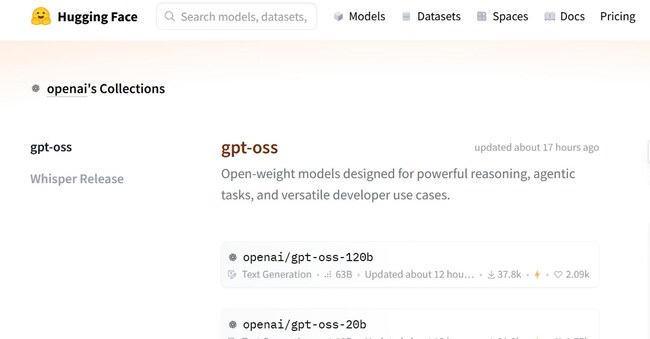
Gpt-5 may not be OpenAI's real August news. From a strategic point of view, Gpt-oss-120b and gpt-oss-20b, its first open-weight models since GPT-2, i.e. since 2019, represent a more significant breakthrough than the new and discussed version of ChatGPT-5. First of all, an explanation; 'open-weight' does not mean 'open source' in the full sense, but rather that the parameters defining the behaviour of the model are freely downloadable and modifiable thanks to a permissive Apache 2.0 licence.
It is a radical paradigm shift: before, only proprietary cloud; now, strong and transparent models accessible to everyone, from the big company to the researcher in pyjamas. The largest model - gpt-oss-120b - has 117 billion parameters, but only 5.1 billion are activated per token, using the mixture-of-experts (MoE) technique. The 'small' gpt-oss-20b (21 billion parameters, 3.6 activated) promises to run on a laptop with only 16 GB RAM.
Why is this important? Imagine that you have not only the assistant that answers you, but the machine itself: you can explore it, adapt it, experiment. Do you want to make it think differently, better, turn it into an operational agent? Now you can.
ChatGPT-5 (launched 7 August 2025) remains undoubtedly powerful: multimodal, with deep reasoning, but it is a closed model, handed over on a plate (albeit polished) to users. gpt-oss, on the other hand, invites you to take it apart, study it, transform it - a bit like going from looking at a work of art to being able to put your hands inside it (but you also need a steady hand).
There is also a geopolitical aspect to moving towards openness: a way to reassert Western leadership in AI development, in response to growing competition from Chinese open models such as DeepSeek R1. Yet, there is a disturbing counterpart: opening up the model also means putting yourself in the position of someone making unhealthy use of it. OpenAI knows this and has conducted adversarial fine-tuning tests, simulating abuse scenarios, with reassuring results - at least for now.


