
The grammar of the ancient walls of Rome
The Gravity of the Wall, solo exhibition by Amir Zainorin, open until 12 April

When, in a city like Rome, one speaks of walls, one might start by considering them as a mental form, as well as a historical object, because there, they do not just delimit space, but produce yesterday's and today's time, uniting it together. Walking along the stretch that houses the Museum of the Walls, the stone seems to function as an accumulation surface, a mineral archive in which the city has deposited centuries of defence, of crossings and pauses. It is not surprising then that this is where Gravity of the Wall, Amir Zainorin's solo exhibition, curated by Camilla Boemio, is located: not an exhibition 'about' the walls, but an exhibition that stems from their grammar. Roman walls have a special quality: they are neither romantic ruins nor celebratory monuments. They are functional structures that have outlived their purpose, defensive machines that have become urban landscapes. This ambiguity - between protection and obsolescence, between permanence and loss of function - constitutes the real terrain on which Zainorin intervenes.
A different measure of time
His work does not attempt to compete with monumentality, nor to comment on it didactically, but introduces a different measure of time that is slow and fragile, almost organic. At the entrance to a tower, the handmade paper of The Weight of Lightness stretches out like a silent repository. It derives from disused atlases, maps deprived of their descriptive authority with paper surfaces that do not tell of territories, but of the end of their certainty. It is a subtle gesture, we immediately think, almost archaeological, replacing the precision of the map with the tactility of the material. Sound, then, acts as a second layer of perception with drums made of wood and X-ray film that do not evoke folklore or exotic rituals, but function as instruments of resonance, capable of restoring the visitor's body's presence in space. Architecture, over there, needs no explanation and the museum becomes a sounding board. Zainorin often works with minimal slippage.
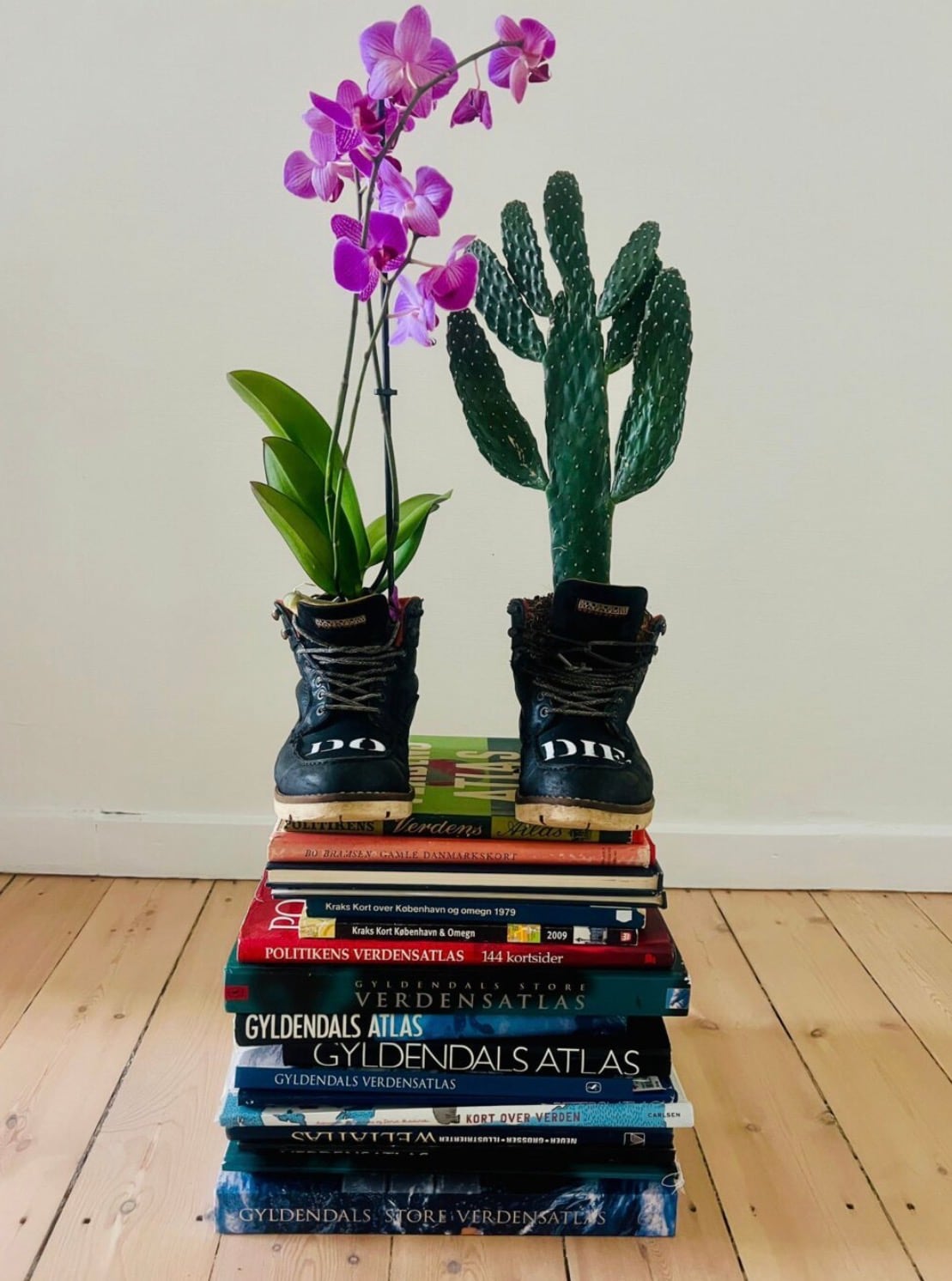
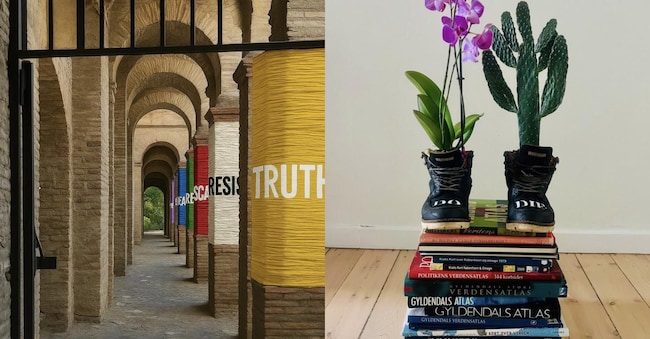
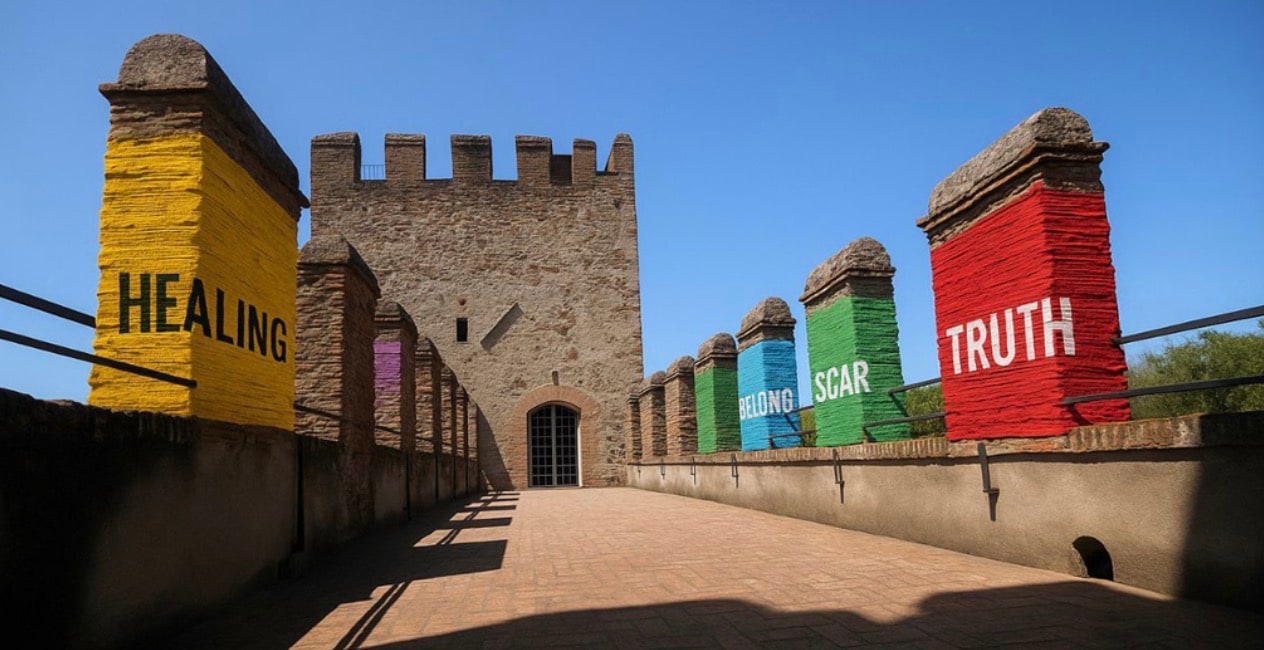
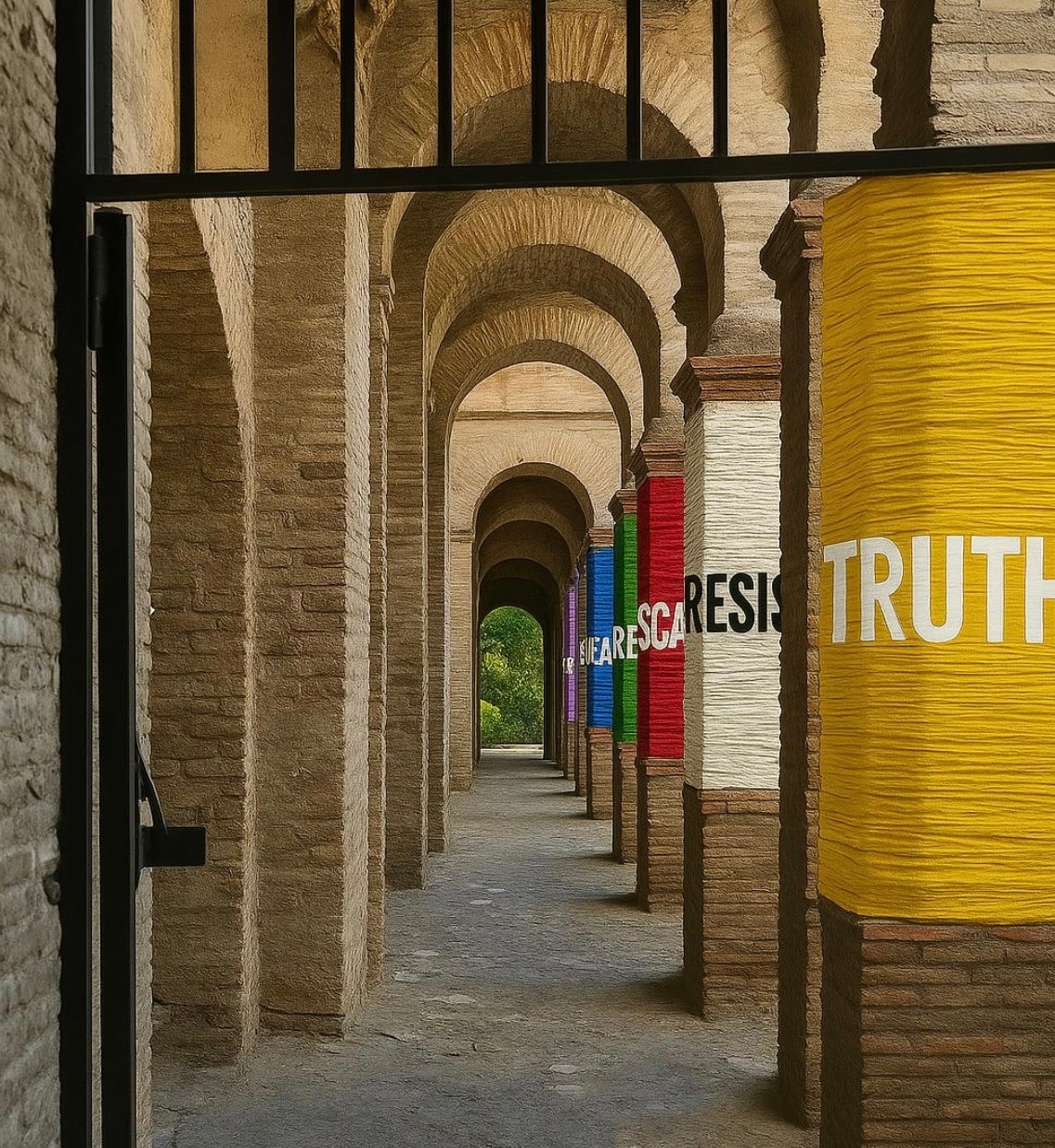
The Boot-ed boots, worn and almost resigned, are objects that retain the gesture of walking when movement is now absent. Similarly, the bandaged columns of the walkway do not transform the walls into a contemporary setting, but introduce a perceptual variation, as if the stone had suddenly become epidermis. The most interesting point of the exhibition does not coincide with a single work, but with the way the path forces the visitor to recalibrate his or her posture. And it is here that Boemio's curatorship works by subtraction, avoiding the spectacular installation effect and instead constructing a sequence of pauses, thresholds and slowdowns. In this sense Gravity of the Wall succeeds in a rare operation in Rome's historical venues, because it does not use the site as a prestigious backdrop, nor does it neutralise it with a self-referential contemporary language, but treats it as an interlocutor.
The walls remain what they are - mass, weight and continuity - but they also become an optical instrument through which to observe the precariousness of materials, bodies and maps. Stepping out onto the uncovered section, where the city becomes visible again beyond the battlements, one has the impression that the exhibition has added nothing to the museum and, at the same time, changed its temperature. This is perhaps the most successful result of the intervention: having transformed a defensive structure into a place of slow perception, where the stone does not dominate the gaze but holds it, forcing it to pause.
Museo delle Mura - Gravity of the Wall, the solo exhibition of Amir Zainorin, Rome, until 12 April

