
Recycling graphite from batteries: a European pilot scheme in Macerata
Developed by Orim in partnership with Sima, it is due to be completed by the end of 2027, with an investment of 5 million

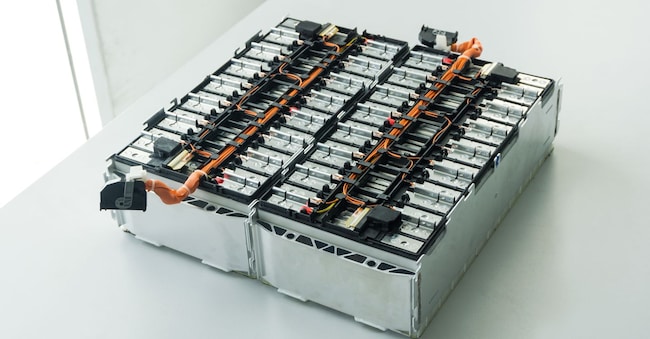
Europe’s first pilot plant for recycling graphite from lithium-ion battery waste is set to become operational in Macerata in the second half of next year. The project is being carried out by Orim, a Macerata-based company specialising in the research and development of innovative solutions for the management of industrial waste and critical metals, and Sima, which designs and builds high-tech plants in the province of Chieti. The project is called Graphirec; it has required a total investment of around 5 million, 3.2 of which came from a European funding scheme, and has been included by the European Commission on the Innovation Radar platform.
A breakthrough for the Italian critical raw materials supply chain, which currently stops at mechanical processing. Thanks to two patents, developed in collaboration with the University of L’Aquila, it will in fact be possible to integrate both thermal and hydrometallurgical processes at the same site, creating a closed-loop system for the use of graphite – a component which, accounting for almost half the weight of the battery, becomes a key element for both industry and environmental policy. Alfredo Mancini, founder and CEO of Orim, explains: ‘When it comes to batteries, the focus is mainly on lithium, cobalt and nickel, with the associated ethical and market issues linked to their supply; graphite tends to be overlooked, whilst the European Commission considers it a critical raw material and its recovery can consume up to 90 per cent less energy than mining’. Thus, recovering essential materials for use in sectors such as energy, the automotive industry and electronics is like establishing an urban raw materials mine – something Italia has lacked until now – thereby reducing the vulnerability of the European system and building genuine strategic autonomy. Furthermore, the initiative proposed by Orim brings together industrial and academic partners across the entire European battery value chain: a solid foundation for becoming a large-scale industrial model.
Mancini, who is also vice-president of Aidic, the Italian Association of Chemical Engineers, is focusing primarily on the medium term: “We want to encourage a shift in mindset regarding the sourcing and use of raw materials,” he says, “particularly for battery production, setting a precedent for future initiatives focused on the recovery of critical and strategic materials, up to 90 per cent of which Europe currently imports. Through recycling, the aim is to cover at least 25 per cent of this by 2030.” Brussels considers Orim’s project to be market-ready: according to Mordor Intelligence, the European battery recycling market is set to grow from 19 to 33 billion dollars between 2025 and 2030. On a trial basis, the plant has already produced over 20 tonnes of ultra-high-purity graphite (which the company claims to be 99.3 per cent pure), which has been sent to Norway to be used as a raw material for manufacturing new batteries.
Orim, 70 per cent of which is owned by the Xenon fund, is set to close 2026 with a turnover of around 27 million and has announced a new investment plan worth 9.5 million to build three rotary kilns and eight 8,000-litre reactors, which will be used for other innovative activities, such as the recovery of vanadium, cobalt and molybdenum (critical raw materials) and precious metals such as platinum and palladium, as well as for graphite enrichment processes up to 99.95 per cent purity.

