
‘AI? A great opportunity for SMEs and the Italian economy’
Marchesini (Confindustria): our businesses are ideally suited to artificial intelligence. Tripi (Almaviva): we need regulations, but the trend is unstoppable

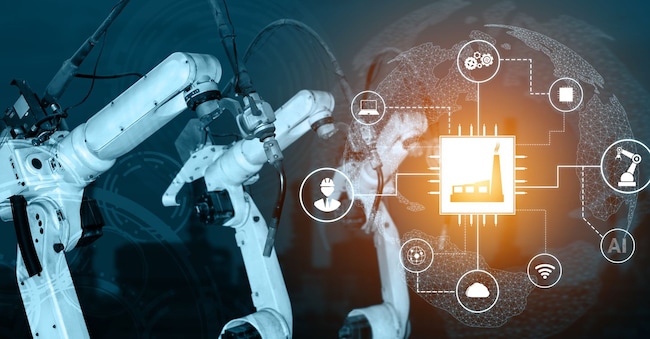
“Artificial intelligence is now part of everyday business life. It is not some unattainable monster.” Maurizio Marchesini, vice-president of Confindustria and Nomisma – the two organisations behind the Ai.Dea Forum, taking place on 16 and 17 October in Bologna and dedicated to the relationship between artificial intelligence and the business world – is convinced that it is an inevitable process, but one that benefits the system. “We will try to demonstrate, through concrete examples, how artificial intelligence represents a great opportunity for the Italian economy – for large businesses as well as small ones. Artificial intelligence is accessible, inexpensive and easily adaptable to our way of doing business.”
Drawing on specific examples, Marchesini explains how the use of AI has long been part of the companies within his group, but also how we have now reached a turning point. “We started using artificial intelligence to do the things we were already doing better. The results were immediate. Products have improved significantly and productivity has increased. Og we have realised that AI can help us find solutions we hadn’t imagined, new paths that are completely unexplored in our processes and for our products. It’s an opportunity we cannot afford to miss.”
The vice-president of Confindustria and Nomisma broadens the discussion to the Italia economy as a whole. The AI market has reached an estimated value of around 1.8 billion euros, with growth of 50 per cent between 2024 and 2025. But it is developing at two different speeds. 84 per cent of large enterprises have already purchased licences for generative artificial intelligence, whilst only 8 per cent of small and medium-sized enterprises have launched structured projects. Italia ranks eighteenth out of the twenty-seven European Union countries in terms of AI adoption. “The solutions offered by artificial intelligence,” says Marchesini, “seem tailor-made for our industrial system in terms of the size of our businesses, the ability to offer bespoke products, and to occupy new market niches. AI is the perfect tool for this type of work.”
But it is also the tool with which we can overcome the system’s weaknesses. ‘We are facing a declining population and a skills shortage. Artificial intelligence can help us bridge these endemic gaps in our country. Provided, however, that we delve deeply into the subject, understand the potential of the technology, and enhance our skills and knowledge. Today, artificial intelligence can be programmed – the so-called ‘codes’ – in a conversational manner. We will need fewer programmers, but more analysts capable of understanding the specific needs of individual companies and markets.”
To complete this process, which is already underway, we must start by forging a new relationship between businesses and universities. ‘We need to show more of a collaborative spirit towards one another. Universities and start-ups often have innovative business ideas, but lack the practical skills needed to put them into practice. Conversely, businesses need more fundamental knowledge. We must make a concerted effort to complement one another, in a spirit of collaboration.’


