
Greece: there are young farmers. The problem is persuading them to stay
In Greece, generational renewal does not mean attracting new farmers, but preventing existing ones from leaving the countryside
by Silvia Martelli (Il Sole 24 Ore) and Mike Konstantopoulos (Efsyn, Greece)
 Aggiungi Il Sole 24 Ore
ai preferiti su Google
European agriculture faces one of the most significant challenges of the coming decades: ensuring generational renewal in a sector where the average age of farmers continues to rise, whilst fewer and fewer young people are choosing to invest in the land. Yet behind this common problem lie very different realities. In Spain, the main issue is access to agricultural land; in Italia, multifunctionality has become the driving force behind new business models; whilst Greece and France face challenges linked, respectively, to the fragmentation of farms and the competitiveness of production. Through data, analysis and testimonies gathered in the field, this series of reports, produced as part of the European PULSE project, explores how four Mediterranean countries are seeking to shape the future of European agriculture by building on the next generation. Following the episode on Italy and on Spain, here is the report on Greece.
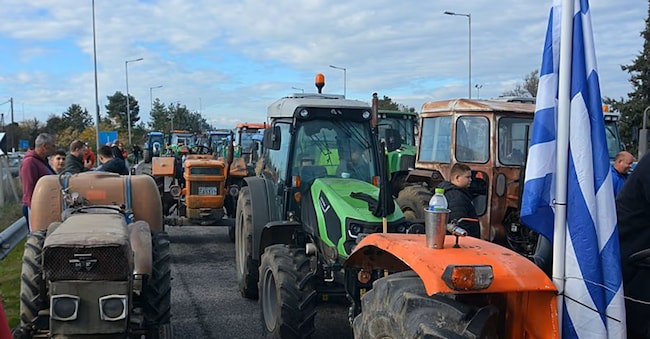
For fifty days, Greek farmers protested at roadblocks across the country. They then travelled to Athens, gathering outside the Parliament and the Prime Minister’s residence, to demand what they consider essential to continue doing their work: income, infrastructure, training and a long-term strategy for the agricultural sector.
What has made the protests of recent months particularly significant is the massive turnout of young people under the age of forty. However, this is not a new generation discovering farming as a way of life. Many of them belong to the third or fourth generation of farming families and are simply fighting to be able to carry on the work of their parents and grandparents.
In Greece, the issue of generational renewal takes on a different character compared with the rest of Europe. The question is not so much how to attract new farmers, but how to prevent existing farmers from deciding to leave the countryside.
The figures paint a particularly critical picture. According to Eurostat data, only 7.2 per cent of farm owners are under 40, compared with a European average of 11.9 per cent. At the same time, almost 40% of Greek farmers are over 65, one of the highest percentages in the European Union, comparable only to that of countries such as Portugal, Cyprus and Spain.


