
Green deal in the final rush: four new measures to be voted in the EU
The EU Parliament will decide on circular design, supply chain controls, air quality and packaging. But open questions remain

4' min read
4' min read
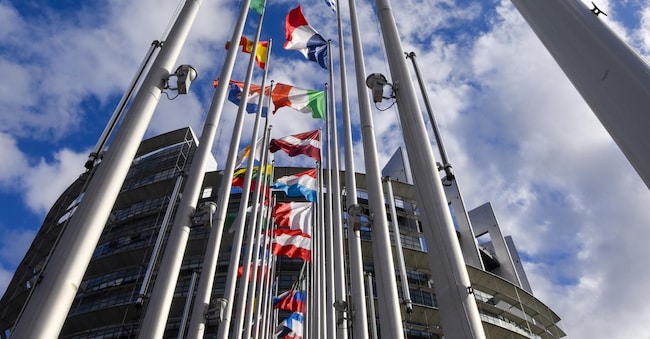
Precisely in the week of initiatives for the Earth Day, which falls today, with eyes already on the elections on 8 and 9 June, the European Parliament, meeting until Thursday 25 in its last plenary session in Strasbourg, is preparing for the final rush on the environmental mitigation rules.
In the coming days, in fact, four measures will be voted on that represent as many key pieces of the package of regulations better known as the Green Deal: the Ecodesign regulation (Espr), the directives Corporate social due diligence (Csddd), Ambient air quality and cleaner air for Europe and the regulation Packaging and packaging waste. The plan adopted by the Commission in 2019 for a greener Europe consists of a series of strategies (such as the one on textiles) and regulations on cross-cutting topics (from transport to housing) and aims to achieve climate neutrality by 2050.
Regulations on voting
In this context, the Ecodesign regulation accelerates on the circularity front: it updates the directive of the same name in force since 2009 by imposing eco-design, durability and traceability (through a digital passport, for example) on almost all product categories, including textiles, from 2030. With respect to the latter, the Espr introduces a direct ban on the destruction of products, with a four-year derogation for medium-sized enterprises and a general derogation for small and micro enterprises strongly desired by Italy. "We have tried to build a legislative framework that is more in line with the new way of doing business," explained rapporteur Alessandra Moretti, "and all the interlocutors we have had, from SMEs to large industries and environmental associations, have been very participative, with a constructive spirit. Moretti, who confirms Parliament's willingness to "engage on sustainability issues to the last, also to secure some measures," trusts in "a strong approval" of the Espr, which will then go back to the Council for formal approval. The process of the regulation has been decidedly less tortuous than that of other pieces of the Green Deal, such as the Csddd, also known as the Supply Chain Act, which will be re-examined in Strasbourg on Wednesday 24 after a significant reduction in the perimeter of the measure (which will affect companies with more than a thousand employees and 450 million in turnover). The clash on the issue of supply chain control came to a head at Coreper in February when - thanks to the abstention of countries such as Italy and Germany - it was decided not to proceed with the vote. The main node of this and other regulations is the impact (also economic) on companies, which on several occasions have raised criticism: "The European regulations in the field of sustainability developed in recent years will have a very significant impact that goes beyond pure compliance - explains Matteo Capellini, expert partner Bain & Company -. The focus on the environmental impact of products and the direct responsibility on the entire supply chain, together with the disclosure obligations of the already approved CSRD, will require companies to rethink their operating model and organisational structure, so as to be able not only to respond to legal obligations, but also to adapt to a world in which the concept of value is being redefined, which increasingly cannot disregard the externalities (positive or negative) generated by the production of products and services'.
Air Quality Standards
.Alongside Espr and Csddd, two other key measures are being voted on in Strasbourg this week: "The air quality directive is crucial because it significantly updates our 15-20 year old standards, almost halving the air pollution limit values permitted by law," comments rapporteur Javi López. For the first time, it also opens the door to a right of compensation for citizens who suffer health damage due to the violation of national standards. "By requiring states to draw up air quality maps, the directive will ensure that local authorities take concrete action to implement the new standards by 2030," López continues. The agreement stipulates that some areas, including the Po Valley, may request a ten-year extension. "However," the MEP concludes, "to qualify, states will have to meet specific conditions, such as demonstrating continued efforts to reduce air pollution and meeting the new standards by the end of the extended period. This will ensure that applications are based on real progress towards the target'.
Proposals on packaging
.Finally, the proposed regulation on packaging and packaging waste. The main target concerns waste reduction (-5% in 2030 and -15% in 2040), but Pfas in food-contact packaging is also banned, and minimum levels of recycled content are set. Regarding plastics - the theme of this year's Earth Day - by 2029 all countries will have to ensure that at least 90% of single-use bottles are collected separately each year, and by 1 January 2030 certain sizes of single-use plastic packaging and bags will be banned.

