
Green Gap for Italian Cities
The gap between the 12 Italian centres analysed by Husqvarna and the EU average is ten percentage points when looking at green and eight if the focus shifts to tree cover

2' min read
Key points
- Erik Swan: the challenge is to find the balance
- The role of private individuals
2' min read
There is a ten-point gap to close for Italian cities in terms of urban green space. The response comes from the Husqvarna urban green space index (Hugsi) by Husqvarna, world leader in the production of equipment for the care of forests, lawns and gardens, through images obtained from satellites and analysed by artificial intelligence. The twelve Italian cities surveyed (Genoa, Bologna, Florence, Palermo, Verona, Milan, Rome, Turin, Venice, Bari, Naples, Catania) record an overall green share of 37 per cent against an EU average of 47 per cent. They do a little better than their neighbours in the Mediterranean countries (35% overall), but that is not enough. If we shift the focus to tree cover, the Italian average is 22% against 28% at EU level. According to the rules of sustainable urban planning (the so-called 3-30-300), neighbourhoods should have at least three trees visible from every home, school and workplace, a distance of no more than 300 metres from a public park and at least 30% tree cover.
Erik Swan: the challenge is to find the balance
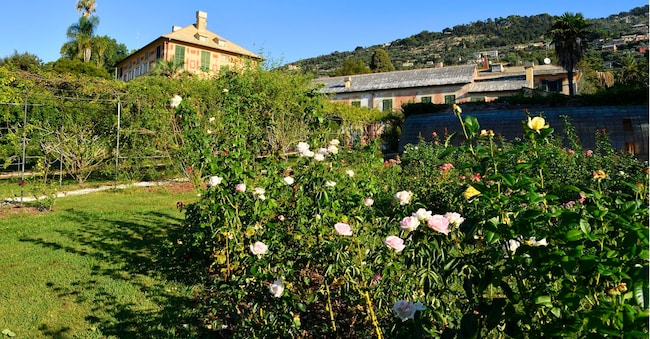
.In our country, the greenest city according to the criteria surveyed is Genoa: it has an urban green percentage of 50 per cent and a tree coverage rate of 39 per cent. It is followed by Bologna (with 40 and 23 per cent respectively) and Florence (with 44 and 21 per cent). "Of course," explains Erik Swan, Director Digital business exploration at Husqvarna, "Italian cities are still far from the benchmark that sees Stuttgart (Germany), Vilnius (Lithuania) and Odense (Denmark) on the podium. Genoa follows them at a distance in 23rd place among the 248 cities analysed. 'The high population density does not play in Italy's favour,' Swan points out, 'most of the centres we analysed have more than 5,000 people per square metre. The challenge is to find a balance between the need for services for these people and the development of green spaces. Genoa has succeeded in doing this'. And something is moving in all the centres analysed. Catania, for example, ranks last among Italians but records the best net positive change when considering the planting of trees, the maintenance of green spaces and the development of new areas. A figure that should not be lost sight of because the new EU regulation on nature restoration that has just come into force requires member states to ensure that there is no net loss of urban green spaces and tree cover in cities until the end of 203o. If we shift the focus to biodiversity only three cities score above the global average of 22/100: there is again Genoa accompanied by Turin and Florence.

The role of private individuals
."All types of greenery," Swan explains, "have a positive impact on the urban environment, but trees in particular are crucial for preserving the biodiversity of city ecosystems. And he also points out, among the benefits, the calming effect on temperature and noise reduction. The EU regulation itself calls for at least three billion of them to be planted throughout the Union within the next six years. "Individual neighbourhoods," says Swan, "can influence an entire city, and private individuals must also be involved in efforts to make cities greener.


