
Green houses, high potential for biomethane in the grid
The goal for 2030 is to cover 10 per cent of Italian consumption with renewable gas. To review the structure of connection charges by relieving operators

3' min read
Key points
3' min read
A production of 5.7 billion per year by 2030. Which means a little less than 10% of the total consumption in Italy (around 62 billion cubic metres in 2024) or, in theory, a scant third of household consumption. These are the targets written in the Pniec, the National Integrated Energy and Climate Plan, which tell how that of biomethane is already a very concrete path in the composition of our energy mix.
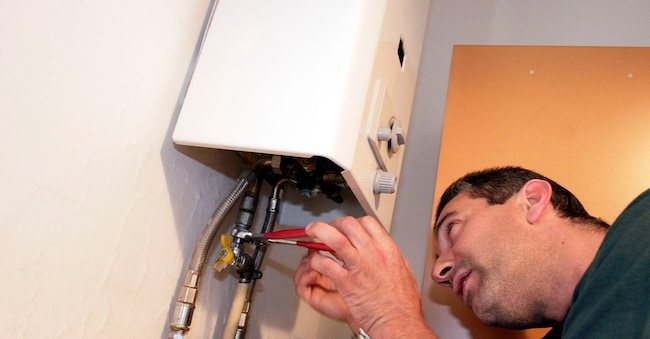
The guidelines drawn up by the European Commission in implementation of the green homes directive are mainly pointing in this direction, then, when they talk about decarbonisation of the grid to achieve the Epbd targets. Among other things, by 2040 the directive aims to eliminate single boilers powered by fossil fuels.
The use of biomethane
.As the Brussels documents explain, 'biomethane can be used without the need for modifications in the end user's equipment. That is, it can exploit the same network and the same boilers used today. So says Pier Lorenzo Dell'Orco, CEO of Italgas Reti, the Italgas Group's main operating company, 'biomethane is a commercially available gas, it is already produced today, it is not experimental and it is sustainable also from an economic point of view. It has the same characteristics as methane, so it does not require any kind of plant adaptation to be received in the existing infrastructure'.
It is, in short, not a futuristic solution. In Italy there are 133 biomethane plants, with an annual production of about500 million cubic metres. We are, therefore, below 1% of total national consumption. But the potential for growth is great. Dell'Orco continues: 'Today it is certainly the technology on which we are seeing the most signs of effervescence in the market, with a possible big impact on the residential sector as well. Household consumption is about one third of the 60 billion cubic metres nationwide. So if we parameterise the almost 6 billion of Pniec at this level, we could arrive at covering about one third of the needs of our homes".
Critical issues
.The obstacles, however, are different. Starting with the system ofrebates. The NRP incentives for biomethane are currently active, but they presuppose that the plants are put into operation by June 2026. A deadline that many will not meet. "If we want to realise the Pniec forecast," adds Dell'Orco, "we need to think of a phase B with new incentives outside the Pnrr, going beyond June 2026. Among other things, 'we could envisage a plan that rewards the transformation of biogas plants, which are less efficient and on which we are currently among the first in the world: we produce 2.2 billion cubic metres each year'.


