
Green houses, € 800 to 1000 billion are needed to implement the EU directive
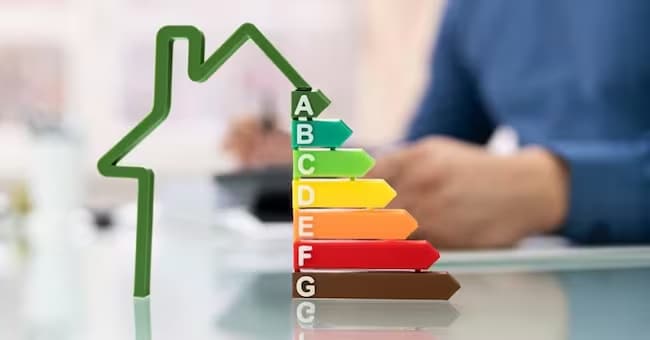
According to data from Deloitte, more than 83 per cent of Italian residential buildings were built before 1990 and more than half (57 per cent) date from before the 1970s. In Italy, F and G energy class buildings are 63 per cent of the total residential building stock, while in Germany they are 45 per cent, in Spain 25 per cent and in France 21 per cent.

2' min read
2' min read
In order to implement the 'Greenhouse Legislation' directive and redevelop the national real estate stock, between 800 and 1,000 billion euros of investment would be needed in a context like Italy's, where more than 8 out of 10 residential buildings are obsolete.
This is what emerges from an analysis by Deloitte presented during the event "Greenhouse Legislation: black hole or pink future for Italian Real Estate? "at the Deloitte headquarters in Milan in the presence, among others, of Davide Albertini Petroni, president Assoimmobiliare and ceo Costim, Riccardo Serrini, ceo and general manager Prelios Group, and Fabrizio Zichichi, executive project director of Lendlease.
"Turning the European "Green Homes" directive into a growth opportunity for the country is possible," says Claudio Scardovi, Deloitte partner in charge of M&A and Private Equity. "To do so, however, we need a systemic solution capable of addressing the financial and economic criticalities that the Energy Performance of Buildings Directive could bring upon citizens and the banking system in the absence of a coordinated strategy. What is needed, therefore, is a programmatic plan that involves developers and builders, institutional and retail investors, and the banking system, with the targeted contribution of the State, to support the country's "built environment" and a strategic sector for the competitiveness and wellbeing of Italy as a whole".
The Italian housing stock
.According to Deloitte's reworking of Istat data, in 2024 the Italian real estate stock will consist of more than 13 million buildings, of which about 89% will be residential. Manufacturing and commercial buildings represent only 2% each of the total stock, while buildings with other uses account for about 7% of the total. More than 83% of residential buildings were built before 1990 - slightly higher than the EU average (76%) - and more than half (57%) date from before the 1970s. Building obsolescence is considered one of the main causes of energy inefficiency in buildings and is the reason why the European Commission promoted the Energy Performance of Buildings Directive.
EU directive: climate neutrality target by 2050
New European legislation, which comes into force on 28 May, sets out new measures that will require European governments to structurally improve the energy efficiency of buildings in order to reduce energy consumption and CO2 emissions. The aim is to chart a course towards a climate-neutral building stock by 2050 by reducing energy consumption, zeroing emissions, eliminating fossil fuel boilers and installing solar panels. As for its implementation, the Commission envisages that each member state can implement the legislation on its territory autonomously, as long as at least 55 per cent of the energy loss comes from the renovation of buildings with less efficient energy classes.
In a context in which Italy is structurally lagging far behind other European countries, it is estimated that investments of between 800 and 1 trillion euros could be needed to upgrade the building stock. If we analyse the percentage of buildings in energy class F and G, in fact, we see that in Italy buildings in this category are over 60 per cent, while in Germany they reach 45 per cent, in Spain 25 per cent and in France just 21 per cent.
Brand connect


Newsletter RealEstate+
La newsletter premium dedicata al mondo del mercato immobiliare con inchieste esclusive, notizie, analisi ed approfondimenti
Abbonati