
Green hydrogen: new projects are moving forward
The Global Gas Report 2026: less than 5 per cent of all clean hydrogen projects announced up to 2035 are backed by firm off-take agreements

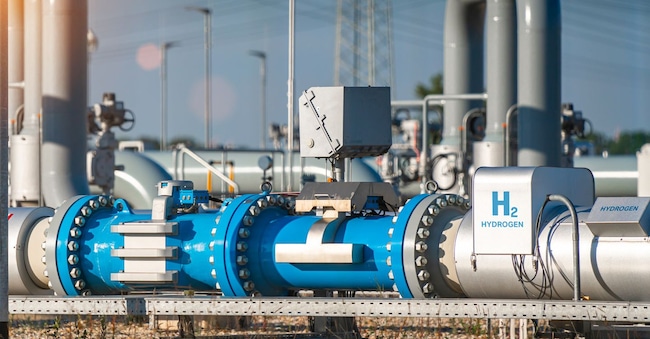
Some progress has been made, but there is still a long way to go before financially sustainable and satisfactory targets can be achieved. This, in a nutshell, is the picture that emerges regarding low-emission hydrogen (also known as green hydrogen) from the Global Gas Report 2026, recently published jointly by Snam and the International Gas Union (IGU). What some, until a few years ago, described as the new frontier of the green transition has gradually come up against the harsh reality. In the specific case of this report, this is illustrated by two figures: on the one hand, the global operational capacity for low-emission hydrogen has reached 1.2 million tonnes, still a long way from the medium-term targets; on the other hand, less than 5 per cent of all clean hydrogen projects announced up to 2035 are backed by firm off-take agreements.
Operational capacity, one small step at a time
More generally, according to the study by Snam and Igu, green hydrogen is moving from the announcement phase to that of so-called “selective implementation”, with final investment decisions naturally focusing on projects where the entire value chain is financially viable. And where, therefore, four conditions are met: competitive procurement costs, a viable commercialisation pathway, purchase commitments from solvent buyers, and the political support needed to bridge the residual cost gap (in practice, incentives to support a business that is still a long way from breaking even).
Looking at the figures, 0.5 million tonnes of capacity came on stream in 2025, bringing operational capacity to 1.2 million tonnes at the start of 2026, with a further 1.1 million tonnes under construction. At the same time, binding purchase agreements signed in 2025 totalled 1.7 million tonnes across 26 contracts, marking a 34 per cent increase on the previous year. Looking ahead, it is forecast that demand for low-emission hydrogen will reach 8.4 million tonnes by 2030, rising to 29 million by 2035, driven by the fertiliser and refining sectors. Europe and East Asia are the main import destinations, albeit with different end uses: Europe requires receiving terminals and ammonia cracking plants to convert ammonia into usable hydrogen, whilst Japan and South Korea use ammonia directly as a fuel for power generation. The announced production capacity is still significantly higher, reaching 91 million tonnes worldwide by 2035, with Asia leading the way.
Only 5 per cent of the pipeline is in the final stages
However, the real sticking point for the development of green hydrogen – according to the report – lies between the projects (the pipeline) and reality (the assets that are actually operational or at an advanced stage). Although the announced capacity exceeds projected demand, only 7 million tonnes are operational or have reached the final investment decision, which is less than 5 per cent of the announced pipeline up to 2035. The challenge – the report notes – therefore lies in transforming this long list of projects into contracted and bankable volumes, linked to reliable buyers and delivery infrastructure. The physical means for trade are largely already in place, given that the existing ammonia trade moves around 20 million tonnes by sea, and there is therefore significant potential for growth. However, there is still a long way to go, at least until the costs of producing green hydrogen manage to approach the break-even point.


