
Green transition, Teha and Erion: 75 per cent of businesses want to maintain or increase their sustainability commitments
A report produced by the think tank in collaboration with Erion reveals that 8 out of 10 companies cite energy, sustainable innovation and environmental product standards as the main areas of pressure when compared with global competitors

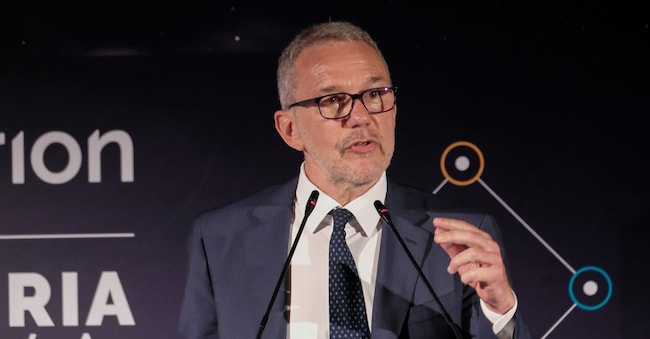
75.5% of businesses would like to maintain or increase their commitments to sustainability. This was revealed in the 2026 Strategic Report “Non-negotiable priorities for businesses and the future of the sustainable transition”, produced by TEHA Group (The European House-Ambrosetti) in collaboration with Erion. The findings of the survey were presented at the Erion 2026 Forum, held on 17 June in Rome in the presence of the Minister for the Environment and Energy Security, Gilberto Pichetto Fratin, who reiterated that ‘the energy transition at European level is not easy. It is a challenge that hinges on agreements and the balance between the demands of different countries. We have an important duty to find these points of balance in concepts such as sustainability and innovation’.
The survey that formed the basis of the report involved 108 companies from the Erion ecosystem, who took part via a dedicated questionnaire, 11 business leaders who came together for the first Erion Leaders’ Roundtable, and 4 key opinion leaders. The results were then supplemented with proprietary data covering 17 years of European citizens’ perceptions, 281 European and Italian ESG policies, and over 50 studies and reports.
Competitiveness
According to the study by Teha and Erion, the sustainable transition represents the new arena for global economic competition, and businesses are now fully aware of its significance. It is no longer simply a response to environmental challenges. In fact, eight out of ten companies cite energy, sustainable innovation and environmental product standards as the main areas of pressure when compared with global competitors.
The report also highlights the importance of sustainable transition: companies that adopt circular economy models are 28 per cent more creditworthy, making them consequently more attractive to private investors, and, compared with traditional competitors, generate on average 1.5 times more cash, have 6 per cent less debt and demonstrate a greater ability to service their debt through operating profit. In fact, more than 68 per cent of companies state that they have strengthened their ESG policies over the last three years.
Danilo Bonato, Director of Strategic Development and Institutional Relations at Erion Compliance Organisation, explained that ‘the sustainable transition cannot be viewed as a cost to be borne, because it is an essential prerequisite for preserving industrial capacity and ensuring long-term development’. And in such a context, according to Bonato, “the challenge for Europe, and for Italia, lies in forging a new competitive pact, in which sustainability and growth are not alternative objectives, but integral elements of the same industrial strategy”.

