Cerved ESG Ratings Study

Green transition: higher risk for large, energy-intensive companies

Large companies in sectors such as metallurgy, transport, energy and logistics are more exposed. However, the risk is low for 62 per cent of businesses

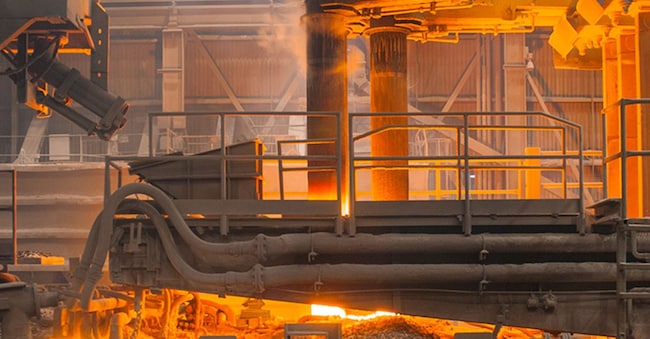
AZIENDA INDUSTRIA SIDERURGICA METALLURGICA LAVORAZIONE METALLO METALLI FONDERIA FABBRICA CROIGIOLO IMAGOECONOMICA

4' min read

Translated by AI
Versione italiana

4' min read

Translated by AI
Versione italiana

A great opportunity to innovate and improve the efficiency of production processes, and to capture new market shares and create jobs. But it is also one of the greatest financial challenges facing the Italian industrial sector, as demonstrated by the findings of a study carried out by Cerved ESG Ratings, ‘ESG Connect 2026 – The objectives and economic significance of the climate transition for businesses’. This analysis, based on the financial statements of European and Italian companies, not only examined and compared decarbonisation strategies but also assessed the level of exposure of Italian companies (1.8 million limited companies analysed) to so-called transition risk.

A major financial challenge

A financial risk linked to the investments required to upgrade production facilities and processes which, particularly for companies in the most energy-intensive sectors, can be substantial and thus hinder the transition itself, resulting in increased debt, reduced profit margins and diminished competitiveness.

Loading...

The good news is that in Italia the transition risk is low for the vast majority of the companies analysed (62.5 per cent), as explained by Andrea Cincinnati Cini, CEO of Cerved ESG Ratings, and only around 20 per cent fall into the medium-risk category. However, there is a significant proportion – 16.9 per cent – that falls into the high and very high risk categories, particularly affecting large companies, ‘given that in Italia, large companies are generally the most energy-intensive, operating in sectors such as metallurgy, transport, energy and logistics – manufacturing sectors characterised by a higher transition risk”, explains Cincinnati.

A systematic approach is needed

From a numerical perspective, therefore, the distribution of risk indicates a downward shift; however, as this risk is associated primarily with large enterprises – which have a high economic value of their associated assets (almost 1,000 billion euros and approximately 745 billion euros in revenue) – it is clear that there is a need to accelerate and facilitate the transition of the Italian industrial system, supporting it with a coordinated, system-wide approach, observes Cincinnati. ‘Banks should not shy away from helping businesses make the transition, but given that they cannot, in turn, expose themselves to the risk of not being repaid, the state should also step in, through tax incentives, subsidies and guarantees for companies.’

This is also because the timeframe for complying with the targets set by the European Union is beginning to shrink, and Italia is lagging behind its European neighbours, as demonstrated by the other part of the Cerved ESG Ratings study, which focuses on the decarbonisation plans disclosed by Italian and European companies in their consolidated financial statements.

Decarbonisation: corporate strategies

“We have found that decarbonisation strategies are often consistent between Italia and other countries, for example the use of energy from renewable sources and measures to improve the efficiency of production processes and mitigate environmental impacts,” says Cincinnati. In other cases, however, there are clear differences, such as in the areas of electrification, mobility or decarbonisation processes, which are more frequently cited by foreign companies. “In summary, we could say that foreign companies, within the same manufacturing sector, have described more strategic initiatives in their annual reports – focused on adapting their business models and production processes, as well as on technological transformation – whilst Italian companies have concentrated more on issues relating to the mitigation of environmental impact, such as the use of renewable energy sources.” Not only that: the time horizon is also different: in Italia, companies’ transition plans mostly look ahead to 2030; only 12.4 per cent extend beyond this date, compared with 26.3 per cent of foreign companies. This is due more to a fear of announcing targets to the market that may subsequently need to be revised, rather than a desire to accelerate the transition, according to Cerved ESG Ratings.

In Italia, innovation pathways vary significantly from sector to sector, the study notes, depending on the technologies available, the structure of production and emission intensity. Sectors such as energy, manufacturing and chemicals and pharmaceuticals are at a more advanced stage, whilst the metals sector faces significant technological and industrial constraints that make decarbonisation difficult, as demonstrated by its more cautious targets.

Finally, an increasing number of companies are extending their strategies beyond direct emissions to include suppliers, customers, materials and logistics. Measures relating to the circular economy and the decarbonisation of the supply chain are widespread both in Italy and abroad. However, there are as yet no particularly ambitious targets associated with the value chain as a driver of the transition.

Another interesting finding to emerge from the study is the correlation between advanced governance and the ambition of transition plans: companies with higher ESG performance – typically integrated into their business strategies – tend to adopt more challenging decarbonisation targets. These companies have a more structured approach to climate risk management, more accurate emissions measurement and governance that is more closely aligned with long-term sustainability objectives.

Copyright reserved ©
Loading...

Brand connect

Loading...

Newsletter

Notizie e approfondimenti sugli avvenimenti politici, economici e finanziari.

Iscriviti