
GreenBone Ortho lands on the Iss to treat osteoporosis
Scientific experiment by the Faenza-based company to validate bone regeneration techniques in microgravity conditions

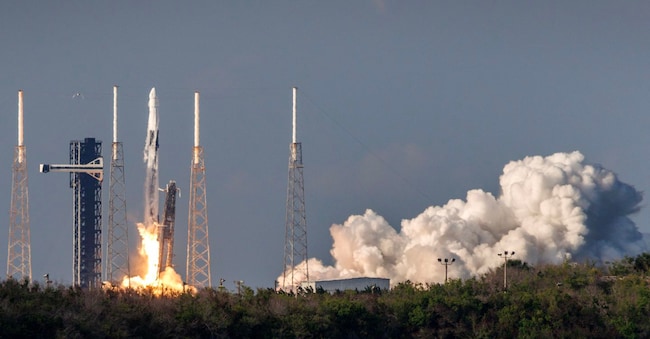
GreenBone Ortho, a company specialising in bone regeneration, is bringing an innovative scientific experiment on board the International Space Station. The aim is to validate in microgravity conditions the clinical application of b.Bone, a biomimetic regenerative bone substitute developed by the company for the treatment of bone defects.
The arrival on the Space Station (SpaceX mission Crs-34) represents a milestone in the Faenza-based company's research to improve bone therapies, both on Earth and for astronauts in space.
"We are extremely excited about this unique opportunity to test b.Bone in such a challenging environment as microgravity," said Saverio Gellini, CEO of GreenBone Ortho. The results of this experiment could revolutionise the treatment of osteoporosis and offer concrete solutions for the loss of bone mass that affects so many elderly people and women in particular. This is a significant step forward in our mission to innovate the field of bone regeneration'.
As part of the experiment, b.Bone will be tested to verify the ability of human bone cells to adhere, proliferate and differentiate in microgravity conditions. The first scientific results are expected by the end of the year and will be analysed by a joint team from the San Martino Hospital and the University of Genoa, after the return of the samples to Earth.
The experiment was made possible through collaboration with technology partners. Kayser Space, a subsidiary of FAE Technology S.p.A. Società Benefit, designed and built the sixteen experiment units that will house the b.Bone scaffold, providing the essential infrastructure for the survival, growth and monitoring of mesenchymal stem cells in the space environment. These units will be installed within an incubator developed by Comat with the contribution of Kayser Space, operated in the European Space Agency's Columbus module on the ISS.


