
Greenland, Nato: 'Threat in the Arctic grows'. The countermeasures Europe is studying to stop Trump
Brussels and Copenhagen study strategies to counter US pressure on the Arctic island, including European investments, NATO mediation and possible trade retaliation.

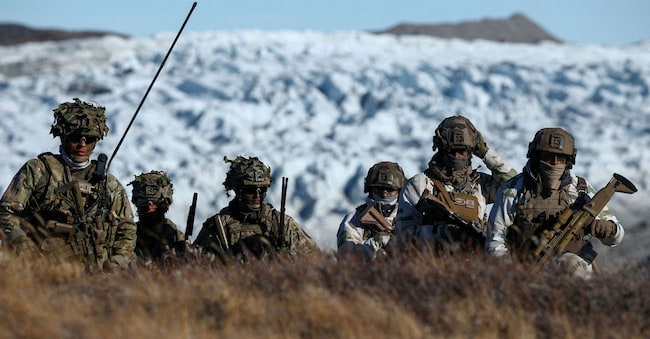
Now that Donald Trump is speaking in increasingly assertive tones about the possible takeover of Greenland - without excluding the use of force - his threats are no longer considered mere rhetorical provocations in Brussels and among European governments. Governments, diplomats and experts are already studying possible countermeasures to dissuade Washington, considering a range of options from negotiated compromise to economic retaliation to a possible European military presence on the territory. Politico has collected the assessments of NATO officials and insiders, outlining four possible courses of action.
Danish Prime Minister Mette Frederiksen confirmed today that Foreign Minister Lars Løkke Rasmussen will meet US Secretary of State Marco Rubio for talks on Greenland next week. "We are at a crossroads," Frederiksen said at a party conference, according to the Ritzau news agency. Rubio had said he would meet with Danish representatives next week, after Denmark and Greenland had requested talks with the senior US diplomat.
EU Commissioner: the days of pax americana are over
For Europe 'now is the time to deliver' on defence, 'because, as Chancellor Merz recently said, the time for American pax is over'. This was said by EU Commissioner Andrius Kubilius at the security policy conference in Salen, Sweden. After 'Washington's national security strategy, Venezuela and the threats to Greenland, it is now even clearer that we have to build Europe's independence,' he emphasised.
Nato: 'Threat in the Arctic grows, we strengthen activities'
"The allies are cooperating closely on Arctic issues," recently it was "agreed to deepen our understanding of Arctic activities and increase our activities and exercises in the far north. Military cooperation in this region has never been stronger'. This was said by the Supreme Commander of the Allied Forces, General Alexus Grynkewich, at the Security and Defence Policy Conference in Salen, Sweden. "In the far north, Russian and Chinese ships are conducting more and more joint patrols," he stressed, adding that the threat will become "ever greater".
Finding a compromise
The quickest way to defuse the crisis, according to several European interlocutors, would be an agreement allowing Trump to claim political success while saving face for Denmark and Greenland. The US president considers the island crucial for national security and accuses Copenhagen of not adequately protecting it from Russian and Chinese activities in the Arctic. A mediating role for NATO is being considered, as well as a strengthening of the allied military presence in the region - with exercises, increased investments and a possible 'Arctic Sentinel'-type mechanism - to reassure Washington and meet US security demands.

