
Greenwashing, it takes newspapers to flush out the 'green scoundrels'
Emerging from a Bank of Italia study on the greenwashing phenomenon and its consequences for bank lending

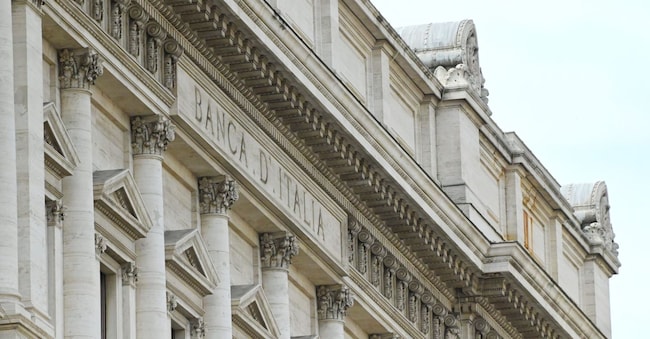
To flush out the greenwashers, traditional data provided by providers or sustainability reports are not enough. The press is needed. Reassessing the role of newspapers was the Bank of Italia in a recent study on greenwashing by Simone Di Paolo, Danilo Liberati and Lorenzo Rubeo.
The consequences for rates
The paper entitled "(Green)washing the trust: climate information and banking policies" points out that greenwashing "is an increasingly relevant issue in the financial sector". Identifying companies practising greenwashing, however, "is not an easy task, given the difficulty of assessing the real environmental profile of companies, especially when relying on traditional data sources that generally overlook communication strategies and public perception". The consequences are not insignificant. Bankitalia analysts analysed 1,570 companies, but the paper does not specify whether the companies are listed or not; the report states that 'using granular data on credit from the euro area banking system, we show that over the period 2019-2023, greenwashing firms - initially identified by combining information on carbon emissions with an assessment of the reliability of their reporting - were able to obtain financing at lower interest rates than other firms'.
Greenwashers are thus able to deceive the financing banks in times of fat cows. What happens instead in the event of a monetary shock? The banks refine their analysis criteria before opening their big bags. "We find evidence," the report explains, "of a reduction in the price benefits previously enjoyed by greenwashing firms.
The role of the press
The financial crisis thus brings the problem to the surface. However, one cannot wait for a monetary shock every time to identify those who deceive on environmental data.
Hence the need to rely, the authority's experts explain, on textual analysis. In essence, the data provided by companies' websites must be cross-referenced with the news that emerges from newspapers on that particular company. And we are talking specifically about the press, given that Bankitalia's study makes reference to the four main Italian newspapers (Sole 24 Ore, Corriere della Sera, Repubblica, Stampa): in fact, this further in-depth analysis was only carried out on 86 Italian companies. "This exercise (with reference to textual analysis ed.) highlights the added value of textual information in identifying possible misalignments between corporate self-representation and external evaluations, which can signal suspicious communication strategies,' reads the conclusions of the research. 'More generally, the inclusion of textual analysis strengthens the ability to identify cases in which companies' sustainability narratives diverge from independent reporting, offering a complementary tool when traditional data sources are incomplete, expensive or difficult to access'.


