
Grulli: ambitious and highly visible project, facilitating fundraising and sponsors
Since this year at the direction of CAMeC - Modern and Contemporary Art Centre in La Spezia, he has already worked with many Italian artists both young and mid-career

4' min read
4' min read
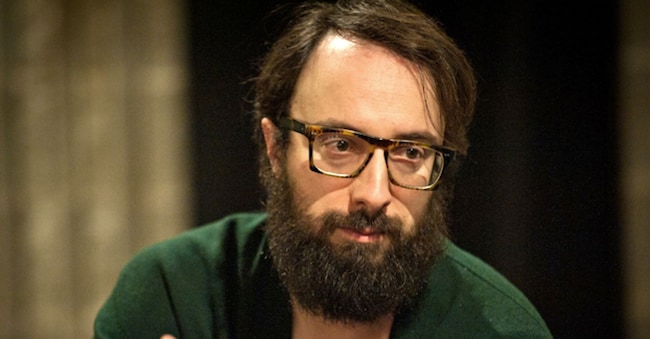
Antonio Grulli, born in La Spezia in 1979, was trained in Bologna and is an art critic and independent curator, a permanent member of the board of the Viafarini space in Milan. He curated the projects "Sentimiento Nuevo" at MAMbo in Bologna and "Festa Mobile", both research on art criticism begun in 2009 and completed at the HEAD Academy of Fine Arts in Geneva. He curated the 2023 edition of "Luci d'Artista" in Turin and last year was curator of the artistic residencies assigned to young creatives in the spaces of the SS. Cosma e Damiano complex at Giudecca, Palazzo Carminati and the former newspaper library in Mestre thanks to the collaboration between the Fondazione Bevilacqua La Masa and the Fondazione Musei Civici di Venezia.
Tell us about yourself, your path and your curatorial vision? Above all, which exhibitions, in terms of impact and importance, can be qualifying of your path?
I took my first steps in the art world around 2003, when I was still studying, and until a few years ago I have always pursued a form of curating independent of institutions. In 2023 I became curator of the historic Luci d'Artista public art project in Turin, and in July 2025 my direction of CAMeC - Centro d'Arte Moderna e Contemporanea di La Spezia (Centre for Modern and Contemporary Art in La Spezia) began, recently relaunched thanks to a partnership between the City of La Spezia and Fondazione Carispezia. Until October, I will also curate the study programme at the Bevilacqua La Masa in Venice. Among the projects I feel most fond of I would mention Sentimiento Nuevo, a year-long survey of Italian art criticism held in 2011 at MAMbo in Bologna, and Giardino all'italiana, a large group exhibition of paintings held in Ljubljana at Match Gallery in 2023.
Looking back, is there an Italian Pavilion that has particularly impressed or inspired you and what mistakes should not be repeated? And broadening your gaze to international ones?
Certainly the Italian Pavilion of Massimo Bartolini in 2024 reached a very high peak in my opinion, as recognised by all. Among the international pavilions on the other hand, the ones I feel most fond of are probably the 2005 Austrian pavilion by Hans Schabus, entitled 'The Last Land, Ragnar Kjartansson' for Iceland ('The End', 2009), the German pavilion by Christoph Schlingensief ('Church of Fear', 2011), Francis Alÿs for Belgium ('Children's Game', 2022). I was also very impressed by Anne Imhof in 2017 with her German pavilion.


