
Gucci conquers Times Square and plays with its hyper-consumerism
Demna brings his first Cruise collection for the Kering Group brand to the heart, and symbol, of Manhattan, mixing echoes of Tom Ford with his sarcastic and at the same time adulatory critique of luxury stereotypes

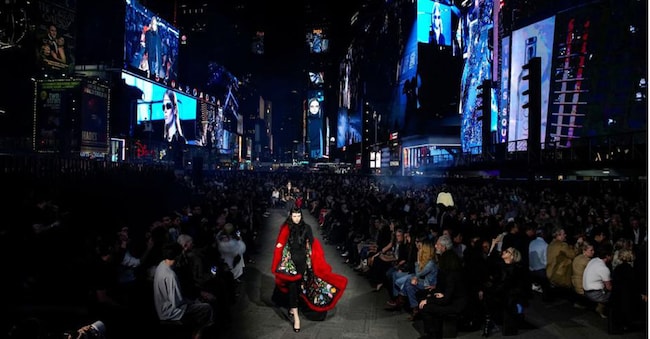
Demna has no fear of being popular, of playing with what is massified and provocatively verging on the vulgar. It is his signature; the Gucci he is modelling is a perfect expression of this.
At 8:30 p.m. on a Saturday night - an iconic day like no other - the huge digital billboards that ceaselessly illuminate Times Square - the symbolic New York crossroads that sums up America's obsession with consumer goods and mass culture - begin to offer things never seen before. Filling the screens is a whole universe of Guccizzati products, from water to chocolate, from cars to longevity pills. A business dream made real for a moment, accompanied by catchy slogans and hypnotic images that serve as a prologue to the first Cruise collection designed by Demna for the Kering group megabrand. It is a true manifesto, the perfect introduction for the fashion show that takes place in the open air, in the midst of traffic, without obliterating it, rather encompassing it.
Demna's recipe for bringing Gucci out of its recent shambles is clear at this point. The bold and brazen sexuality of the catwalk debut in February remains central, but the nuances increase. Nothing that produces earth tremors, mind you. On the contrary, a pragmatic cynicism that is all of today. Demna, with Gucci, offers the new rich and exhibitionist spenders, lovers of flashy luxury and obsessed with the body, exactly what they want. It is a true tautology, effective precisely because of this.
The collection, entitled 'GucciCore', proposes a wardrobe that is fit for the urban jungle and the diverse humanity that populates it. It is an approach many brands take in times of crisis: back to basics. But it raises further questions about what the true essence of Gucci is: a fashion house whose roots lie in leather goods and accessories, and which has taken on as many stylistic identities in fashion as there have been creative directors at the helm.
According to Demna, clearly, the beating heart of Gucci lies in the work of Tom Ford, founder of a now mythical and still reverberating aesthetic. The show opens with the sharp, seductive tailoring at which Ford excelled and then veers into more intimate and personal territories, into Demna's true language: his peculiar reinterpretation of the classics; his appreciation for the bourgeois elegance of the chemisier and for dresses with a pseudo-couture allure; his penchant for dressing characters drawn from real life. In this sense, the fusion of brand and creative director is perfect.

