
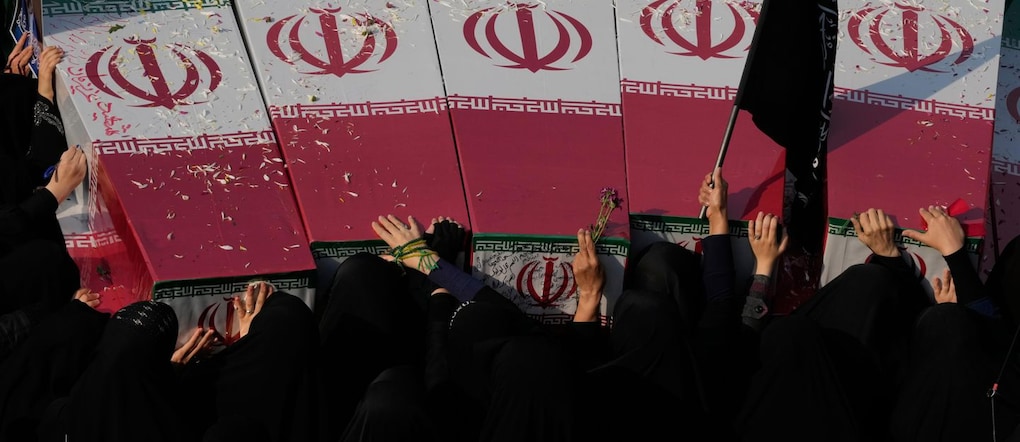
Latest news on the war in the Middle East. Oil tanker ablaze in the Strait of Hormuz. Trump to discuss Iran with Xi and Putin
 Aggiungi Il Sole 24 Ore
ai preferiti su Google
White House: ‘Trump will discuss Iran with Xi and Putin, not Ukraine’
Donald Trump will discuss Iran, but not Ukraine, with his counterparts Xi Jinping and Vladimir Putin during the trilateral talks scheduled for next Thursday on the sidelines of the APEC summit in Shenzhen, China. This is according to the White House.
The leaders of the US, China and Russia, in their first-ever trilateral meeting, may also discuss their respective nuclear arsenals, according to a senior US official. The latest nuclear arms control treaty between Washington and Moscow expired in February, removing, for the first time in over half a century, the limits on the world’s two largest nuclear arsenals. When the agreement, known as ‘New Start’, expired, Trump rejected the Russian proposal to extend it by a year, calling instead for a “new, improved and modernised” deal that would also include China. The trilateral meeting is intended to be a “start to what we hope will be a conversation” on nuclear disarmament, “capable of leading to productive developments in the future”, the official added, noting that no announcements of agreements are expected. Beijing’s arsenal, which according to Pentagon estimates comprises over 600 warheads, is far smaller than that of the US and Russia, each of which possesses more than 5,000. Given this stark disparity, China has shown little interest in opening discussions on the issue, instead calling for a reduction in the number of warheads held by Washington and Moscow. The Trump administration recognises that, for Beijing, the issue may be complex: the official, however, described next week’s meeting as an opportunity for China to ‘take its place at the big table’ on a matter of international significance.
Trump is considering calling a halt to the attacks if Tehran refrains from further provocations
The US might refrain from launching further attacks against Iran if Tehran and the Houthis in Yemen do not carry out any further provocations. This is what US President Donald Trump is said to have confided to his closest advisers in recent days, according to three informed sources cited by Reuters. The news has been picked up by several international media outlets, including Sky News Arabia and Al-Arabiya. After weeks of threats of military escalation and overtures towards a possible end to hostilities, Trump is reportedly considering a pause. The possibility is said to have emerged during a number of meetings with national security advisers and following a series of intelligence briefings. The White House’s assessment is also reportedly influenced by requests from allies in the region, who are opposed to a return to full-scale war. “I could end the war immediately, but at the request of the nations I am trying to protect, we are taking a slightly longer, slightly more civilised path,” Trump said in an interview on Thursday.
Child from Gaza undergoes surgery at Meyer Hospital in Florence for bilateral retinoblastoma
A child from Gaza underwent a complex operation for advanced bilateral retinoblastoma: the operation was carried out at the Meyer Children’s Hospital in Florence in collaboration with the Siena University Hospital. Following the operation in Florence, the young patient was transferred to Siena to complete his hospital stay and undergo further checks, after which he was discharged.
In a joint statement, AOU Meyer IRCCS and AOU Senese explain that this was an “extremely delicate combined neurosurgical and ophthalmological procedure to address one of the most serious complications of retinoblastoma”. The operation involved the ophthalmology team from the Retinoblastoma Reference Centre at AOU Senese, alongside the neurosurgery and ophthalmology departments at the AOU Meyer Children’s Hospital, joining forces in a procedure which, according to the doctors, could open up new prospects for the child, who had previously undergone numerous treatments, including systemic chemotherapy, intra-arterial and intravitreal chemotherapy, and focal therapies, in an attempt to control a particularly aggressive form of cancer. And despite the treatment, at his last check-up, he was found to have “spread of the disease along the optic nerve almost as far as the chiasm, an extremely serious condition requiring a life-saving, specialist assessment and a surgical approach of exceptional difficulty never before performed in Tuscany”.

