
Live
War, latest news. Pasdaran: ‘The Strait of Hormuz will reopen as soon as the US accepts our conditions’. The NATO-style ‘Mecca Agreement’ makes its debut
Egypt may join a defence pact with Riyadh and Islamabad. CNN: US military chief seeks a way out of war with Iran
For feedback, please contact
english@ilsole24ore.com
 Aggiungi Il Sole 24 Ore
ai preferiti su Google
Summary by points
8 August 2026
Pentagon: we have enough ammunition to wage a war
The deputy director of the Defence Innovation Unit (DIU) at the US Department of Defence has stated that the military has sufficient ammunition for a war against Iran, following reports that stocks of weapons vital to air defence, such as ballistic missile interceptors, had been depleted as a result of the conflict. “We have enough ammunition for the task ahead,” Jarred Conley told Al Jazeera, “the department has everything it needs today to wage a war.”
8 August 2026
US, NYT: War with Iran is depleting missile stocks
The war against Iran is rapidly depleting some of the United States’ most advanced munitions, reducing available stocks in Europe and Asia and fuelling concerns within the Pentagon about its ability to deal with other crises simultaneously, particularly those involving Russia and China. This is reported by the New York Times, citing senior US and Western officials.
The problem mainly concerns air defence missiles and long-range weapons. According to two sources familiar with the stockpiles, the United States is said to have used over 1,500 Patriot interceptors since the start of the war against Iran, whilst the current stock is reported to be less than 1,700 units. Even if production were ramped up, it could take more than two years to replenish the quantities used.
The conflict has also forced the Pentagon to redeploy ships, aircraft, defence systems and ammunition from Europe and Asia to the Middle East. Numerous Tomahawk missiles and other long-range systems are reported to have been moved from the Indo-Pacific, whilst hundreds of advanced interceptors are said to have been transferred from South Korea and other Asian bases.
8 August 2026
Centcom Commander Cooper in Israel
The commander of the US Central Command (CENTCOM), Admiral Brad Cooper, arrived in Israel today for a series of meetings with the Chief of Staff of the Israel Defence Forces (IDF), General Eyal Zamir, and other senior defence officials. The talks will focus primarily on the Iranian issue, joint assessments regarding a possible new escalation or a deal, and the situation in the Gaza Strip. This is according to Kan News, the Israeli television channel.
Cooper arrived in Israel following a series of meetings in Bahrain and the United Arab Emirates. The visit comes against the backdrop of statements made today by the Iranian president and the US vice-president regarding the possibility of moving towards a new ceasefire agreement.
Meanwhile, the United States continues to maintain a state of high alert in the Middle East, including Israel. Dozens of US aerial refuelling tankers, fighter jets and air defence systems, along with thousands of American military personnel, remain deployed in the country. During his visit, Cooper is also expected to meet with US forces stationed in Israel.
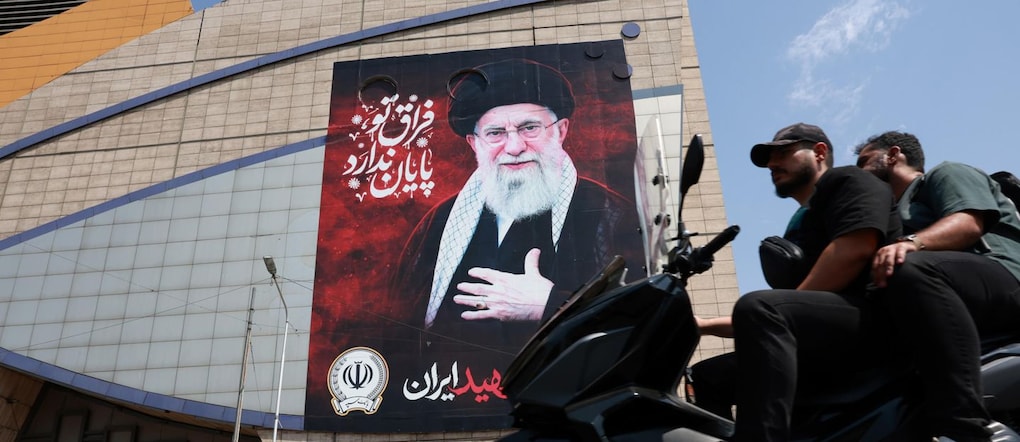
Alcuni automobilisti passano davanti a un cartellone pubblicitario raffigurante il defunto leader supremo iraniano, l’ayatollah Ali Khamenei, in una strada del centro di Teheran, in Iran, il 6 agosto 2026. EPA/ABEDIN TAHERKENAREH EPA
Ask the editorial team
Have questions or feedback about this article? Contact our editorial team.
8 August 2026
Yemen: Army launches attacks on Houthi rebel bases
The Yemeni army has attacked the Houthi rebels in response to recent Houthi attacks in central and eastern Yemen. Colonel Majed al-Nazili, a spokesperson for the Yemeni army, said the attacks targeted the rebels’ “bases and capabilities” across several front lines. He added that the attacks were aimed at “protecting unarmed civilians” and defending the army’s security, marking a serious escalation since a 2022 truce largely halted the fighting. The country’s civil war pits the Iran-backed Houthis against a Saudi-led coalition allied with the internationally recognised Yemeni government.
8 August 2026
Vance: “Iran has said it will not impose tolls in the Strait of Hormuz”
“Our expectation is that the same quantities of oil and gas will be exported from the Gulf as were before the conflict began. That is what the Iranians have told us they intend to do.” US Vice-President Jd Vance made this statement in an interview with Fox News, explaining that Tehran had informed Washington that it had no intention of imposing tolls in the Strait of Hormuz. Vance added that the United States expects oil and gas flows to return to pre-conflict levels, but that it will judge Iran “by its actions, not by its reassurances”. According to Vance, Iran and the Persian Gulf states, particularly Oman, are discussing ways to ensure safe passage through the Strait, including through mine clearance and a commitment from Tehran not to attack commercial vessels. “We are still in the thick of it with Iran,” said the vice-president, explaining that Washington is using diplomatic, economic and military tools to achieve what he describes as the best possible outcome for Americans. “We don’t trust, we verify,” he concluded.
8 August 2026
Oman: positive talks on the Strait of Hormuz, but we condemn the attacks on ships
Oman has stated that talks with Iran on the future management of the Strait of Hormuz are ‘positive’, whilst at the same time warning against attacks on ships in this strategic waterway, which is effectively blocked by Tehran.
“The ongoing negotiations on the rules governing navigation through the Strait are taking place in a positive and constructive atmosphere,” the Foreign Office said. Without naming Iran, the Foreign Office condemned “the repeated attacks” and called for all parties to refrain from any action that might jeopardise the diplomatic process.
8 August 2026
Pezeshkian: Decisions on war are a matter for military commanders and Khamenei
“Whether or not we should fight, the military commanders know more about this than I do or you do. They know their own capabilities.” Iranian President Masoud Pezeshkian made this statement at a press conference, reiterating that the final say lies not with the government but with the military leadership and, ultimately, with Supreme Leader Mojtaba Khamenei. “The Supreme Leader decides, and whatever decision he takes, we will support him to the very end,” added Pezeshkian. The president explained that, under Iran’s institutional framework, the conduct of war does not fall within the remit of the executive: “War does not depend on the government. The government is there to provide the necessary support.”
8 August 2026
Iraqi Oil Minister: “We used to export 3.4 million barrels a day via the Strait of Hormuz; today it’s 1.5 million”
The crisis in the Strait of Hormuz continues to have a severe impact on Iraqi exports. Before the end of February, when the US and Israel announced the launch of military operations against Iran – to which Tehran was quick to ‘respond’ – Iraq was exporting around 3.4 million barrels a day via the Strait of Hormuz, said the Oil Minister, Bassem Mohammed Khudair, as reported by the Iraqi news agency INA. Currently, the minister stated, “Iraq’s production stands at 2.7 million barrels a day and it exports between 1.5 and 1.7 million barrels a day”. “The situation in the region,” he emphasised, “requires in-depth dialogue.” The Iraqi minister also stressed the need to reach “solutions in the country’s best interests”.
8 August 2026
Pezeshkian: The US are colonialists and murderers; they have breached the memorandum
“The United States are colonialists and murderers.” This was stated by Iranian President Masoud Pezeshkian. “If the United States had had the power, they would undoubtedly have wanted Iran not to exist, but talks and expert opinions prevented that.” Referring to the latest developments in the Strait of Hormuz, he emphasised: “The Americans have breached the part of the Memorandum of Understanding signed with Iran, which stipulates that the United States must act in accordance with the guidelines drawn up jointly by Iran and Oman. They failed to act, so we reacted.” According to the ISNA news agency, speaking to local media, Pezeshkian also called for unity among Iranian officials “to preserve the achievements the country has made”.
8 August 2026
Netanyahu calls for a $17 billion increase in military spending over the next decade
Israeli Prime Minister Benjamin Netanyahu has asked the Israeli Ministry of Finance to increase the planned rise in defence spending over 13 years from 350 to 400 billion shekels (from around 117 to 133 billion dollars) the planned increase in defence spending over a 13-year period, requesting that the funds be allocated before the upcoming elections in October. According to *Haaretz*, officials at the Ministry of Finance are strongly opposed to the proposal, arguing that such a significant increase in spending would need to be accompanied by tax rises, cuts to other areas of expenditure or an increase in the public deficit. Israel’s defence budget has risen repeatedly since the war broke out following the Hamas attack on 7 October 2023. Earlier this year, the government had approved a defence budget of 112 billion shekels ($37 billion). After Israel launched the war against Iran alongside the United States, the government increased the allocation to 143 billion shekels (48 billion dollars). The Israeli armed forces have requested a further 40 billion shekels ($13 billion), of which 15 billion shekels ($5 billion) were approved immediately. The remaining funds were earmarked for October and November, subject to actual expenditure. Israeli defence officials, the Israeli newspaper reports, are calling for several more billion shekels and warn that some defence companies could halt certain production lines if they do not receive this funding. According to the officials, these companies had been forced to increase their production capacity to meet the army’s demand during the war, particularly for weapons and ammunition. Now, however, they risk having to shut down some production lines because the Israel Defence Forces cannot guarantee new orders, due to the ongoing dispute with the Ministry of Finance.
8 August 2026
Araghchi: close to an agreement on a new route through the Strait of Hormuz
Iran and Oman are “very close” to reaching an agreement on a new shipping route through the Strait of Hormuz, as part of negotiations for a temporary solution for commercial traffic. This was stated by Iranian Foreign Minister Abbas Araghchi, according to a report by the Reuters news agency.
Araghchi explained that Tehran no longer accepts the previous system for separating shipping lanes through the Strait and believes it is necessary to establish a new route.
The reopening of the Strait would, however, also be subject to other conditions set by Iran.
According to the minister, these include the payment of compensation for what Tehran regards as breaches by the United States of the memorandum of understanding signed in June.
8 August 2026
Missile hits UAE vessel in the Strait of Hormuz; no injuries reported
A vessel belonging to the Abu Dhabi National Oil Company (ADNOC) was the target of a missile attack whilst passing through the Strait of Hormuz in the early hours of this morning. This has been confirmed by ADNOC itself, as reported by the UAE news agency WAM, which stated that there were no injuries and that the situation is “under control”.
8 August 2026
Pasdaran: “The Strait of Hormuz will reopen as soon as the US accepts our conditions”
“The reopening of the Strait of Hormuz is subject to the mechanisms and conditions specific to the Islamic Republic of Iran and has nothing to do with the negotiations between Iran and Oman”. This was stated by the spokesperson for the Islamic Revolutionary Guard Corps (IRGC), Hossein Mohebi, who clarified that the reopening of the strategic sea passage will depend exclusively on an agreement with Washington. “When America accepts Iran’s conditions, the Strait of Hormuz will certainly reopen,” added Mohebi.
8 August 2026
Member of Iran’s Supreme Leadership Council: “Foreign forces must leave the region”
“The defeat of the United States and the Zionist regime has reinforced the conviction that foreign forces – the main cause of insecurity – must leave the region.” This was stated by Ali Akbar Velayati, adviser to the Supreme Leader on international affairs. “Growing cooperation between the states of the region can ensure regional security,” he added in a post on X. “Recent developments reflect the resilience of the armed forces, the steadfastness of the Iranian people and the courage of the Axis of Resistance,” he added.
8 August 2026
Egypt may join a defence pact with Riyadh and Islamabad
Turkey has not ruled out extending the defence agreement signed with Saudi Arabia and Pakistan to include Egypt in the future, Turkish Vice-President Cevdet Yilmaz said in an interview with CNN Turk. “In the future, of course, it is possible. Egypt is a fairly strong country and its participation could be important for a framework of this kind,” said Yilmaz, responding to a question about the possibility of Cairo joining the agreement.
Turkey, Saudi Arabia and Pakistan have signed a joint defence agreement, which was signed by the leaders of the three countries. According to the Turkish newspaper *Türkiye*, the pact provides, amongst other things, for cooperation in the exchange of intelligence and coordination on regional security matters.
8 August 2026
Iranian media: “Clashes with pro-Saudi militias are taking place in Yemen”
Sources have reported that intense clashes are currently taking place between the Yemeni armed forces and militias affiliated with Saudi Arabia in the western part of the country. The Iranian news agency Mehr has reported this on Telegram.
8 August 2026
Latest war news. New US sanctions against Iran. Defence pact between Turkey, Saudi Arabia and Pakistan

8 August 2026
US official: we expect an agreement on Hormuz shortly
A US official has stated that progress has been made in the talks between Iran and Oman aimed at the full reopening of the Strait of Hormuz. “We expect an agreement shortly,” he said in a statement sent to journalists who had asked the question. This was reported by The Times of Israel. US President Donald Trump has been saying that an agreement is imminent since Saturday, when he called off a major military strike against Iranian energy sites. Recent reports suggest that the parties have reached a framework agreement.
8 August 2026
CNN: US military chief seeks a way out of war with Iran
The Chairman of the US Joint Chiefs of Staff, General Dan Caine, is reported to have told key advisers to the Trump administration in recent weeks that a “way out” of the war with Iran must be found, warning of the risks of further military escalation. This is according to CNN, citing three sources with knowledge of internal discussions within the administration. According to the American broadcaster, the most senior officer in the US armed forces believes that the military options currently available to escalate the conflict could have negative consequences and that air power alone would be unlikely to achieve the objectives set out by President Donald Trump.
“Caine is looking for a way out,” said one of the sources quoted by CNN. The general’s concerns are reportedly shared by other senior figures in the administration. Caine is reported to have discussed both the risks associated with an escalation and the possibility of finding a solution to the conflict with CIA Director John Ratcliffe, Secretary of State Marco Rubio and Vice-President JD Vance. According to two of the sources, Caine is also said to have held confidential talks with some of these officials with the aim of improving coordination between the various parts of the administration and arriving at meetings with Trump with a shared assessment of the limitations and risks of the various military options. The discussions are also said to have covered scenarios that do not involve the deployment of US troops on the ground.
Trump has so far been opposed to sending ground troops to Iran and has instead suggested that air strikes are a means of forcing Tehran to accept a deal on Washington’s terms. However, according to CNN, citing its own sources, Caine and other members of the administration consider it unlikely that an air campaign alone could achieve this result and are therefore reportedly assessing alternatives that are compatible with the limits set by the president.
These reservations also relate to a plan discussed at the end of July for new and more aggressive strikes against Iran. According to CNN, Caine and other national security officials were concerned about the possible consequences of an escalation, whilst Trump initially appeared inclined to authorise what he had described as a ‘massive’ operation, only to decide against it following talks with US allies in the Middle East, who were concerned about possible Iranian retaliation and, in particular, attacks on their energy infrastructure. A senior administration official, however, told CNN that the president has not definitively ruled out the option of further air strikes.
