
Live
Latest war news. New US sanctions against Iran. Defence pact between Turkey, Saudi Arabia and Pakistan
The agreement “aims to strengthen collective deterrence against all forms of aggression”. Iran: “Khamenei may be on his deathbed”
For feedback, please contact
english@ilsole24ore.com
 Aggiungi Il Sole 24 Ore
ai preferiti su Google
Summary by points
- A message to Tehran and Washington from the Riyadh-Ankara-Islamabad defence pact D
- Pakistan, Saudi Arabia and Turkey have signed a joint defence agreement
- Phone call between Bin Salman and Macron on the Middle East and the Red Sea
- Lebanon, media: Israeli artillery fire in the Tyre area
- Iran, WSJ: Trump orders investigation into leak regarding ammunition stocks
7 August 2026Pinned update
Pakistan, Saudi Arabia and Turkey have signed a joint defence agreement
Saudi Arabia, Pakistan and Turkey have signed a mutual defence agreement in Jeddah, according to sources close to the Saudi Arabian military and government who spoke to AFP. Saudi Crown Prince Mohammed bin Salman, Turkish President Recep Tayyip Erdogan and Pakistani Prime Minister Shehbaz Sharif met in the Saudi city for a summit between the three Sunni Muslim countries. “The matter had been under discussion for a long time, but recent developments in the region have accelerated the process,” a source close to the military, who wished to remain anonymous, told AFP.
Iraqi Prime Minister invited to Riyadh, whilst pro-Iranian militias halt an attack
Iraqi Prime Minister Ali al-Zaidi has received an invitation to visit Riyadh. This was announced by the Prime Minister’s Office, whilst Tehran-backed groups have announced that they would postpone their response to last month’s bloody US and Saudi attacks in Iraq. Zaidi was due to visit Riyadh at the end of July, but the trip was cancelled following the attacks on 29 July that killed 20 militants, including five Iranians. Zaidi’s press office stated that the Prime Minister met with the head of Saudi intelligence, Khalid bin Ali al-Humaidan, who “conveyed a message from the Saudi leadership renewing the invitation to the Prime Minister to visit the Saudi capital, Riyadh”. The US and Saudi attacks came after Riyadh had claimed that its forces had intercepted drones targeting oil facilities, blaming Iranian-backed Iraqi groups. The attacks also followed growing US pressure on Baghdad to disarm pro-Iranian armed groups, which have targeted US interests hundreds of times during the war in the Middle East. Zaidi, who came to power this year with Washington’s backing, has promised to ensure that these groups hand over their weapons, but has met with resistance.
Araghchi urges Muslims: unite against hostile foreigners
Iranian Foreign Minister Abbas Araghchi stated in a post on X that the Iranian military had demonstrated its ability to stand up to “the world’s most expensive army” and called on Muslims to “remain united” against “malicious foreigners”. “Iran’s powerful armed forces have demonstrated their readiness, capability and strength in the face of the world’s most expensive army,” said Araghchi. “When Muslims stand united, we can face any challenge from ill-intentioned outsiders with our heads held high. It is time to rely solely on ourselves and to embrace true brotherhood.”
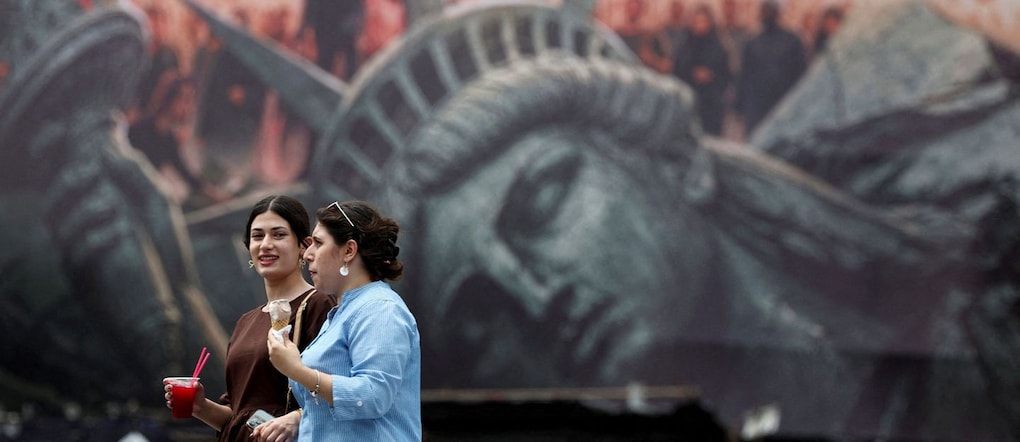
La gente passa davanti a un cartellone pubblicitario anti-statunitense in una strada di Teheran, in Iran, il 3 agosto 2026. Majid Asgaripour/WANA (West Asia News Agency) via REUTERS via REUTERS
Ask the editorial team
Have questions or feedback about this article? Contact our editorial team.
7 August 2026
Axios: Tehran expects the Supreme Council to give the go-ahead “shortly” for the agreement with Oman and the US
Iranian negotiators are awaiting final approval from Iran’s Supreme National Security Council regarding the agreement with Oman and the United States. A diplomatic source from one of the mediating countries told Axios this, adding that they expect “such approval to be granted shortly”.
7 August 2026
US Senate approves new sanctions against Russia and Iran
The Senate has approved, by an overwhelming majority, a bill to impose new sanctions on Russia and Iran following a protracted process lasting several months. The decisive impetus came following the death of Republican Senator Lindsey Graham. The 61-page bill, renamed the ‘Lindsey O. Graham Sanctioning Russia and Iran Act’, aims to sanction the major buyers of Russian oil and gas. It also provides for further sanctions against Russian leaders, their family members and oligarchs. Following a last-minute request from Donald Trump, the bill also extends sanctions to Iran’s arms and energy sectors.
7 August 2026
US imposes sanctions on Iran’s ‘shadow banking system’
Washington has taken steps to dismantle a network of currency exchange bureaux and front companies that were helping Iran to smuggle hundreds of millions of dollars through the international financial system. This is according to a statement by US State Department spokesperson Tommy Pigott, published today.
According to a statement by the US spokesperson, “today the US Treasury Department has taken steps to dismantle a network” of currency exchange bureaux and front companies of this kind. Through these networks, Tehran gained access to the proceeds from oil sales and circumvented the sanctions introduced to curb its destabilising activities. Intermediary companies were used for money laundering, the US spokesperson explained.
Pigott emphasised that this initiative represents a continuation of US President Donald Trump’s administration’s policy of ‘maximum pressure’ on Iran, ‘by blocking the resources that the regime uses to threaten regional stability, support terrorism and develop its military capabilities’.
It was pointed out that the United States has imposed sanctions on banks, currency exchange bureaux and individual intermediaries that facilitated the operation of this illegal financial system. “The United States is making it clear that those who help Iran to circumvent sanctions will face serious consequences,” Mr Pigott noted.
According to the US State Department, this is the eighth measure taken in 2026 by the Office of Foreign Assets Control (OFAC) against Iran’s so-called ‘shadow banking system’. The list includes, amongst others, Iranian banks, front companies linked to them, currency exchange bureaux and their managers, major financiers, as well as importers and exporters who use these financial networks to launder money and channel the proceeds back to Iran.
7 August 2026
The US imposes new sanctions on Iran, targeting banks and currency exchange bureaux
The US Treasury Department has imposed new sanctions on a network of currency exchange bureaux and shell companies that were helping Iran to secretly transfer hundreds of millions of dollars through the international financial system. The State Department announced this in a statement, specifying that “through these networks, Tehran gained access to oil revenues and circumvented sanctions designed to curb its destabilising activities, by laundering funds through shell companies”.
7 August 2026
Tehran: Trump talks of ‘spoils’ but has not won the war
The spokesperson for the Iranian Foreign Ministry, Esmail Baghaei, stated that US President Donald Trump, before announcing “war booty”, should “actually win the war”. Criticising the US President’s remarks regarding the spoils of war obtained following the operation in Venezuela, the Iranian spokesperson stated that Trump “claims that the same will be done as, in his words, was done in Venezuela. There is, however, a small problem: before one can lay claim to spoils of war, one must actually win the war”, and “not get bogged down in a stalemate, fail to achieve the stated (and deemed harmful) objectives, run out of weapons and lose credibility along the way”, Baghaei specified.
“So far, Iran’s spoils are nothing more than a paper trophy for a victory that shows no sign of materialising,” added the spokesperson. Furthermore, comparing the US president to Milo Minderbinder, the protagonist of Joseph Heller’s novel *Catch-22*, he argues that “Milo, at least, knew how to profit from war; these people, on the other hand, are busy dividing up the spoils in front of the cameras even before they have secured them”.
7 August 2026
Tehran: security talks likely to take place between countries in the region
“If peace were to be restored, it is likely that security talks would be held between the countries in the region.” The Foreign Ministry in Tehran announced this, explaining that it had provided the United Nations Security Council with “details of the attacks launched against us from the territories of neighbouring countries during the last war”. This was reported by Al Jazeera. Finally, Tehran is calling for “security issues in the region to be resolved without foreign interference”.
7 August 2026
Trump: “Voters are angry with the Republicans, not with me”
US President Donald Trump has admitted that he fears American voters may punish the Republican Party in November’s mid-term elections, but not him personally. “They’re angry with the Republicans. But they’re not angry with me. They’re not angry with me, but they’re angry with the Republicans,” Trump said in an interview with Punchbowl News. The GOP fears heavy losses at the polls, with rising petrol and food prices and the war in Iran among the factors that could favour the Democrats and enable them to win the House and, potentially, the Senate as well.
Trump also played down his direct involvement in the election campaign, recalling his victory in the 2024 presidential election. “I said to someone: ‘Hold on a moment, you’ve got it wrong: I’m not campaigning’,” he said, whilst assuring that he would use the vast resources of his super PAC, MAGA Inc. – which had $400 million at its disposal in June – to “help the Republicans”. According to the president, the main problem for the GOP is precisely his absence from the ballot paper: “If I’m not standing, will those people go out and vote? And that’s the only thing I can’t know; I’ll ask them to do so.”
7 August 2026
Iranian Parliament examines draft bill on the Strait of Hormuz, tariffs and a ban on US and Israeli ships
The Iranian parliament is examining a preliminary 11-article bill aimed at establishing a strategic framework for the management of security, navigation and economic activities in the Strait of Hormuz. The text – as explained by the Iranian broadcaster Press TV – is currently under review by Parliament’s Committee on National Security and Foreign Policy. “This is an initial proposal that has been discussed in committee and does not yet represent the final report,” said Alireza Salimi, a member of the parliamentary presidium. According to Salimi, the draft bill would mandate the Iranian government, in collaboration with the Armed Forces, to ensure maritime security, the safety of navigation and environmental protection in the Persian Gulf. Iran would also provide services such as navigational assistance, inspection of maritime passages, environmental documentation, assessment of authorisation for the transit of vessels, and determination of the coordinates of designated vessels. For vessels owned by or flying the flag of the United States, Israel or other “hostile states” or “entities associated with them”, there would instead be a “blanket ban” on transit. “The bill also provides for Iran to charge fees for navigation, supervision, management and security services, giving priority to payments in Iranian national currency,” Salimi added.
7 August 2026
What does the ‘Mecca Agreement’ entail, in terms of mutual defence and military cooperation?
Ankara, Riyadh and Islamabad are aiming to create a shield designed to reshape the Middle East’s security architecture, based on mutual defence, collective deterrence and military cooperation at all levels. The signing of the pact by the three Sunni countries in Islam’s holiest city also lends the ‘Mecca’ agreement significant symbolic importance in terms of solidarity amongst the Muslim population in the region. These are the main points of the agreement:
1) Mutual defence. “Any armed attack against any of the three States shall be regarded as an attack against them all”, reads the most explicit clause of the agreement, using wording similar to that set out in Article 5 of the NATO Treaty, the North Atlantic Treaty Organisation, of which Turkey is a member and for which it provides the second-largest military force after that of the United States.
2) Collective deterrence. Although the pact does not explicitly state what form of mutual assistance or response the other signatories should provide should one of the countries involved come under attack, the agreement aims to become a new form of deterrence against the backdrop of a Middle East in turmoil due to the war between Iran and the United States, whilst Israel increasingly describes Turkey as a regional threat. “The agreement aims to strengthen collective deterrence against any act of aggression,” the text emphasises, whilst since the war between Washington and Tehran began, Saudi Arabia has been targeted on multiple occasions by Iran, and the signing of the Mecca pact could deter the Islamic Republic – or the Yemeni Houthis – from striking again. A principle of deterrence that could also extend beyond the Middle East and potentially prevent new crises between Pakistan and India, such as the one that erupted in 2025 in the disputed region of Kashmir, in accordance with the principle enshrined in the pact to “promote peace, security and stability in the region and beyond’.
3) Military cooperation. The pact “also provides for the strengthening of all aspects of defence cooperation between the three states”. Whilst bilateral relations regarding military cooperation between the three countries involved have existed for years, this aspect of the agreement has not yet been clarified by more specific announcements. Military cooperation between these three countries can, however, rely on a solid foundation consisting of Saudi Arabia’s petrodollars – the country being one of the world’s largest oil exporters – Pakistan’s nuclear arsenal, the only Muslim country to possess the atomic bomb, and Ankara’s defence industry, which has recently developed significantly, particularly in the drone sector, garnering international recognition, including from the Western world.
7 August 2026
Iran: pact with Turkey and Pakistan will not guarantee Riyadh’s security
“The Saudis must realise that a paper agreement with Turkey and Pakistan will not guarantee their security, just as years of unilateral reliance on the United States have not guaranteed it. ‘Revise your policies so that you no longer have to depend on others for your security.’ This was written on X by Ebrahim Rezaei, a member of the National Security Committee of the Iranian Parliament, commenting on the defence agreement between Turkey, Saudi Arabia and Pakistan.”
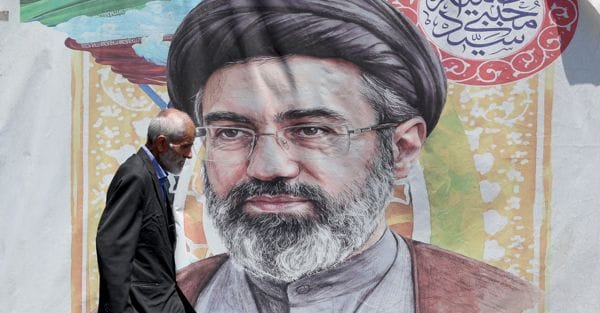
epa13046115 Un uomo iraniano passa davanti a un manifesto raffigurante il leader supremo iraniano, l’ayatollah Mojtaba Khamenei, in una strada di Teheran, in Iran, il 18 giugno 2026. L’Iran e gli Stati Uniti hanno firmato un accordo di pace per porre fine alla guerra tra i due Paesi. EPA/ABEDIN TAHERKENAREH
7 August 2026
A message to Tehran and Washington from the Riyadh-Ankara-Islamabad defence pact
Saudi Arabia, Pakistan and Turkey have today signed a defence pact, uniting the three countries against the backdrop of attacks on the Saudi kingdom and the ongoing war in the Middle East. Saudi Arabia, where the agreement was signed, intends to strengthen its alliances after being targeted by Iran – like other US allies in the region – and finding itself facing renewed hostilities with the Houthi rebels in Yemen. The announcement sends a message to Tehran, but also to Washington, which experts say is increasingly viewed as an unreliable partner. “The agreement aims to strengthen collective deterrence against any act of aggression and stipulates that any armed attack against one of the three states will be considered an attack against all three,” the Pakistani Foreign Ministry stated.
The agreement was signed in Mecca by Saudi Crown Prince Mohammed bin Salman, Turkish President Recep Tayyip Erdogan and Pakistani Prime Minister Mohammad Shehbaz Sharif. “The matter had been under discussion for some time, but recent developments in the region have accelerated the process,” a source close to the Saudi military told AFP. At the start of the year, Turkey’s participation still seemed out of the question, according to Riyadh. The three predominantly Sunni countries share the common goal of participating in efforts to resolve the conflict between Iran and the United States, which was triggered at the end of February by Israeli-American air strikes against Tehran, which have shaken the global economy.
Saudi Arabia and Pakistan are already bound by a mutual defence agreement concluded in September 2025, the result of a long tradition of military cooperation. The announcement has raised numerous questions, given that Islamabad possesses nuclear weapons. “This agreement is one of the clearest signs yet that the Middle East is moving away from a security order organised exclusively by the United States,” Andreas Krieg, a security expert at King’s College London, told AFP. “Regional powers increasingly believe that security should be guaranteed at a local level rather than solely by Washington.”
According to the analyst, this announcement supports Saudi Arabia’s ambitions to become the guardian of regional security and to diversify its defence capabilities. For Turkey, also a NATO member, and for Pakistan, the aim is to gain influence and attract Saudi investment. This rapprochement “is clearly directed against Iran”, observes Oumar Karim, an expert on Saudi Arabia at the University of Birmingham. In his view, the alliance “aims to counter Tehran’s new strategic approach, which seeks to dominate the entire Gulf region and control maritime traffic in strategic waterways, whether the Strait of Hormuz or the Strait of Bab el-Mandeb”.
For Saudi Arabia, the world’s leading exporter of crude oil, the opening of these sea lanes is vital. The Red Sea and the Bab el-Mandeb Strait had become alternative routes after Iran reimposed its blockade of the Strait of Hormuz following renewed clashes with the United States in July. However, the Iran-backed Houthis in Yemen have recently imposed a blockade on Saudi ships and are also threatening shipping through Bab el-Mandeb, on the other side of the peninsula. The agreement between Riyadh, Islamabad and Ankara comes at a time when progress appears to be emerging regarding the Strait of Hormuz: Tehran has confirmed that it has reached an agreement with the Sultanate of Oman on a new transit route for ships. However, any reopening will depend on Washington, which has imposed a blockade on Iranian ports.
In addition to the coastal front, Saudi Arabia has come under attack on its own territory from the Houthis, who have targeted oil infrastructure in recent weeks. The Riyadh-led coalition, an ally of the Yemeni government since 2015, also accused the rebels on Friday of carrying out “attacks against civilian targets” in the border region of Najran, injuring 11 people: an attack unprecedented in the kingdom since the 2022 ceasefire between the two sides. The agreement – as a Saudi official was keen to emphasise – is not linked to “any nuclear ambitions” and does not pose a threat to any country in the region.
“The agreement does not represent an attempt to establish a military axis or a sectarian bloc. Nor is it linked to any nuclear ambitions or an arms race; rather, it focuses on the development of sustainable capabilities,” said Deputy Minister for Public Diplomacy Rayed Krimly in a post on X. He added that the agreement “does not pose a threat to the security of any country in the region, nor does it represent an escalation of tensions”.
7 August 2026
Trump: ‘Iran does not want to be attacked; it wants a deal’
Donald Trump reiterated that Iran wants to reach an agreement with Washington and hinted that further attacks by the United States remain a possibility should diplomacy fail. “It’s clear that they don’t want to be hit. They want to reach an agreement. We’ll have to wait and see,” Trump said in an interview with Punchbowl News. Trump also spoke about energy prices, stating that the cost of petrol would only rise if he were forced to launch “another strike” against Iran. (
7 August 2026
Source close to the Riyadh-based army: the coalition will not stand idly by whilst the Houthis carry out raids
A source close to the Saudi military has stated that the Saudi-led coalition, which has been supporting the Yemeni government since 2015, will not “stand idly by” whilst the Houthi rebels step up their attacks on Yemeni troops. “The coalition is not seeking an escalation, but we will not allow the current balance of power on the ground to be altered,” added the source, speaking on condition of anonymity.
7 August 2026
Lebanon, media: Lebanese soldier wounded in Mansouri
A Lebanese soldier was injured today in the village of Mansouri, in the district of Tyre, after an Israeli drone fired a stun grenade at an army bulldozer that was attempting to reopen a road in the village. This has been reported by the Lebanese media, which state that the Lebanese army entered Mansouri overnight to clear the roads following Israeli bombardments and attacks over the past few days.
7 August 2026
Iran: Erdogan in Jeddah for a trilateral summit with Saudi Arabia and Pakistan
Turkish President Recep Tayyip Erdogan has arrived in the Saudi city of Jeddah. The news was reported by the Saudi media. The visit will provide the occasion for a summit of the region’s three major Sunni-majority powers – Turkey, Saudi Arabia and Pakistan – the latter represented by Prime Minister Mohammed Shehbaz Sharif. The meeting will focus on the Iranian crisis, including threats from Shia militias in Yemen and Iraq against Riyadh, and the signing of a defence agreement.
7 August 2026
Lebanon, media: Israeli artillery fire in the Tyre area
Israeli artillery struck the village of Mansouri, in the Tyre district, this morning. This was reported by the Lebanese newspaper L’Orient Le Jour, which noted that Mansouri had already been hit by Israeli air strikes yesterday following an evacuation order issued by the army – the first since mid-June.
7 August 2026
Saudi sources: ‘Mutual defence pact to be signed today with Turkey and Pakistan’
Saudi Arabia, Pakistan and Turkey are set to sign a mutual defence agreement today in Jeddah, according to sources close to the Saudi Arabian military and government who spoke to AFP. Saudi Crown Prince Mohammed bin Salman, Turkish President Recep Tayyip Erdogan and Pakistani Prime Minister Shehbaz Sharif are to meet in the Saudi city for a summit between the three Sunni Muslim countries. “The matter has been under discussion for a long time, but recent developments in the region have accelerated the process,” a source close to the military, who wished to remain anonymous, told AFP.
7 August 2026
Iran, WSJ: Trump orders investigation into leak regarding ammunition stocks
US President Donald Trump has ordered a new investigation into the leak of information regarding the Pentagon’s ammunition stocks. This was reported to the Wall Street Journal by administration officials.
According to officials, Trump ordered the investigations after weeks of media reports about a shortage of interceptors due to the war against Iran.
7 August 2026
Iran: media reports: ‘Khamenei is in a critical condition and may be on the verge of death’
Iran’s Supreme Leader Mojtaba Khamenei has never met any member of the Iranian government since the joint US-Israeli attacks that killed his father and predecessor, Ali Khamenei. This was reported to IranWire, a website close to the opposition, by two anonymous sources close to President Masoud Pezeshkian’s administration, who stated that “rumours are circulating in the highest echelons of the regime that he is in an extremely critical condition and could die at any moment”. One of the sources is reported to have said: “We would not be surprised if we were soon to hear the news of his martyrdom.” Since becoming Supreme Leader, Mojtaba Khamenei has made no public appearances and no recordings of his speeches have been broadcast; only written statements attributed to him by state media have been published. According to some sources, he was injured and possibly disfigured during the attack in which his father lost his life, and has been in hiding ever since, communicating with other senior regime officials through a slow network of intermediaries to avoid being targeted. Pezeshkian himself stated in an interview broadcast on Wednesday on state television that interaction with Khamenei is currently “very diffi
7 August 2026
Bin Salman and Macron hold telephone talks on the Middle East and the Red Sea
According to the Saudi Press Agency (SPA), as reported by Al-Jazeera, Saudi Crown Prince Mohammad bin Salman discussed the situation in the Middle East and freedom of navigation in the Red Sea with French President Emmanuel Macron during a telephone call. The agency also reported that the two leaders discussed joint efforts to strengthen stability in the region and ensure security following attacks on Saudi targets by the Iranian-backed Yemeni Houthi group.
7 August 2026
Al Jazeera: Israeli raid in the West Bank leaves 51 Palestinians injured
A “large-scale” Israeli raid on the Qalandiya refugee camp in the occupied West Bank has left at least 51 Palestinians injured, according to a report by the Jerusalem Governorate to Al Jazeera.
On Thursday, Al Jazeera also reports, Israeli forces demolished shops near the Qalandiya checkpoint, before imposing a curfew in the nearby town of Kafr Aqab and blocking the roads linking the area to Jerusalem.

