History

Guided tours of the Breda bunkers

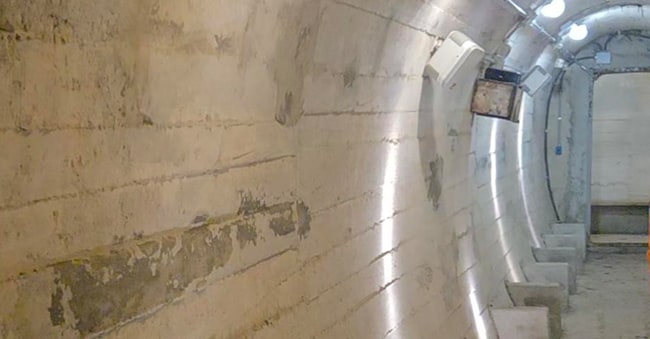
They were built of reinforced concrete in 1942 in the eastern part of Milan’s Parco Nord (between Milan and Sesto San Giovanni) to serve Breda’s 5th Aeronautical Section.

5' min read

Translated by AI
Versione italiana

5' min read

Translated by AI
Versione italiana

Visiting the Second World War air-raid shelters in Milan: you can do so at Parco Nord.

These are the Breda Company’s bunkers. They were built in reinforced concrete in 1942, in the eastern part of Milan’s Parco Nord (between Milan and Sesto San Giovanni), to serve Breda’s 5th Aeronautical Section.

Loading...

Renovated in conjunction with the Milan North Metropolitan Urban Ecomuseum (EUMM), they house an exhibition and multimedia display on the Second World War and the industrial transformation of the Milan area.
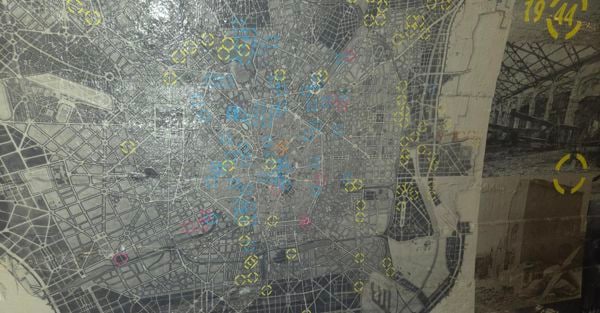
I bombardamenti a Milano

In rosso quelli del 1942, in azzurro quelli del 1943, in giallo quelli del 1944

What to see and what the route is like

The section open to visitors extends for over 30 metres inside the air-raid shelters, featuring photographic displays and an atmospheric audio system that evokes the atmosphere of the air raids.
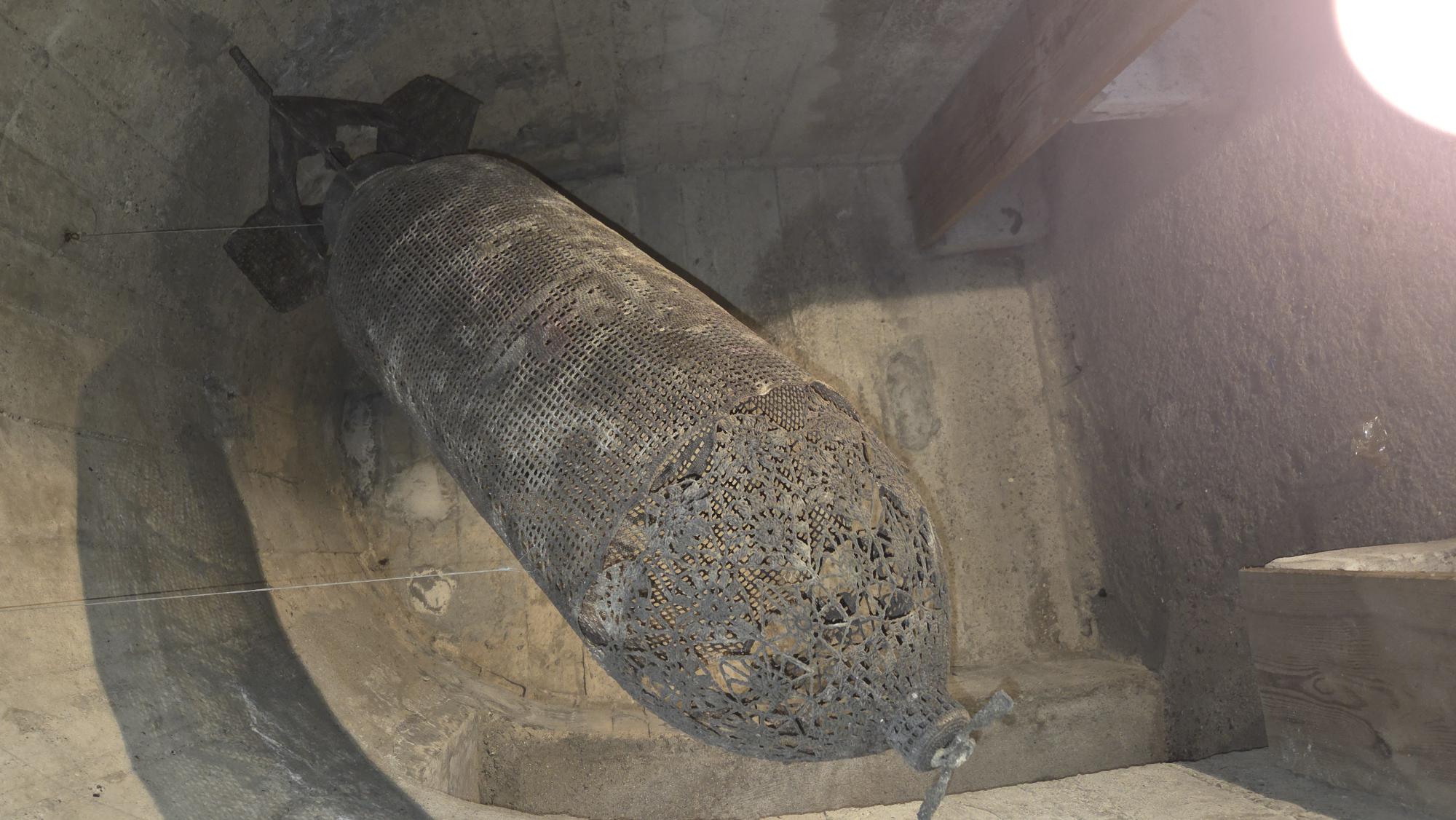
Bomba all’uncinetto

In the first corridor there is a piece from the collective installation *Bombe a uncinetto* (Crocheted Bombs), featuring life-size replicas of bombs. In memory of the real bombs that fell by the hundreds on 6 July 1944 in Dalmine (Bergamo), destroying the Dalmine steelworks – now Tenaris – and causing 278 deaths and around 800 injuries.

‘Crocheted Bombs’ is a collective art and installation project conceived by the artist Laura Morelli (in collaboration with the Di+ association), created to commemorate the Allied bombing raids of the Second World War on the industrial areas of northern Italia.

Tours, prices and how to take part

Tours take place by appointment, or on specific weekends each month, in collaboration with EUMM and the park’s volunteers, with limited places (often up to 30 participants) and booking is required.

Greater Milan

During the guided tour on 21 November 2026, the two dozen visitors, who left the tour highly satisfied, appreciated what they had seen and heard from their guide, Alessandra. The first part of the historical account focused on the development of Milan: in 1873, the city was sparsely populated, with its boundaries confined to the Spanish walls, to the extent that companies – including Breda and Pirelli – were located in areas close to the city centre along Viale Melchiorre Gioia.

In 1886, the engineer Ernesto Breda took over the ‘L’Elvetica’ engineering workshop in Milan, renaming it ‘Accomandita Ing. Ernesto Breda & C.’.

Fifty years later, in 1923, 11 municipalities (Affori, Baggio, Chiaravalle, Crescenzago, Gorla-Precotto, Greco, Lambrate, Musocco, Niguarda, Trenno and Vigentino) became part of ‘Greater Milan’. To the north, Niguarda included the Bicocca district, to which Pirelli relocated.

Loading...

In 1903, in order to expand the facilities, Ernesto Breda purchased large tracts of building land in the municipalities of Sesto San Giovanni and Niguarda. It was here that the famous steel and engineering complex was established, divided into various production ‘sections’ (electromechanical, locomotives – the best-known product –, steelworks, forges and aeronautics in the Parco Nord area). In order for the aeroplanes to take off, it was necessary to build the factory in a vast area that was, by necessity, on the outskirts.

Magneti Marelli was also located between Milan and Sesto San Giovanni. On Via Adriano stands the so-called ‘matitone’, a reinforced concrete air-raid shelter tower approximately 35 metres high, dating from the Second World War.

The Breda Bunker

At Parco Nord, at a depth of about three metres, the Breda bunker could accommodate 400 workers. Each section could hold 50 people for a maximum of two hours – the time limit for oxygen consumption, given that there was only one small opening for air recirculation. After that, they had to get out at all costs.

On 30 April 1944, a bombing raid on a Sunday – when few employees were at work – claimed five lives. The bunker offered protection from shrapnel, but if it had been hit by a bomb, there would have been no chance of survival for anyone.

In Milan – according to the guide – the bunker considered to be the safest was beneath Piazza Duomo. The green arrow indicating the nearest air-raid shelter is still visible near the ATM (Milan Transport Authority) point (whereas, when the green arrow was on the inside, it indicated the emergency exit).

The Fascist regime

During the Fascist regime, one was required to say ‘ricovero’ rather than ‘rifugio’, for reasons to do with propaganda.

Furthermore, there was the offence of defeatism, introduced in 1930 (the Rocco Code), which remains in force today (Article 265, paragraph 1, of the Criminal Code): “Any person who, in time of war, disseminates or communicates false, exaggerated or tendentious rumours or news which may cause public alarm or undermine public morale or otherwise undermine the nation’s resistance in the face of the enemy, or otherwise engages in any activity likely to harm national interests, shall be punished with imprisonment for a term of not less than five years”.

It was therefore forbidden to take photographs of bombed-out Milan, as did Gianfranco Ucelli di Nemi, a Milanese engineer and partisan, known for his active participation in the Resistance and for his family’s involvement in the Nazi-Fascist persecutions in Milan between 1943 and 1944. A keen photographer (he even used a Leica during the war), he left behind visual records of Milan as it was struck by the bombings of 1943, which today form part of the Ucelli Archive.

In Milan, 17,000 shelters were built. One of the best-known was that of the Royal Prefecture on Corso Monforte, between Palazzo Diotti and Palazzo Isimbardi, completed in 1943 in reinforced concrete with walls and a roof up to 2.50 metres thick. It was designed to house the provincial staff on the upper floor and the Prefecture’s operations centre — including the Prefect’s office — on the lower floor.

The phrase ‘Better to be alarmed today than bombed tomorrow’ is a historic slogan from the Second World War, engraved on the walls of the Torre delle Sirene. Built during the Fascist regime, it served as the city’s air-raid warning command centre. The inscription was repeated on every floor of the tower as a warning to the public and to the operators.

For private shelters – mostly cellars – people were asked to install reinforced columns and place sandbags against the windows. For buildings constructed from 1936 onwards, shelters were compulsory.

Alessandra explains that the Allied air raids on Milan prior to 8 September 1943 were concentrated in central areas in order to terrorise the population into rising up against the Fascist regime. Particularly memorable were the RAF air raids in August 1943, which claimed 161 lives at the *Corriere della Sera* offices, Santa Maria delle Grazie and Sant’Ambrogio.

On the night of 12–13 August 1943, Milan and Turin were hit by the most devastating attack of that period. Over 500 heavy bombers from the British RAF (Royal Air Force) dropped more than 1,250 tonnes of bombs.

After the armistice, and in 1944, the bombing shifted to the outskirts to target factories, such as Breda, partly because of the presence of Nazis in the factories, given the workers’ intense anti-fascist activity.

Copyright reserved ©
Loading...

Brand connect

Loading...

Newsletter

Notizie e approfondimenti sugli avvenimenti politici, economici e finanziari.

Iscriviti