The billion-dollar guru: building a beauty empire through young people
Bobbi Brown's second professional venture into the world of beauty thinks Gen X. Tired of anti-ageing products, she reinterprets the success of the nude look.
6' min read
6' min read
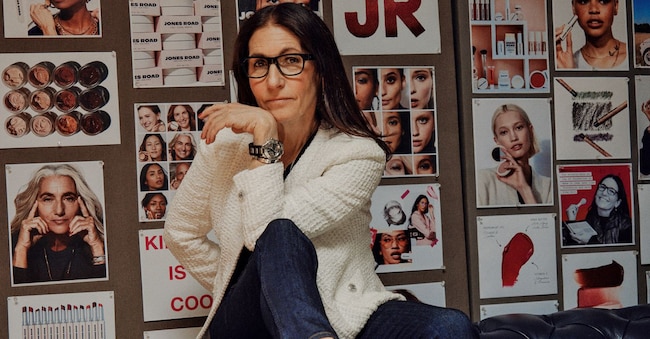
The last time I interviewed Bobbi Brown was 20 years ago. At the time, the make-up artist turned beauty guru and mogul was still running the eponymous brand she founded in 1991 and later sold to Estée Lauder - reportedly for $75 million. Her sales reached $1 billion a year. In the 20 minutes I had spent with her in a London hotel, they had brought to our table a jug of cucumber-flavoured water, Brown's suggestion for a moisturising skin boost, which I had then copied and prepared at home for a while. Today, the Brown in front of me, sitting cross-legged in another luxurious London hotel, is 67 years old and a grandmother, and as then, she shares with me her recipe for a new cucumber detox drink, which I will certainly try to replicate. "I call it Bobbi Rocks: an extra large ice cube in a low glass, a splash of tequila, cucumber pulp, lemon juice and fresh mint. An American splash of tequila,' he points out. "Your squirts are so tiny..." .
It is a great moment for Bobbi Brown. Having abandoned what she now calls 'the other brand' in 2016, she is more relaxed: 'I am myself,' she confides. And it is a bit ironic, since she left her name to that brand: 'I was able to reinvent myself,' she declares cheerfully.
And that's just how it is: four years after - 'not even', she says, interrupting her speech for a moment - the launch of Jones Road Beauty, Brown is well on her way to turning it into her second billion-dollar cosmetics brand, and this time she is doing so by taking full control of the creative process and with some of her family members on the team: her husband Steven Plofker, with whom she has three children; her son Cody Plofker, now chief marketing officer, i.e. responsible for all marketing activities of the company; and her daughter-in-law, Payal Patel Plofker, senior marketing director. Actually, it was not his intention to set up a family business, but it simply happened.

Initially, she thought she was done with beauty for good, partly because she had signed a 15-year non-compete agreement with Estée Lauder in 1995, with four years to go. Instead, she set out to study nutrition and started a brand of supplements, Evolution 18, which never really took off. "I tried and it wasn't really successful, I learned that not everything I touch turns to gold, but I never gave in to failure, if you worry too much about making mistakes, you probably won't make enough attempts." And so, on the very day his non-compete clause expired, he launched his new brand.
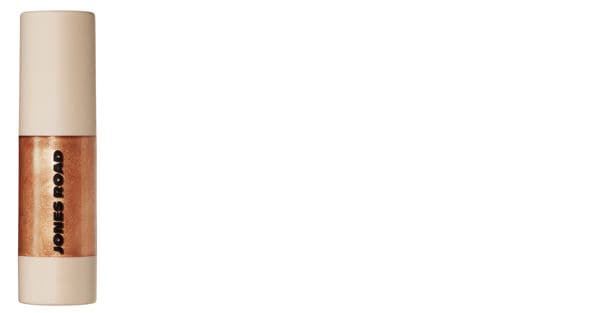
Jones Road Beauty is the second incarnation of the famous 'no make-up make-up' look, the natural, invisible make-up that made her so famous in the early 1990s. At a time when the norm was opaque make-up that favoured strong colours, she embodied minimalism: her products enhanced the natural beauties that appeared on glossy magazine covers and in advertising campaigns. She has no nostalgia for that phase, or for the nineties: 'We used to take a foundation and smear it on our lips, only later did I realise that it gave a slightly dull look. The difference is that today I look for and want either brightness or colour." While Bobbi Brown Essentials was launched with nude lipsticks in 10 different shades, all in natural beige tones, Jones Road came to market in 2020 with a Miracle Balm in four versions. The balm, which is a kind of hybrid between primer and moisturiser, has become a so-called 'hero product', a flagship product with immediate success. The tradition of cosmetics companies suggests that it is a mistake to mix two products in one: 'When I first saw it, I thought it was not what I wanted,' she says. "Then I applied it to my face and I couldn't believe how much it improved my skin." The consistency of Miracle Balm is not particularly inviting, appearing as a shiny, solid creamy wax reminiscent of heavy theatrical make-up. However, when you apply it (Brown dips his fingers in it, then lightly rubs them against each other and with small touches of both hands lays it on the skin) the effect is just the kind of sheen so sought after today. Cody Plofker admits that it is a divisive product: 'Some people love it, others don't care'. Ruby Hammer, a make-up artist who has been awarded the prestigious MBE (Order of the British Empire) for her contribution to the cosmetics industry, herself a brand founder and friend of Brown, is more diplomatic: 'I like it, but you have to be careful when using it because it gives a lot of shine. It is a product that adds shine to the face, you have to keep that in mind in case you are photographed'. Its success is in any case unquestionable: available today in 13 shades (price €44), it represents around 30 per cent of the brand's sales, which this year - Plofker estimates - will reach a total volume of more than one million dollars.