
'Habemus Papam', Leo XIV and the last secular mass on generalist television
Over 20.8 million people tuned in to follow the election of Leo XIV live. A figure that brings generalist TV back to a central role. And Rai1 leads the way

3' min read
Key points
3' min read
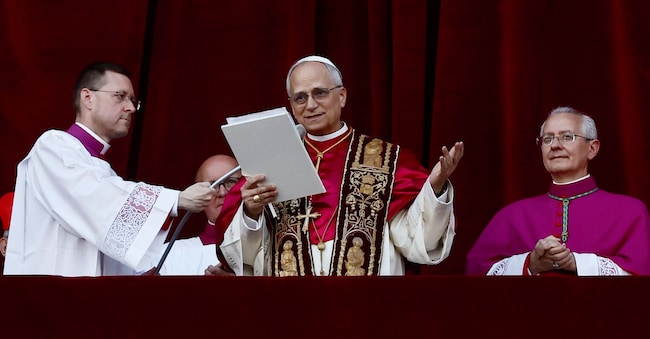
At 7.30 p.m. on 8 May, when Cardinal Protodeacon Dominique Mamberti pronounced the ritual 'Habemus Papam', Italy once again gathered in front of a screen. It did so in silence, as one does with gestures one knows by heart. What rarely seems to happen, but does happen, has happened: television has once again become a shared space, a place of collective presence. And all this in a time often branded as post-television.
The Power of Ritual (live)
.According to Auditel data processed by Studio Frasi 20.8 million people tuned in to the main television networks to watch the live announcement of the new pontiff: Leo XIV. A figure that defies the times, that belies the narrative - for many observers too hasty - of the irreversible decline of generalist TV. In reality, what is waning is not the medium, but the daily use that is made of it. And when the event requires it (it also happens with sporting events, or major national or international news events), television once again becomes our agora.
Between the white smoke (18.08) and the end of the live broadcasts (20.00), the overall average audience was 16.5 million. Rai 1 led with 7.8 million, almost tripling Channel 5, which stopped at 2.7. Next, SkyTg24 was the most viewed all news channel with 971 thousand viewers, while Tv2000 - the network of the Bishops' Conference - exceeded half a million, doing better than Rai 2. These are numbers that tell something more than just tastes: they speak of trust, symbolic proximity, recognition.
Rai1, the queen of institutional information
"Within this framework," comments Francesco Siliato, media analyst at Studio Frasi, "the certainly interesting fact is basically the symbolic role that Rai 1 continues to play: it remains the channel of officiality, of the institution, of legitimacy. When an event occurs that calls the country to collective attention, that's where we return'. In the ten minutes in which the new Pope spoke, between 7.30 p.m. and 7.40 p.m., Rai 1 gathered over 9 million viewers per minute. A quantitative record, but above all a symbolic one. In short, RAI's first network confirms itself as the channel of institutional legitimacy, the place where the country meets when it needs to recognise itself. It is a conditioned reflex, but also a cultural habit before being a media choice.
The special editions of the news programmes confirm this set-up. Again according to Studio Frasi's processing of Auditel data, Tg1, with 7.6 million, leads the special editions. Tg5 follows at 2.6 million. Then TgLa7 (1.2), Tg3 (950 thousand), Tg4 (619 thousand), Studio Aperto (507 thousand), Tg2 (493 thousand). But it is in the post-event dynamics that a significant detail is grasped: Tg1 falls, Tg5 gains. At the end of the ceremony, the spectator returns to being an individual, no longer a crowd.


