Aesthetic surgery

Hair transplants, business grows in Europe and low-cost clinics multiply

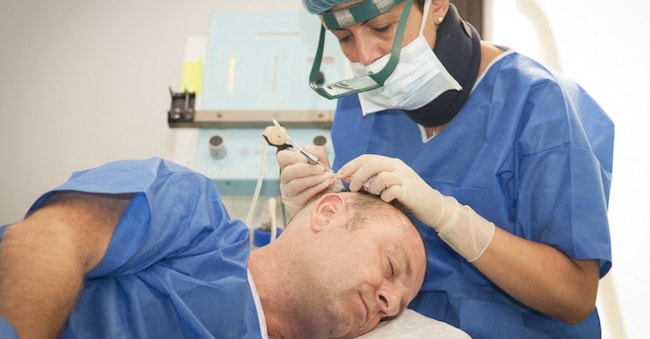
The European hair transplant market is worth over USD 9 billion and continues to grow. France and Spain strengthen domestic supply, while Turkey remains the capital of medical tourism

by Davide Madeddu (Il Sole 24 Ore), Francesca Barca (Voxeurope, France) and Ana Somavilla (El Confidencial, Spain)

(AdobeStock)

4' min read

Translated by AI
Versione italiana

4' min read

Translated by AI
Versione italiana

For some it is a matter of aesthetics, for others a way to regain self-confidence and psychophysical well-being. But behind the race for hair transplants - a phenomenon that involves an increasing number of men and, to a lesser extent, women - there is now an expanding global market, driven by new technologies, greater affordability and a widespread normalisation of the subject of baldness.

A steadily growing market

According to estimates by Medihair, a platform specialising in monitoring the industry, the worldwide hair transplantation market is worth around USD 9.5 billion and could exceed USD 15 billion by 2030, with an average annual growth rate of more than 6%.

Loading...

In 2021 alone, some 358,000 operations were performed in Europe, with a steady increase in recent years, driven by the UK, Germany, France, Spain and Italy.

Hair loss affects, according to Medihair, more than 80 per cent of men and 25 per cent of women in the course of their lives. The increase in the average age of the population and the increasing attention to one's physical appearance, also in the professional sphere, contribute to keeping the demand for trichological treatments high.

Italy and medical tourism to Istanbul

In Italy, the average cost of a hair transplant ranges between 6 and 8 thousand euros, depending on the technique used and the number of follicular units implanted. In Turkey, on the other hand, the same procedure costs on average between 2,500 and 3 thousand euros. Price differences that have fuelled the phenomenon of health tourism, with Istanbul having become one of the world's hair transplant capitals in recent years.

Turkish clinics offer complete packages including travel, accommodation, pre-operative counselling and surgery. According to industry estimates, in 2024 more than one million people travelled to Turkey to undergo a hair transplant, generating an income of more than one billion dollars.

France: boom in operations and cases of correction of failed transplants

In France, too, the market is booming. An Ifop survey in 2024 reveals that 13% of French people say they suffer from baldness, a figure that is on the rise. The average cost of a transplant in the country is around 8,000 euros, but can be as high as 15,000, a figure that drives many patients to choose clinics in Turkey where the same procedure costs between 2 and 3,000 euros.

In recent years, however, a parallel phenomenon has emerged: that of French clinics that correct the outcomes of failed transplants performed abroad. Clinique Lutétia in Paris, one of the best known in the field, reports that around 30% of its activity now consists of repairing failed transplants. 'It's very sad, because not all of them can be corrected: the donor area, the back and sides of the head, does not regenerate and is a valuable asset,' explains Nathanaël Aknine, the clinic's president.

In France, the technique of follicular unit extraction (Follicular Unit Extraction) is widespread, but often also practised by nurses. Legislation on the subject is not yet fully defined, and the health authorities are considering the introduction of stricter rules to ensure higher safety standards. The debate has also been ignited after the news case of a 24-year-old young man who took his own life following complications from a beard transplant performed in Turkey, reigniting the discussion on the risks of low-cost medical tourism.

Spain: from tourism in Turkey to low-cost national clinics

In Spain, according to Medihair, 44.5% of men suffer from alopecia. Hair transplantation, once considered an elitist treatment, has now become a widespread procedure accessible to a wider public.

A key factor in this change is the cultural shift in the perception of male aesthetics: more and more men see transplantation not only as a medical solution, but also as an investment in their emotional and professional well-being. The increasing visibility of public figures who have claimed to have undergone the procedure has helped to normalise the practice.

For years, Turkey has been the preferred destination for Spanish patients, but in recent years a competitive domestic offer has emerged. Specialised clinics in Madrid, Barcelona and Valencia propose more affordable packages, including consultation, transport and post-operative care. This phenomenon has given rise to a form of domestic medical tourism, with patients travelling from other regions to access quality treatments at competitive prices.

The Spanish sector is regulated by medical and legal regulations that require specific licences and that interventions must only be performed by certified professionals. However, the rapid growth of the market has also favoured the emergence of unregulated offers, raising the need to strengthen controls and ensure transparency in results and advertising practices.

In parallel, the Spanish public health service has started to introduce reconstructive capillary transplants in specific cases, as part of dermatological surgery programmes, thus widening access to treatment.

Between aesthetics, health and regulation

Alongside transplants, the market for preventive and regenerative treatments is also growing, including drugs such as finasteride and minoxidil, platelet-rich plasma therapies and low-intensity laser light technologies. According to Grand View Research, this segment is already worth more than USD 4 billion globally and is experiencing higher growth rates than the surgical segment.

However, the question of regulation remains open. In Italy, as in other European countries, scientific societies are calling for clearer rules and greater control over operators, particularly those working abroad.

*This article is part of the European collaborative journalism project "Pulse"

Copyright reserved ©
Loading...

Brand connect

Loading...

Newsletter

Notizie e approfondimenti sugli avvenimenti politici, economici e finanziari.

Iscriviti