Handmade tapestries and fabric sculptures: Kala, Indian art and craftsmanship
Following on from ceramics, textiles are now also making their mark in interior design. The country that best embodies this trend is India, with workshops that straddle the worlds of decoration, furniture and one-off pieces.

There is a silent yet vital thread that runs through the entire world of textiles, making a strong impact on both the world of interior design and that of contemporary art. An ancient and precious body of knowledge, whose practitioners have long been regarded as artisans in the Western world and as artists in what is now referred to as the Global South, the southern hemisphere. Like ceramics, textile art has for centuries straddled that fine, blurred line between art and craft — a boundary that the world of interior design now recognises and values as never before. Fibre art, tapestry, weaving, embroidery, knitting: different forms of a single language that extends beyond its natural boundaries, engaging in dialogue with fashion, design, science and technology.
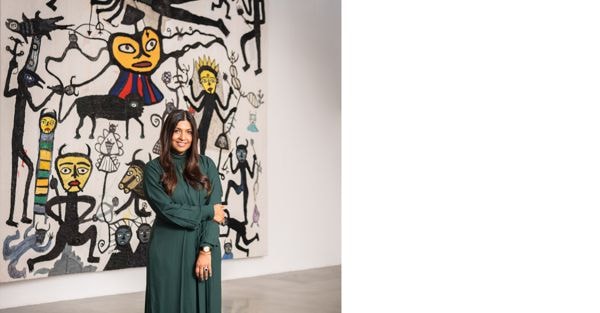
India perfectly embodies this evolution: a nation that has literally woven its history into this dynamic dichotomy, capable of moving from art to product and back again. A prime example is Chanakya International, the textile and embroidery company founded in Mumbai in the 1980s. “When my father founded the brand, his vision stemmed from his own background: a village in Gujarat, the south-central state of India, where every community celebrates its culture and collective identity through craftsmanship,” explains Karishma Swali. Her creative direction has forged lasting collaborations with leading fashion houses, artists and craftspeople worldwide. With the support of Maria Grazia Chiuri, Swali founded the Chanakya Foundation for education and sustainability, and the Chanakya School of Craft, a non-profit organisation dedicated to women’s empowerment through craft and cultural knowledge. In the bright headquarters in central Mumbai, a creative microcosm unfolds: craftswomen and craftsmen bent over long tables design embroidery, knotting and spinning techniques from the zardosi and aari traditions, as well as exploring weaving possibilities never attempted before. With swift movements and skilful knots, gigantic tapestries and abstract textile sculptures take shape.

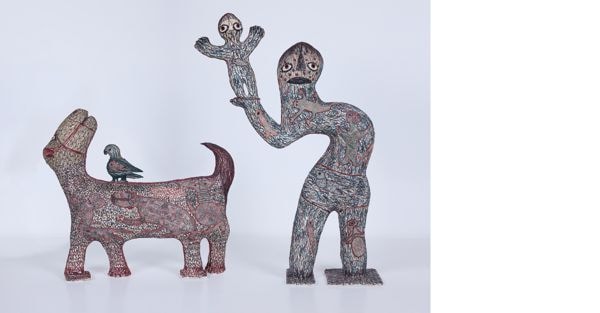
In India, Chanakya began his artistic journey through his connections with the fashion world. “Our first collaboration was with Judy Chicago for a Dior fashion show: she is an artist we admire greatly,” adds Swali. “Together we’ve come a long way, and her work – inspired by the 1979 The Dinner Party – is not only now part of our portfolio, but the large tapestries we created together are now housed at the New Museum in New York.” From collaborations with names such as Mickalene Thomas and Isabella Ducrot, her forays into art have multiplied, culminating in the international success of the exhibition Cosmic Garden, which opened two years ago at the Venice Art Biennale – a six-handed project with Indian artists Manu and Madhvi Parekh. Paintings on canvas alongside woven surfaces and textile-clad sculptures: “When I looked at Madhvi’s works, I almost felt as though I were standing before living beings, because of their primal energy.”

‘I felt the urge to make them three-dimensional.’ Hence the decision to explore lesser-known techniques, such as papier-mâché — with its use of waste materials — in dialogue with weaving (papier-mâché pieces priced at 50,000 euros and woven pieces at 160,000). The circle is now complete with a homecoming, in the truest sense of the word: the Chorus brand is born, where Chanakya explores textiles not just for clothing, but also for interiors, from bedspreads to hybrid objects such as fabric vases that straddle the line between decoration and collectible design. ‘For me, personally, the rarity of a craft form depends not only on the exceptional nature of its savoir-faire, but also on a geographical, historical and cultural context that makes a fabric almost a field of inquiry,’ explains Swali. “Given that in India there is no clear linguistic distinction between art and craft – in Hindi there is a single word to denote both, kala – everything, from the performing arts to any form of creative expression, falls within the same sphere of interest.”

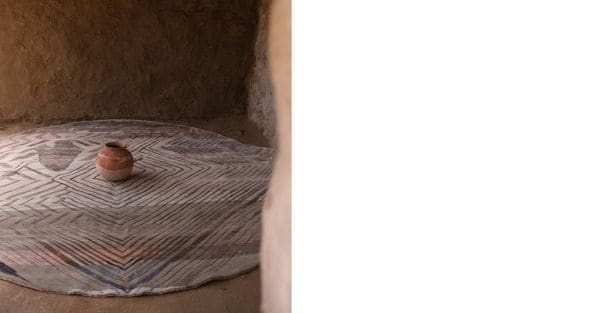
This vision will be celebrated with an exhibition in Rome at the end of the year and, before that, at the next edition of Homo Faber in Venice, from 1 to 30 September. Also present there with one of its spectacular rugs will be another major player at the crossroads of textiles, interior design and Indian art: Jaipur Rugs, a brand which, as its name suggests, originated in the sun-drenched ‘Pink City’ of northern India. ‘One of the first projects I worked on was a series of large rugs designed by Luca Guadagnino and Nicolò Rosmarini for the last edition of the event at the Giorgio Cini Foundation in Venice,’ says artistic director Greg Foster. ‘For the curators, craftsmanship is regarded on a par with contemporary art. More than any other household item, a rug tells a story: it reveals where it was made and, sometimes, even who created it.”