Guidelines

School reform: writing, poetry, computing and Latin in the new educational programmes

Education in respect for women is introduced. The study of the history of the West remains. Minister Giuseppe Valditara's guidelines introduce important changes in the educational programmes, with a focus on writing, poetry, computer science and Latin. STEM education and awareness of respect for women are also promoted. Music and geography return to the centre of attention

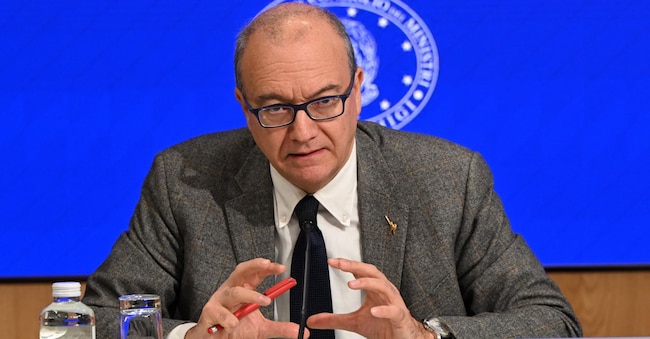
Il ministro dell'Istruzione e del merito, Giuseppe Valditara, nel corso della conferenza stampa al termine del Consiglio dei Ministri, Roma 28 marzo 2025.
ANSA/MAURIZIO BRAMBATTI

4' min read

4' min read

Cursive writing, poems from memory, IT from primary school, Latin from secondary school. And again: more English and 'Stem' teaching, as well as education in respect for women and positive feelings, particularly empathy. The study of the Bible and the history of the West remains. Geography and music return central.

Valditara's guidelines

After a public consultation phase, MIM released its proposed changes to the school curricula at pre-school, primary and secondary level, sending the document to the Cspi for its opinion.

Loading...

Sondaggio

After the first anticipations this winter, the ministry commissioned a survey from Swg and Kpmg: the measures most appreciated by parents are handwriting and poems by heart (81% approval), a little further back, but still over half of the respondents (63%), the introduction of Latin from the second grade.

Here are all the main innovations in detail.

Writing enhancement

.

The role and educational function of cursive writing and handwriting is enhanced. It is specified that for pupils with specific learning disorders, the use of cursive takes into account the Guidelines for the right to study of pupils and students with specific learning disorders. Writing, it is written in the document, is much more than a technique: it is knowing how to structure thought with logic, thus representing a powerful tool for initiating reflective thought and introspection.

Centrality of the summary

.

The New Directions give a key role to the exercise of summarising, which teaches how to be clear, logical in identifying the essential parts of a text, and brief in communication. Learning to summarise is a fundamental achievement for learning to think.

Poems from memory

With the New Directions, learning poems by heart is back, which, as attested by numerous neuroscientific studies, strengthens short- and long-term memory, attention and concentration, enriches language in comparison with cultured language and stimulates sensitivity. Already Calvino and Eco, in the era of the spread of the net and therefore also of the risks of dispersiveness induced by it, suggested the rediscovery of this very important exercise, which once again has its centrality in the ministerial document.

Stem Materials

.

The New National Directions promote an integrated and interdisciplinary mathematics-science-technology (Stem) education. Computer science will be introduced as early as primary school. The primary objective is to form citizens capable of navigating the complexity of the contemporary world and planning for the future. Consistent with the 2023 Guidelines for Stem subjects, the need to start from reality and the pupil's experience to arrive at theory is emphasised. Stem becomes a real 'laboratory of ideas' where students experience knowledge in a concrete and active way: they formulate conjectures, plan, discuss, argue.

The revenge of reading

.

As far as literature is concerned, the main objective is to get students to enjoy reading so that they derive tools from texts to understand themselves and the world. Literature is seen as a powerful means to get to know oneself, find a common humanity and learn to relate consciously in the world. Integral reading of classics and good quality texts is promoted, discouraging anthological fragmentation, and encouraging discussion and comparison of different points of view.

History of the West

.

In the New Directions, history accompanies students, right from pre-school, to understand who they are, where they come from, what future they are preparing for, what contribution they can make to society. For this reason, the history of the West, unravelled between Athens, Rome and Jerusalem, acquires its own centrality. The Indications for the curriculum of the first cycle open history to a European dimension and, as far as it appears possible and sensible, also to a world sphere, while maintaining, especially for the first cycle, the undeniable relevance of the Italian dimension, not only as the one closest to the pupil's experience but also the one so strongly connected to the Mediterranean context where the Greco-Roman events take place. The discipline is designed to accompany young people in the acquisition of fundamental skills to understand the phenomena that have shaped our societies, to recognise their complexity, while also appreciating the differences with respect to geo-historical contexts different from our own, whose peculiar characteristics must also be learnt.

Geography also returns central

.

One cannot be an Italian citizen if one does not know how to locate the Po River or distinguish the Alps from the Apennines, or in which regions Bari, Salerno, Verona or Bergamo are located. The new National Directions for Geography mark a clear relaunch of physical and political geography, elevating the discipline to a fundamental pillar for the formation of an autonomous and aware citizen, capable of a profound understanding of the relations between human beings, territory and environment, at all scales, from the local to the global.

One of the most significant innovations is the centrality given to the formation of 'spatial thinking' and the learning of the code of geo-graphics. Geography does not merely localise, but teaches how to produce, deepen and systematise knowledge about the complex of material and immaterial relations in the territory. This is done through the use of an extended cartographic language that includes not only maps and globes, but also digital representations such as satellite images and Geographical Information Systems (GIS), alongside photographs, audiovisuals, statistical data and even literary text or works of art.

Violenza donne, Valditara: "Basta cultura maschilista, vogliamo relazioni sane"

Latin from seventh grade

The go-ahead is also given for the return of Latin for better knowledge and learning of the Italian language and its rules. The New National Indications reintroduce curricular and optional Latin from the second grade onwards, elevating it to a vital tool for in-depth knowledge of the Italian language and culture and for understanding the relationship between Italian and European cultures.

The study of English is strengthened

.

The study of English and the second community language is the acquisition of essential tools for global communication and mutual understanding between peoples. The New Directions reinforce their role and functions useful for the formation of individuals capable of navigating a complex and interconnected world. The general objective for the first cycle is language literacy and the development of communication skills, aiming at A1 (primary school) and A2 (secondary school) levels according to the CEFR. An immersive approach is strongly encouraged, with the teacher 'entering the classroom speaking in English and stimulating students' expression in English', to gain confidence in its use and appreciate its importance in everyday life.

Fundamental Role of Music

.

It also invests in basic - non-specialised - music education from pre-school onwards, which is essential for forming generations capable of listening, understanding, expressing and appreciating.

Copyright reserved ©
Loading...

Brand connect

Loading...

Newsletter Scuola+

La newsletter premium dedicata al mondo della scuola con approfondimenti normativi, analisi e guide operative

Abbonati