
“They Won”, the sentimental education of a nameless defeat
Set against the backdrop of the ‘Years of Lead’ and the second-hand American dream, Silvano recounts the downfall of an entire generation

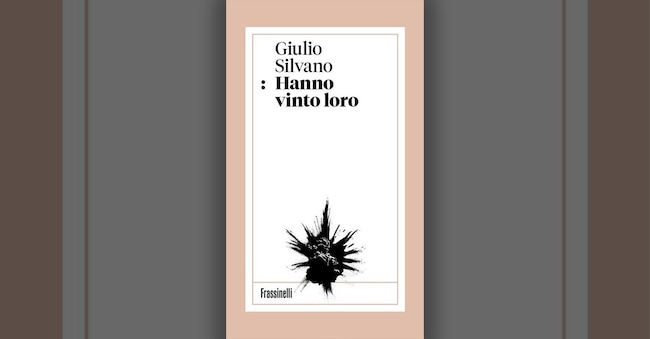
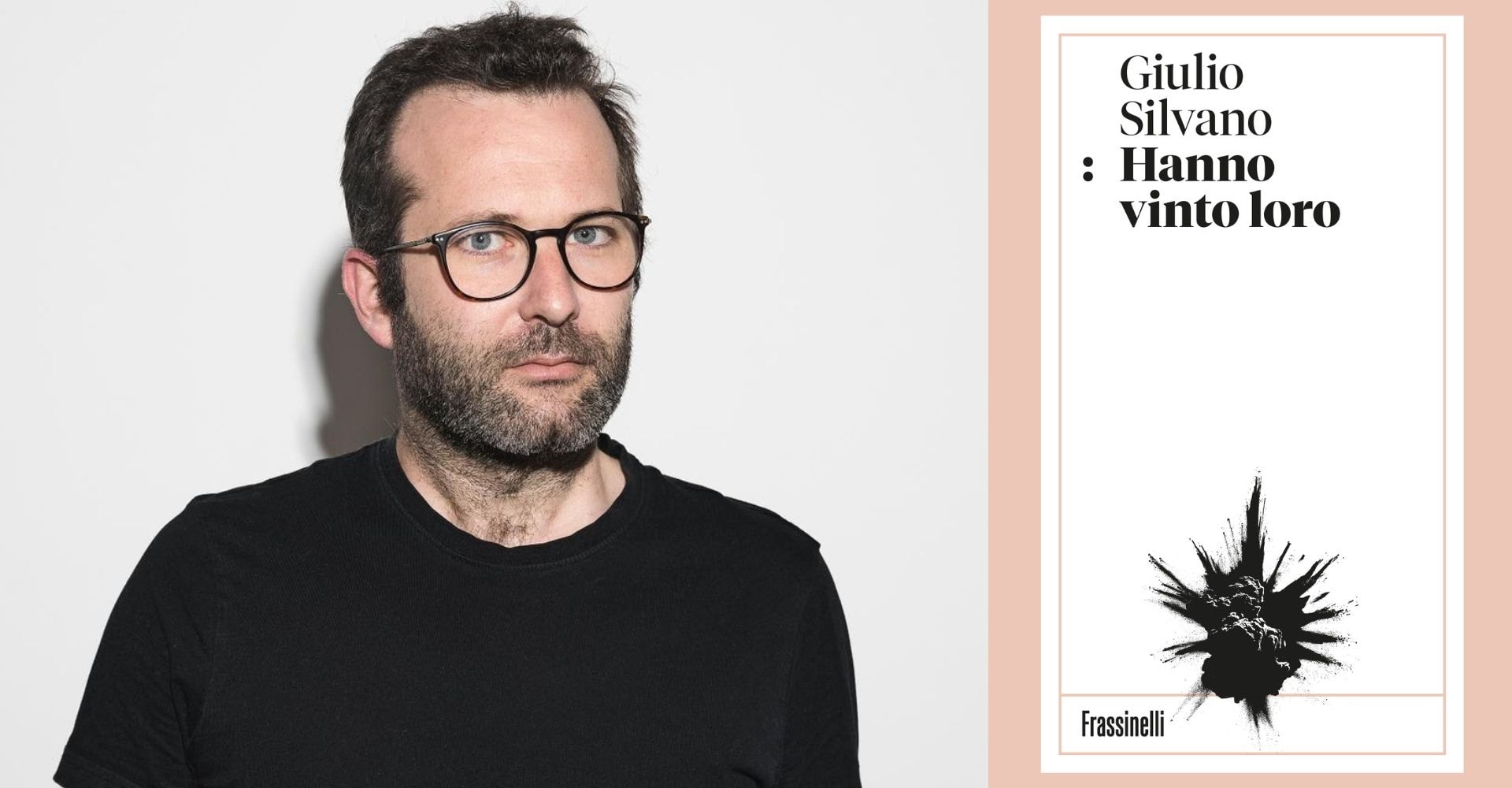
In the life of every generation, there comes a time when history steps out of the textbooks and ceases to be impersonal, becoming instead a personal experience. That moment when collective events – such as a war, a terrorist attack or the widespread collapse of an ideology – settle into a private memory and take root, indistinguishable from those endless summer afternoons and the first cigarettes stolen from adults. For his part, Carrère has based an entire work on the short-circuit between news report and confession, on the suspicion that the truth of an era is better concealed in an anecdote than in a treatise. And it is to that lesson that Giulio Silvano looks in his debut novel, *Hanno vinto loro* (Frassinelli, 256 pp., €20).
The novel’s raw nerve lies in the glorification of conspiracy theories as a national vice – that is, the distinctly Italian habit of never being satisfied with a straightforward explanation. Against this backdrop moves a penniless millennial narrator, a sort of ‘flâneur 2.0’ split between Paris and Rome, who pays for every purchase with his smartphone, terrified that his card might be declined. The mechanism that sets the story in motion is, by his own admission, almost cinematic: one evening, whilst wandering through the Cité, he spots a man being forcibly shoved into a car, and for a moment believes he is witnessing the repatriation of one of the many fellow countrymen—terrorists who have long taken refuge in France under the Mitterrand doctrine.
The hidden depths of the mystery
Out of this misunderstanding resurfaces the memory of B.S., whom he had met two decades earlier in Liguria during a summer of his childhood: a former secret service agent, enigmatic and capable of ‘knowing everything about real life’, unlike the boy’s parents. And here the coming-of-age novel takes a dramatic turn: rather than a journey of growth, it reveals itself to be an apprenticeship in loss, as if the vocabulary through which one learns to navigate the world were to wear thin precisely at the moment it is put to the test. B.S. is a fictional character, a distillation of the all-knowing wheeler-dealers of the First Republic. It is no coincidence that Berlusconi, whilst his presence looms over the entire book – set during the ‘Cavaliere’s’ second government – is never mentioned by his full name, in a game of omission that Silvano has ironically likened to Veltroni’s 2001 election campaign, when the then-candidate systematically avoided uttering his opponent’s name. An omission, incidentally, which the author has admitted is also a linguistic joke, given that ‘B.S.’ in English sounds like a colloquial synonym for ‘nonsense’.
The appeal of all things American
For the most part, the novel is set in 2001 itself – the year of the G8 summit in Genoa and the anti-globalisation movement, but also of the attack on the Twin Towers, which, according to Silvano, did not bring about much change on a geopolitical level, but painfully shattered something deeper: the ‘end of history’ optimism that still permeated the 1990s. From there, the trajectory of globalisation, the delayed effects of which the book documents: the small Ligurian village of just a few thousand inhabitants which, a quarter of a century later, offers tourists bagels and pancakes, club sandwiches and menus with allergy symbols, in a sort of Americanisation of taste that the author traces, with a reporter’s understatement, not to a recent shift in marketing, but to a long-term trend that began back then.
What is the Left?
No less successful is the portrayal of the left-wing family in which the young protagonist grew up; the progressive provincial middle class which, in the 2000s, lost its ideological anchor – from the partisans to the dissolution of the Communist Party – and was reduced to seeking its identity markers elsewhere, on the shelves of Feltrinelli’s paperbacks, among South American titles and a cursory interest in global issues – such as fair trade and the refugees of the moment – at the expense of the pressing issues on their own doorstep, which have been left as a legacy – electorally speaking – to the Right. The result is a Left that has been able to wield cultural power, but not political power, since the fateful ‘moral question’ has led it to shoot itself in the foot every time it has gained it. Matteo Renzi, if anything, was the exception that proved the rule.

