City Break

Hamburg, a Hanseatic jewel suspended between sky and water

The literary echoes of the Buddenbrooks and the notes of Brahms resound in the city: between water streets, breathtaking architecture and workshop districts

by Enrico Marro

4' min read

4' min read

'It's a good thing we have rain otherwise all the other Germans would come and live here,' goes a smile-inducing Hamburg proverb. It sums up well the spirit and pride of Europe's largest city not to be a capital: a Hanseatic, multicultural, German city almost by accident, a long-standing destination for trade and commerce, with a port area alone as big as the whole of Copenhagen. Visited by six million tourists per year: Hamburg.
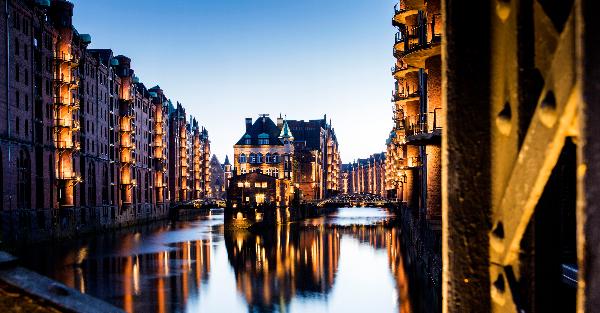
Scenografica, romantica e a suo modo selvaggia, Amburgo è un luogo sospeso tra acqua e cielo in cui Wim Wenders volle ambientare uno dei suoi film più belli, L’amico americano (Mediaserver Hamburg- Jorg Modrow).

Between Water and Sky

.

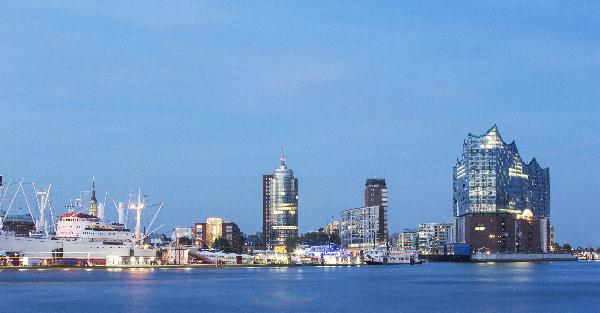
Blue, grey, hugging the water with its 2500 bridges, cultured with its hundred museums and the spectacular Elbphilharmonie. Autonomous and independent. Ecological, thanks to the surprising laboratory city of sustainability - Hafencity, a unique project in Europe.
Loading...

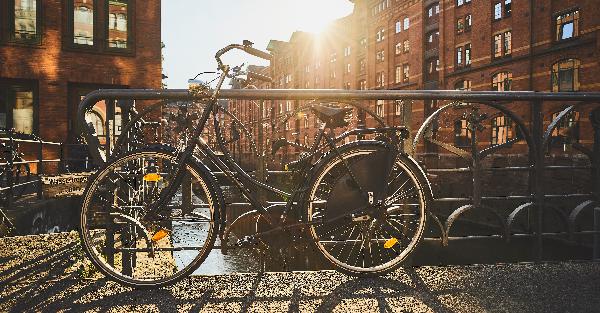
Aristocratica dai tempi di Thomas Mann e trasgressiva da quelli dei Beatles, Amburgo è ricca ma votata all’understatement (Mediaserver Hamburg-Julia Schwendner).

wealthy and aristocratic since the days of the merchant bourgeoisie recounted by Thomas Mann and yet disposed to understatement unlike its 'rival' Munich: it hates to flaunt skyscrapers like the financial Frankfurt (one day it will have one, just one, still under construction). And it has no castles, because nobles were not allowed to own land in the 'free city'.
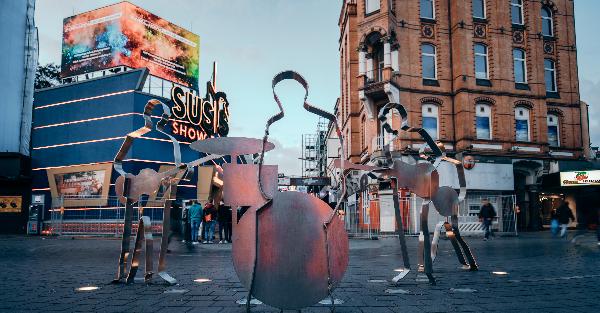
La Beatles-Platz nell’ex quartiere a luci rosse St-Pauli, dove i “Fab Four” iniziarono la loro carriera appena atterrati da Liverpool (Mediaserver Hamburg-Konstantin Beck).

Ask Who Were The Beatles

Wealthy but generous, welcoming and underground, with a mindset devoted to openness that has always attracted refugees, squatters and the subcultures of artists of good hope. Like those kids who landed here from Liverpool in August 1960, four desperados in a band called The Beatles. They played like mad all night in the clubs of the old red-light district, St Pauli, amid the rushing wind and the scent of the North Sea, which is a hundred kilometres away.
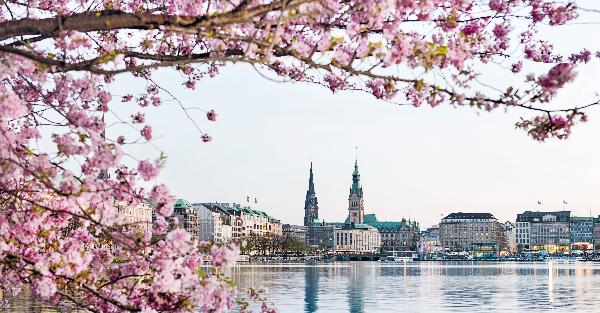
Amburgo ogni anno viene visitata da sei milioni di turisti, affascinati dai suoi 2500 ponti e dagli oltre cento musei (Mediaserver Hamburg-Jorg Modrow).

Scenic, romantic and in its own way wild, Hamburg is a city far from stereotypical. German, but with a Danish and British aftertaste. A place suspended between water and sky in which Wim Wenders wanted to set one of his most beautiful films, The American Friend.
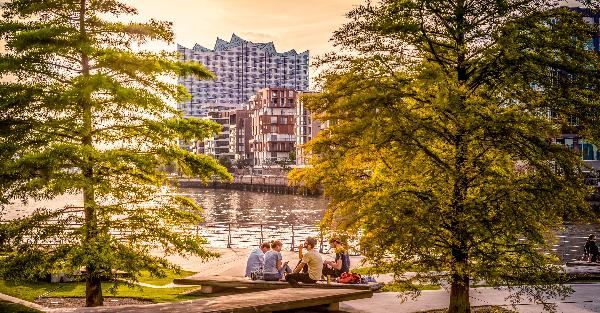
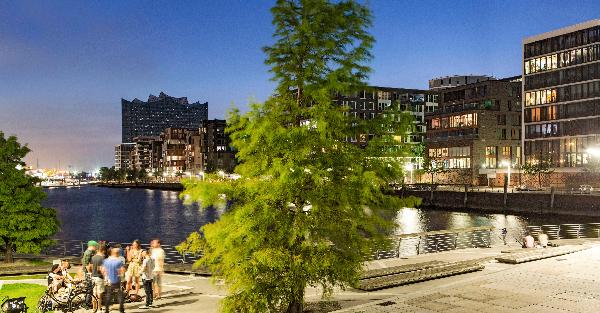
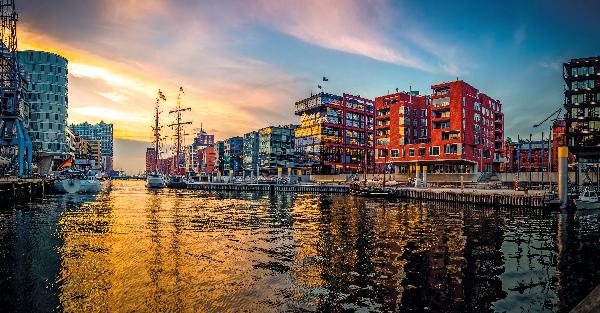
Uno scorcio di Hafencity, la città ideale costruita nel cuore di Amburgo e votata alla tripla sostenibilità: sociale, economica e ambientale (Mediaserver Hamburg-Ingo Boelter).

Hafencity, the city of the future

.

Where to start to tell the story? From the future. Hafencity, the city laboratory of sustainability. It all starts in the late 1990s, with the centre now depopulated and the city in need of rethinking. The idea was to reclaim part of the old port by creating a new heart of Hamburg, dedicated to triple sustainability: social, economic and environmental.

The project is grandiose: when fully operational it will host 45 thousand workers, 16 thousand residents, 5 thousand students (there is also a University) and 70 thousand tourists a day on 127 hectares of urban area. It is a neighbourhood where rich and poor coexist amidst intriguing architecture such as The Roots (a wooden building), Moringa (created with reused materials) and Wehouse, vaguely reminiscent of Boeri's Bosco Verticale.

A regime Hafencity ospiterà 45mila lavoratori, 16mila residenti, 5mila studenti e 70mila turisti al giorno su 127 ettari di area urbana (Mediaserver Hamburg-Ingo Boelter).

With a 10-kilometre-long promenade - dotted with dozens of restored ship cranes - where children are free to walk or cycle without ever crossing a street. And many public parks where residents collect apples and cherries and then sell them, donating the proceeds to charity.

A best practice also for energy and heating management: in just six years, Hafencity's CO2 emissions have been reduced by 50% thanks to the recovery of heat from nearby industrial plants. Speaking of sustainability: Hamburg is cut in half by a 700-kilometre cycle path from the Czech Republic to the North Sea.

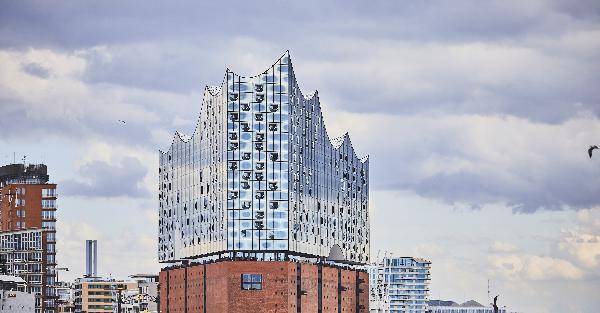
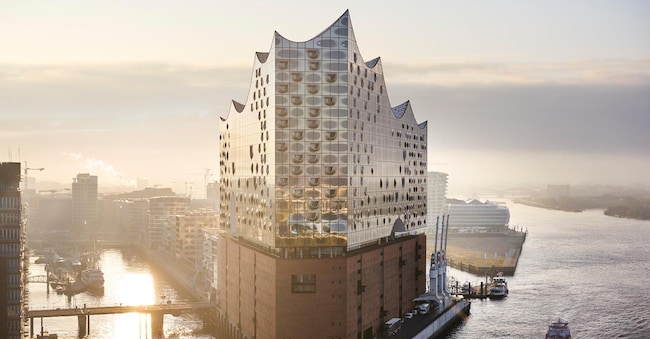
La maestosa Elbphilharmonie, iconica architettura creata dalla matita di Herzog & de Meuron: simboleggia una vela issata, o un’onda (Mediaserver Hamburg-Julia Schwendner).

The incredible "Elphi"

.

Inside Hafencity we also find the maestos-like Elbphilharmonie, the most conspicuous break from the rule of Hamburg understatement: a daringly insane architecture, created by the pencil of Herzog & de Meuron on an old cocoa and tobacco warehouse made of red brick. A hoisted sail (or a wave, or a quartz crystal) iconic with its 110 metre height that defies the sharp North Sea wind and makes it Hamburg's tallest habitable building.

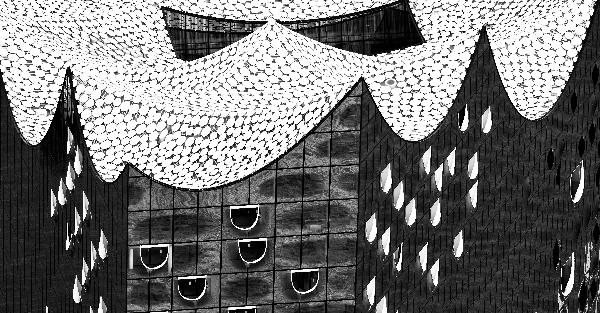
Un dettaglio del tetto di “Elphi”, complesso che ospita una delle sale da concerto più tecnologicamente avanzate del mondo oltre a hotel, appartamenti, ristoranti e bar (Mediaserver Hamburg-Michael Zapf).

The Elbphilharmonie is not only one of the largest and most technologically advanced concert halls in the world (the Grand Hall seats 2500 people and has an organ with 4765 pipes), a temple of world-class concerts, but also a hotel with 244 rooms and a residential complex with 44 flats, restaurants, bars and multifunctional rooms.

La Elbphilharmonie è diventata una delle tre icone della Germania contemporanea, assieme al nuovo Reichstag di Berlino e all’Allianz Arena di Monaco (Mediaserver Hamburg-Thies Rätzke).

It has officially become one of the three symbols of contemporary Germany along with the new Reichstag in Berlin and the Allianz Arena in Munich. 'Elphi', as it is nicknamed, is also infamous in Germany for its stratospheric costs (tripled to 789 million instead of the budgeted 241 million) and the interminable length of construction (ten years instead of three).

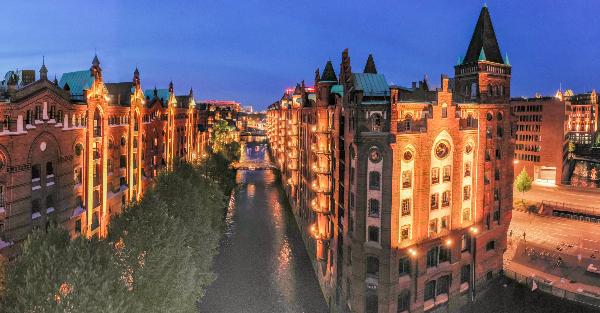
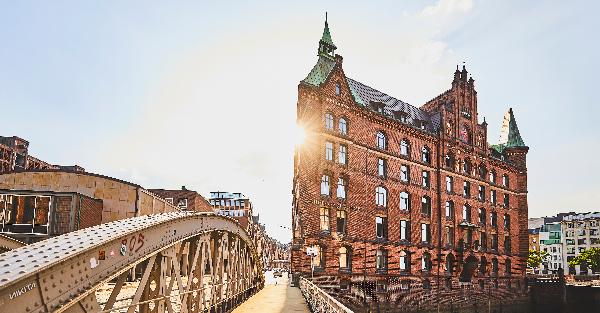
Nel cuore di Amburgo troneggia la Speicherstadt, costruita tra il 1884 e il 1927: è stato il più grande complesso di magazzini al mondo. Oggi è patrimonio Unesco (Mediaserver Hamburg-Andreas Vallbracht).

Channels, Warehouses and Expressionism

Even the actual centre is a whole programme: yes, because Hamburg in the 19th century was the first European city to divide residential areas from commercial or manufacturing areas.

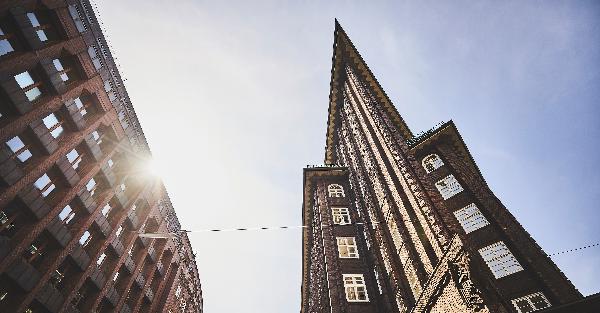
In particular, the Speicherstadt, built between 1884 and 1927, was the largest warehouse complex in the world. Today, it is a UNESCO World Heritage Site along with the Kontorhausviertel and the Chilehaus, the latter a fascinating ship-shaped palace from the Weimar years, a tribute to German architectural expressionism.

La Chilehaus, affascinante palazzo a forma di nave degli anni di Weimar, tributo all’espressionismo architettonico tedesco (Mediaserver Hamburg-Julia Schwendner).

Today, the former warehouses have become mostly offices. Hubs of a growing tertiary sector (Hamburg is home to the German headquarters of much of the global Big Tech: Google, Facebook-Meta, X-Twitter, Adobe, Snapshot). In addition to the port and a state-of-the-art logistics system, Hamburg's economy can count on Airbus (employing 45,000 people). There is no shortage of great little gems, such as Montblanc pens and Steinway pianos, which originated in Hamburg before part of the family emigrated overseas in 1850.

Oggi gli ex magazzini sono diventati soprattutto uffici: poli di un terziario in grande crescita. Ad Amburgo ci sono i quartieri generali tedeschi di buona parte del Big Tech globale, da Google a Facebook-Meta, da X-Twitter a Snapshot (Mediaserver Hamburg-Julia Schwendner).

In third class with hamburgers

.

Between 1850 and 1938 something like 5.6 million emigrants embarked from the port of Hamburg bound for the Americas. In the 'free city' the star of Albert Ballin, who became the biggest shipowner in the world with his Hapag with 175 ships and 20,000 employees, shone for a long time.

Dal porto di Amburgo ben 5,6 milioni di emigranti lasciarono l’Europa diretti nelle Americhe. A bordo mangiavano il caratteristico Rundstück Warm amburghese: lo ribattezzarono “hamburger” (Mediaserver Hamburg-Ingo Boelter).

On ships, emigrants on their way to the United States ate an Hamburg snack, the Rundstück Warm, beef wrapped in two slices of bread. The emigrants christened it 'hamburger'.

And they spread it to the United States, where in 1940 - in California - the Hamburg sandwich met the two people who would change his life: the McDonald brothers. And their pioneering little fast food restaurant.

Copyright reserved ©
Loading...

Brand connect

Loading...

Newsletter

Notizie e approfondimenti sugli avvenimenti politici, economici e finanziari.

Iscriviti