Cases on the rise

Hantavirus: mortality in Argentina double the average of the last five years

In questa illustrazione, realizzata il 7 maggio 2026, è raffigurata una provetta con l'etichetta "Positivo all'hantavirus". REUTERS/Dado Ruvic/Illustrazione REUTERS

3' min read

Translated by AI
Versione italiana

3' min read

Translated by AI
Versione italiana

Argentinian officials and experts are scrambling to figure out whether their country was at the origin of the hantavirus epidemic that hit the Dutch cruise ship Hondius in the Atlantic Ocean.

The health emergency on board the ship occurs as Argentina experiences a surge in hantavirus cases thatmany local public health researchers attribute to the accelerating effects of climate change.

Loading...

Argentina, from where the cruise departed, is regularly ranked by the World Health Organisation (WHO) as the country with the highest incidence of this rare rat-borne disease in Latin America.

On Tuesday, Argentina's Ministry of Health reported 101 hantavirus infections since June 2025. This is about double the number of cases recorded in the same period the previous year.

Higher temperatures expand the range of the virus because, in part, as heat increases and ecosystems change, rodents carrying the hantavirus can thrive in more places, experts say.

People usually contract the virus from exposure to rodent excrement, urine or saliva.

"Argentina has become more tropical due to climate change, and this has led to problems such as dengue and yellow fever, but also to new tropical plants that produce seeds for the proliferation of mice," said Hugo Pizzi, an Argentinian specialist in infectious diseases.

'There is no doubt that, as time goes by, the hantavirus is spreading more and more,' he added.

A hantavirus found in South America, called Andes virus, can cause a serious and often fatal lung disease called hantaviru lung syndromes.

Mortality doubled compared to the average of the last five years

The disease has led to the death of almost a third of cases in the last year, said the Argentine Ministry of Health, up from an average mortality rate of 15% in the previous five years.

Hantavirus is usually spread through the inhalation of contaminated rodent excrement and can spread from person to person, but this is rare, according to the WHO, whose top epidemic expert said that the risk to the population is low.

The Andes strain is the only hantavirus known to spread from person to person. 

The authorities stated that the passengers of the Hondius ship tested positive for the Andes virus.

On Wednesday, Argentina announced that it would send genetic material of the Andes virus and testing equipment to help Spain, Senegal, South Africa, the Netherlands and the UK detect it.

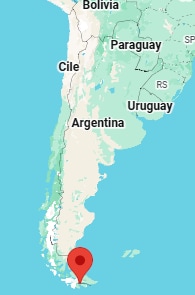
La fine del mondo

Ushuaia, capoluogo della provincia argentina della Terra del Fuoco, Antartide e Isole dell’Atlantico del Sud, è la città più australe del mondo

Google maps

Argentinian authorities say they are trying to identify the places where infected passengers travelled in the country before boarding the Dutch-flagged cruise ship in Ushuaia, a city in southern Argentina known as fin del mundo. Once the itineraries are known, they intend to trace contacts, isolate close ones and actively monitor the situation to prevent further spread.

Before embarking, the deceased Dutch couple visited Ushuaia and travelled to other locations in Argentina and Chile, the WHO reported.

According to two investigators who spoke on condition of anonymity, the Argentine government's main hypothesis is that the ccouple contracted the virus during a birdwatching excursion in Ushuaia.

The authorities are also retracing the steps of Dutch tourists through the forested hills of Patagonia in southern Argentina, where some outbreaks of infection are concentrated.

Because the first symptoms resemble the fever and chills of influenza, "tourists may think they just have a cold and not take it seriously. This makes it particularly dangerous,' said Raul Gonzalez Ittig, professor of genetics at the National University of Córdoba and researcher at the state scientific body Conicet (Consejo Nacional de Investigaciones Científicas y Técnicas).

In recent years Argentina has experienced a historic drought. But it has also experienced episodes of unexpectedly heavy rainfall, part of a broader picture of extreme weather conditions that scientists attribute to climate change.

According to experts, part of this variability created the conditions that allowed the hantavirus to proliferate.

Drought periods push animals out of their usual habitats in search of food and water.

Huge amounts of rain promote the growth of vegetation, scattering seeds that attract leaf-eating rodents.

"When rainfall increases, food availability increases, rodent populations grow, and if there are infected rodents, the possibility of transmission between rodents - and eventually to humans - also increases," Ittig said.

Although cases of hantavirus were once limited to the southern areas of Patagonia, now 83% of cases are recorded in the far north of Argentina, according to the Ministry of Health, which in January issued an alert about several outbreaks with deaths, including in the province of Buenos Aires, which is the most populous.

With rural hospitals under-equipped, residents had no idea what had hit them.

Copyright reserved ©
Loading...

Brand connect

Loading...

Newsletter

Notizie e approfondimenti sugli avvenimenti politici, economici e finanziari.

Iscriviti