
Happiness is bought with time, experiences, authentic relationships
Nobody talks about money, but it dominates our lives. Reversing the power relationship is possible with conscious and not just material spending
2' min read
2' min read
True happiness costs money and money is a means to achieve it in a conscious way. Conversely, it must not be an obstacle to the realisation of our deepest desires.
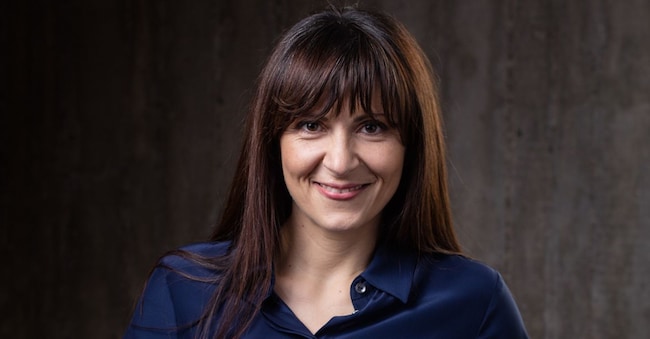
In the meeting with the many young people in Trento's Piazza Fiera, Annalisa Monfreda, journalist and co-founder of the financial education platform Rame, explains that money is a misunderstood tool with which one must make peace, without fear and without shame.
The experiment
.From the stories of over one hundred people interviewed, Monfreda discovers that everyone spends to build relationships and to belong to a community. But they do it instinctively, without distinguishing the price of things from their real value.
In this confusion, there is a drive to buy and desire more and more without ever finding fulfilment, so much so that the mechanism creates a vicious circle. This is witnessed by the adult son who perceives his parents' handouts as a form of compensation for the emotional distance that separates them, or the boy who makes himself available for payment to satisfy those in need of a loved one with small gestures and who is surprised by the many requests. Thus he finds himself giving gratification to someone who feels insecure or applauding an athlete at the end of a marathon or performing daily tasks for someone who is alone.
The recipe
Monfreda, therefore, gives some suggestions to counter this distorted relationship with money, which dominates our lives instead of letting us control it. "The money that makes us happy," says Monfreda, "is the money spent to buy experiences. For example, travel, which is a social glue. Or those to buy time for affection. Or those to take care of others and put money back into circulation'.


